
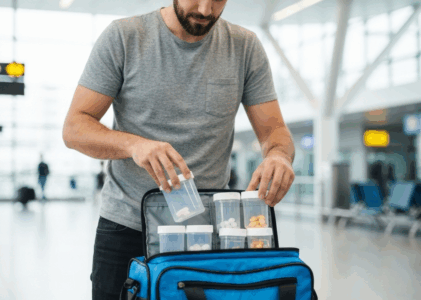
Essential Tips for Taking Medications Through TSA Security
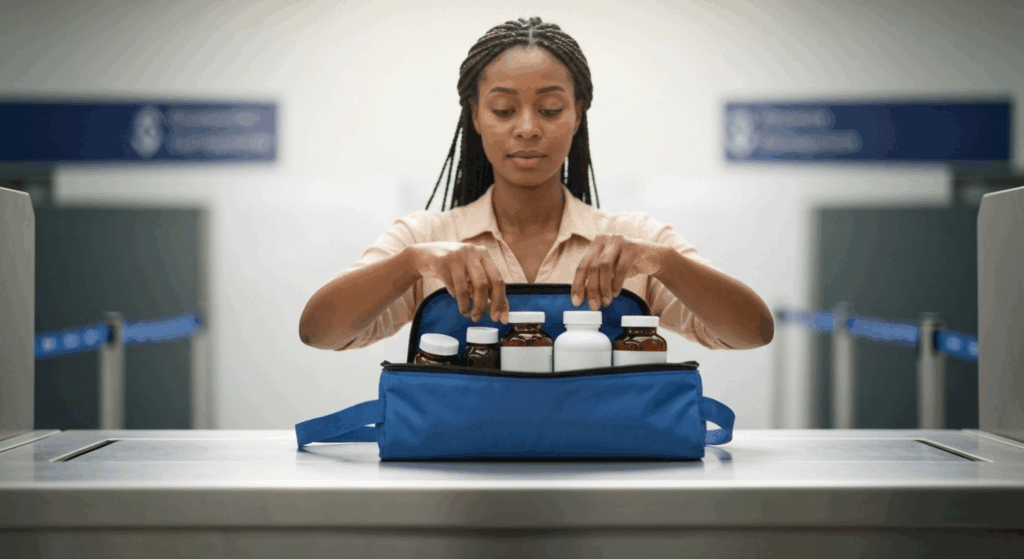
Key Highlights
Here are the essential takeaways for a smooth security screening with your medications:
- The Transportation Security Administration (TSA) allows you to bring medications in pill or solid form in unlimited amounts.
- Medically necessary liquid medications are permitted in your carry-on luggage in quantities greater than 3.4 ounces.
- You must declare medically necessary liquids to a TSA officer at the beginning of the checkpoint process for separate screening.
- While not required by the TSA, keeping prescription drugs in their original labeled containers is recommended to comply with state laws.
- Always pack your medications in your carry-on bag for immediate access during your flight.
Introduction
Traveling can be stressful, and navigating airport security adds another layer of complexity, especially when you need to carry medications. Are you worried about getting your prescription drugs through the security screening process? You’re not alone. Many travelers in the United States have questions about the rules set by the Transportation Security Administration (TSA), the official government organization responsible for airport safety. In fact, you may even be asked to participate in a brief survey about your experience. Understanding these guidelines beforehand ensures your travel day is seamless and worry-free. This guide will walk you through everything you need to know.
Understanding TSA Requirements for Traveling with Medications
When preparing for your trip, it’s crucial to know the specific rules the Transportation Security Administration has for medications. This official government organization in the United States provides clear guidelines on its .gov website to help travelers enhance their experience today. Following these rules facilitates a smoother screening process for everyone.
Are you unsure where to start? The key is to know what type of medication you have and how to pack it. Unfortunately, many Americans are unsure about the TSA’s regulations, which are designed to ensure safety without preventing you from traveling with necessary medical items. We’ll break down the requirements for different types of medications.
Prescription vs. Non-Prescription Medications
The TSA treats prescription and non-prescription medications similarly in many ways. For medications in pill or solid form, including vitamins and over-the-counter drugs, you can bring them in unlimited amounts as long as they are screened. This makes packing pills straightforward.
However, when traveling internationally, be aware that some non-prescription medications common in the United States may be restricted or illegal elsewhere. For instance, some decongestants containing pseudoephedrine are banned in certain countries. It’s always your responsibility to check the laws of your destination.
For prescription drugs, proper labeling of prescription medication can be important. While the TSA doesn’t mandate that you keep them in their original prescription bottles, some states have their own laws requiring it. Keeping them labeled helps avoid confusion and can speed up the security screening process if a visual inspection is needed, especially on secure websites.
Original Containers and Labeling Guidelines
A common question is whether you must keep medications in their original prescription bottles. According to the TSA, you are not required to have medications in their original containers. This gives you the flexibility to use pill organizers for convenience during your travel.
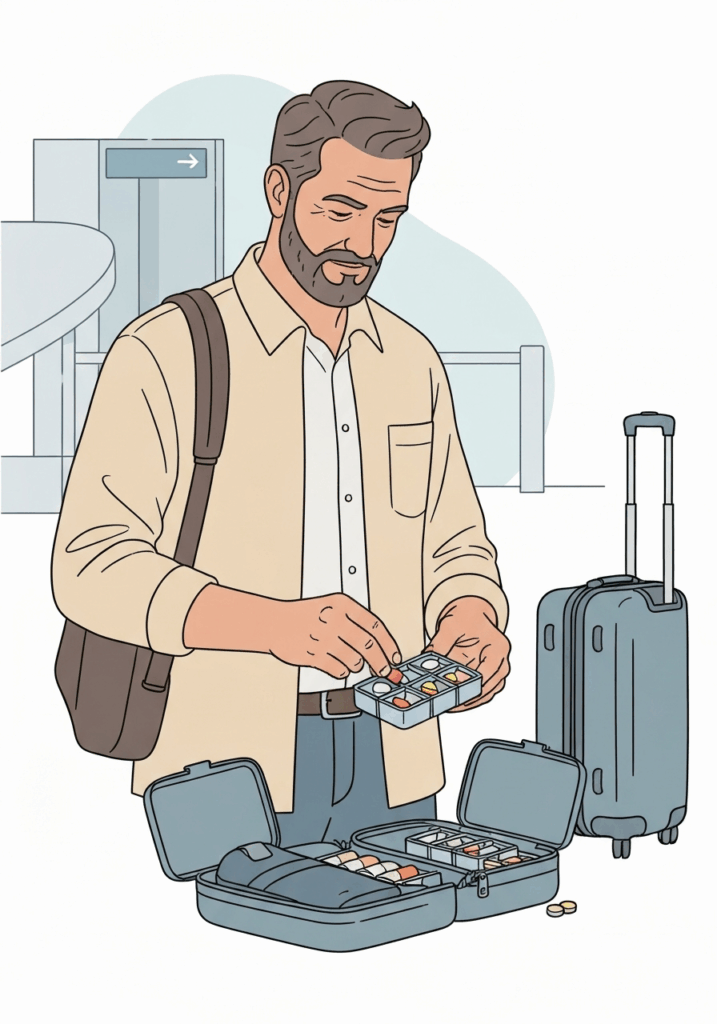
However, it’s highly recommended that you check state laws. Many states have individual laws regarding the labeling of prescription medication. To avoid any potential issues at your destination or during a layover, keeping your prescription drugs in their original, labeled containers is the safest approach.
This practice also helps TSA officers quickly identify your sensitive information regarding medications if they need to perform a visual inspection. Proper labeling on prescription bottles clearly shows the medication name and that it belongs to you, which can simplify the screening experience and prevent unnecessary delays.
Packing and Declaring Medications at Security
Properly packing your medications is the first step to an easy airport experience. It’s highly recommended you place all medications in your carry-on baggage. This ensures you have immediate access to them if needed and protects them from being lost or delayed if your checked luggage goes missing.
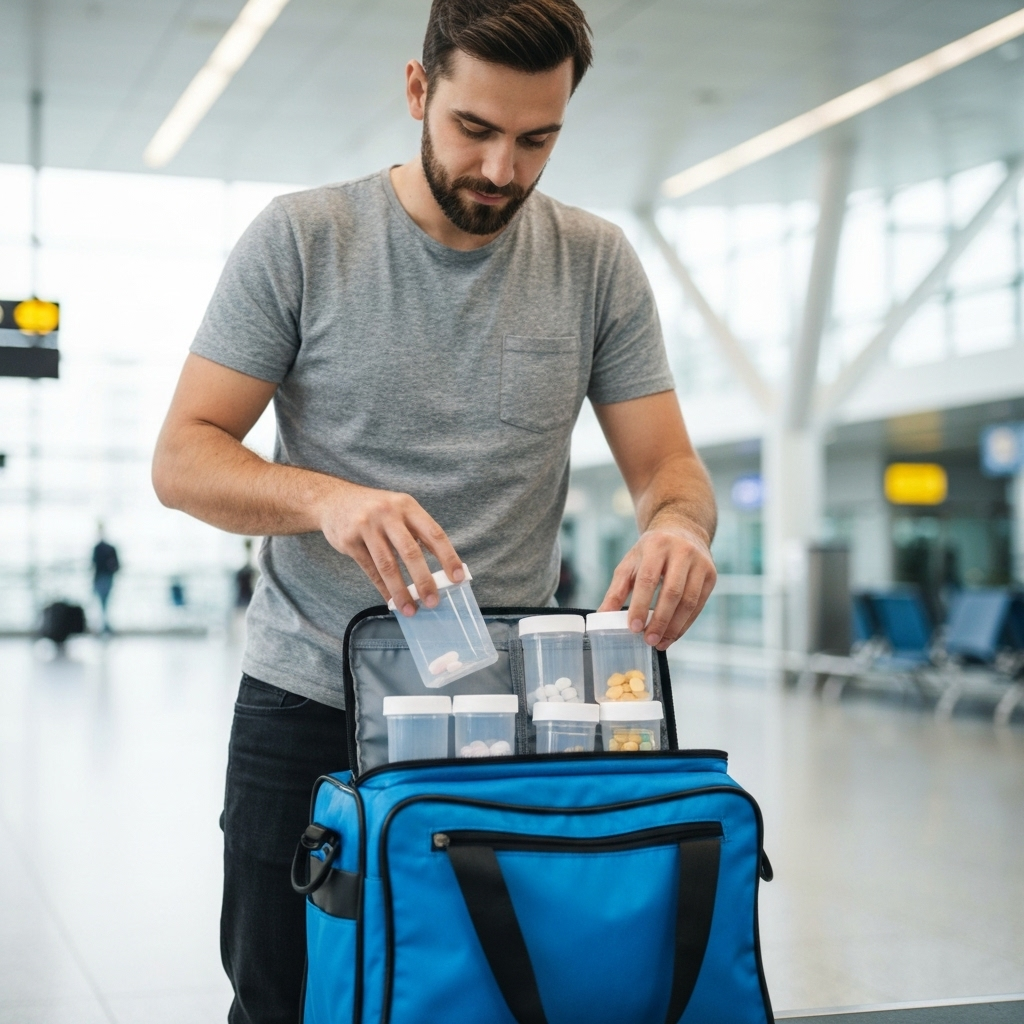
When you arrive at the security checkpoint, you must declare certain medical items to the security officers. For medically necessary liquids in unlimited amounts over the standard 3.4-ounce limit, you need to inform an officer. You can also use a TSA notification card to discreetly communicate your medical needs.
Preparing Pills, Liquids, and Medical Devices
Preparing your medications correctly makes the screening process much smoother. Pills and other items in solid form are the easiest to pack, as you can bring them in unlimited quantities. You can use a pill organizer or keep them in their original bottles.
Liquid medications, gels, and aerosols have specific rules. If they are medically necessary, you can bring larger amounts of medically necessary liquids in quantities larger than 3.4 ounces or 100 milliliters. These necessary liquids do not need to be placed in a zip-top bag, but you must separate them from your other belongings and declare them to the TSA officer. If you travel with a medical device like an insulin pump, inform the officer about it before screening begins.
| Medication Type | TSA Packing Guideline |
|---|---|
| Pills / Solid Form | Allowed in unlimited amounts in both carry-on and checked bags. Must be screened. Travelers with coronary artery disease can carry nitroglycerin tablets, as these are permitted. |
| Liquid Medications | Medically necessary liquids over 3.4oz/100ml are allowed in reasonable quantities. Must be declared to a TSA officer for separate screening. |
| Medical Devices | Inform the TSA officer about devices like insulin pumps. They may be subject to visual inspection but you will not be required to remove them. |
How to Declare Medications to TSA Officers
Declaring your medications is a simple but critical step in the leisure security screening process. If you have medically necessary liquids, gels, or aerosols in amounts over 3.4 ounces, you must inform a TSA officer at the very start of the checkpoint process.
You can do this verbally or by using a TSA notification card, which allows you to describe your condition discreetly. This card can be helpful for travelers with insulin pumps, ostomies, or other medical devices. If you have questions or concerns, you can ask the AskTSA team for live assistance or speak with a supervisor.
Here is how you should declare your items:
- Inform the TSA officer about your medically necessary liquids or medical devices before screening begins.
- Separate these items from your other belongings for inspection.
- You may request a visual inspection for your medication if you do not want it to be X-rayed.
- Be prepared for additional screening, which may include the officer opening the container or testing your hands for explosives.
Conclusion
Traveling with medications doesn’t have to be a stressful experience. By understanding TSA requirements and following these essential tips, you can ensure that your medications are packed properly and accessible during your journey. Always remember to keep prescriptions in their original containers and declare any necessary items at security checkpoints. Preparing in advance not only helps you comply with regulations but also gives you peace of mind as you travel. If you’re still unsure or have specific questions, don’t hesitate to reach out for personalized advice during ET hours! Safe travels and take care of your health on the go!
Frequently Asked Questions
Can I bring over-the-counter medications like vitamins through TSA?
Yes, you can bring over-the-counter medications like nitroglycerin tablets and vitamins through TSA checkpoints. The TSA allows medication in pill or solid form in unlimited amounts in your carry-on or checked bags. Like all items, they must go through the security screening process, but you do not need to declare them to security officers unless they are in liquid form.
What if I need to use medication during my flight?
If you have medical conditions that may require you to take prescription drugs or other medications during your flight, you should always pack them in your carry-on bag. This ensures you have immediate access to them. Keeping them in your checked luggage is not recommended, as your bag could be delayed or lost.
Will TSA ever confiscate my medications?
It is highly unlikely that the TSA will confiscate your medications if you follow the rules. However, if an item triggers an alarm during the security screening process or appears to have been tampered with, it may require additional screening or be disallowed before your next flight. Always carry reasonable quantities of medically necessary liquids for your trip to avoid issues.
https://www.tsa.gov/travel/security-screening/whatcanibring/all
https://wwwnc.cdc.gov/travel/page/travel-abroad-with-medicine
https://www.travel.state.gov/content/travel/en/international-travel.html