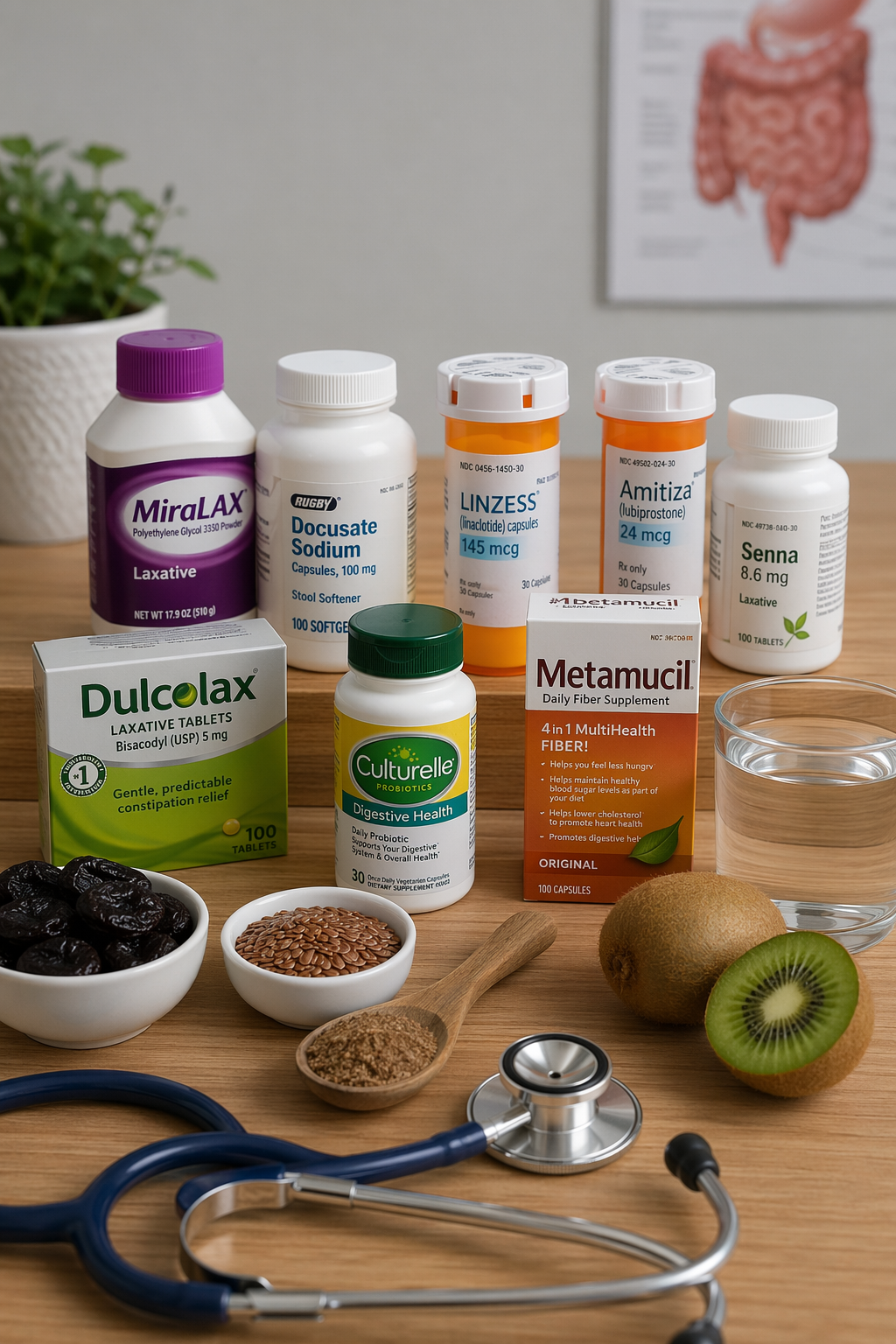

What is Constipation Remedies and Drugs for Relief?

Key Highlights
- Constipation relief often starts with simple steps like more dietary fiber, fluids, and movement.
- Different types of laxatives work in different ways to support bowel movements.
- Stool softeners help add fluid to stool, making it easier to pass.
- OTC options include fiber supplements, osmotic products, stimulants, and lubricants.
- Prescription medications may help when chronic constipation does not improve with basic care.
- Safe use matters because overuse can lead to side effects and other problems.
Introduction
Constipation can make daily life uncomfortable and frustrating. If you are dealing with hard stools, fewer bowel movements, or strain in the bathroom, you may be looking for fast constipation relief. The good news is that many cases improve with simple changes, while others respond to over-the-counter or prescription treatment. Understanding what causes constipation and how each remedy works can help you protect your digestive health and choose a safer path back to more regular bowel movements.
Common Causes of Constipation
Constipation can happen for many reasons. Diet, dehydration, low activity, certain medicines, and intestinal problems can all slow the digestive tract. When stool moves too slowly through the intestinal tract, it can become hard and difficult to pass.
Sometimes the issue is short term. In other cases, chronic constipation or functional constipation may need closer attention. If your regular medication seems to be the cause, speak with your doctor before adding treatment. The right option depends on the known cause, your symptoms, and how often you have regular bowel movements.
Dietary habits and fluid intake
What you eat and drink has a direct effect on bowel movements. Low fiber intake can leave stool smaller, drier, and harder to pass. Many people do better when they eat more dietary fiber from bran, oats, whole grains, fruits, and vegetables. Foods with insoluble fiber can help move waste through the gut.
Just as important, you need plenty of water. Without enough fluid, added fiber may not work as well. If you want to prevent constipation, lifestyle changes often begin with your plate and your water bottle.
- Increase dietary fiber slowly rather than all at once.
- Drink plenty of water through the day.
- Choose whole grains, fruits, vegetables, bran, and oats more often.
These habits may support easier, more regular bowel movements over time.
Medication-induced constipation
Certain prescription drugs can cause constipation as one of their possible side effects. If that happens, do not stop your regular medicine on your own. Instead, ask your doctor whether the dose can be adjusted or whether another option may be better for you.
This matters even more if you have a chronic condition such as kidney disease. Some constipation products are not a good fit for everyone. For example, magnesium-based options may cause problems in people with kidney or heart conditions, so treatment needs to match your health history.
Your doctor may also decide whether your symptoms fit chronic idiopathic constipation or another pattern. Common side effects of constipation drugs can include cramping, gas, bloating, nausea, or diarrhea. If symptoms are severe, or if constipation continues, medical guidance is the safest next step.
Lifestyle factors affecting bowel health
Daily habits shape digestive health more than many people realize. Too little physical activity can slow the body’s natural rhythm and reduce the muscle contractions that help move stool through the bowel. Over time, that can make regular bowel movements harder to maintain.
Even small routine changes can help. Many doctors suggest trying lifestyle steps before turning to medicine, especially for mild constipation. You do not need an extreme plan. A few steady habits often make the biggest difference.
- Add regular physical activity, such as walking, to your week.
- Drink enough fluids, especially water.
- Eat fiber-rich foods as part of your normal routine.
These prevention strategies support digestive health and may lower the chance of future constipation. If simple steps are not enough, it helps to understand the over-the-counter choices available.
Overview of Over-the-Counter Constipation Remedies
OTC medications for constipation come in several forms, and each works in different ways. Common types of laxatives include fiber supplements, osmotic products, stimulant options, lubricants, and stool softeners. There is no single best choice for every person.
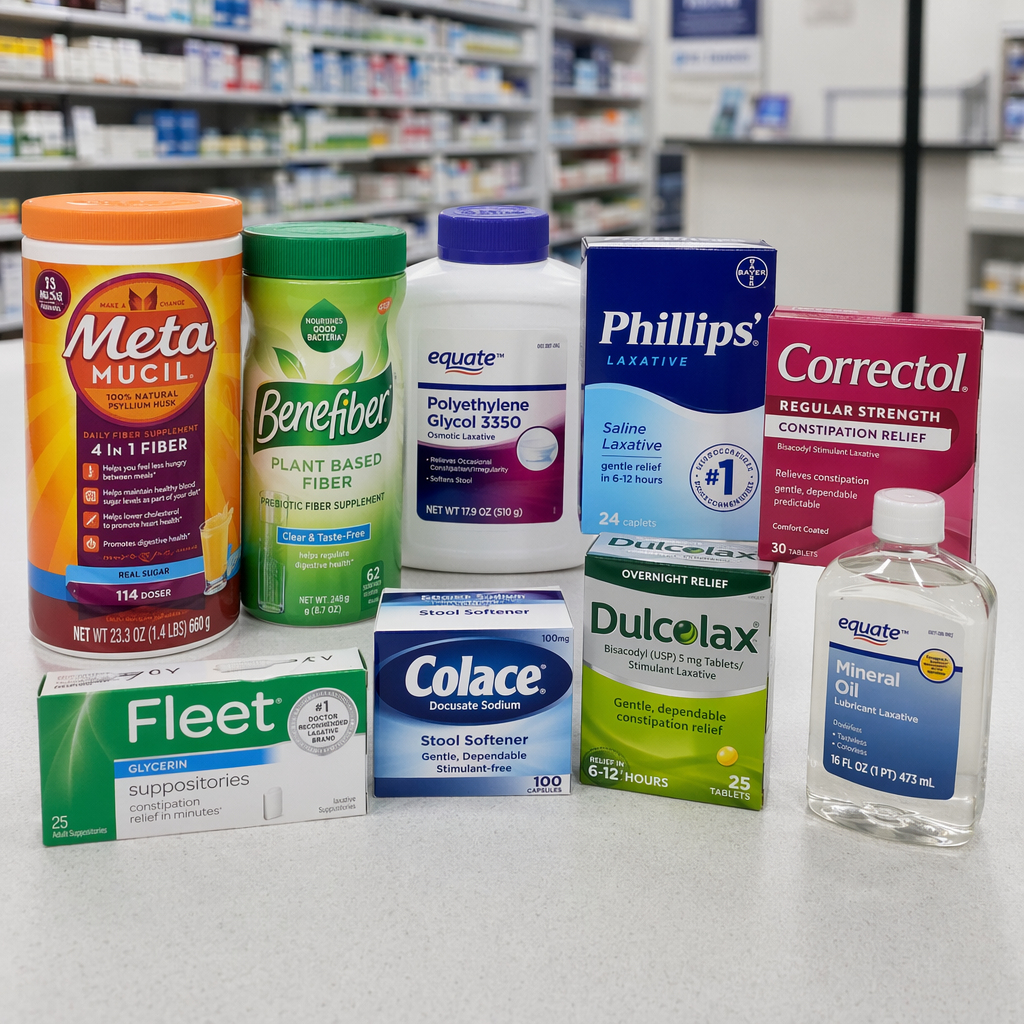
Some of the most used counter products include polyethylene glycol, Milk of Magnesia, docusate, glycerin suppositories, and mineral oil. Laxatives generally trigger movement or pull water into the bowel, while stool softeners mainly help create softer stools. The sections below explain how these products differ and when each type may fit best.
Fiber supplements and bulk-forming agents
Fiber supplements are often considered among the safest different types of laxatives. They add fiber to the stool, helping it hold more water and become larger and softer. That extra bulk can help the digestive tract contract and move stool out more easily. For many people, the effect of fiber supplementation is strongest when fiber intake and fluids both increase gradually.
These products are often a first OTC choice, but they work best when used correctly. Start low, increase slowly, and drink enough water to reduce discomfort.
| Product type | How it helps |
|---|---|
| Psyllium | Adds fiber and water to stool, making it bulkier and easier to pass |
| Polycarbophil | Forms bulk in stool and supports easier movement through the bowel |
| Methylcellulose | Increases stool size and softness to support bowel action |
If you want an OTC option for mild constipation, fiber supplements are often a practical starting point.
Osmotic and stimulant laxatives
Osmotic laxatives help the intestine hold more fluid. This softens stool and can increase bowel movements. Common examples include polyethylene glycol and saline laxatives such as magnesium hydroxide, sold as Milk of Magnesia. These are often used when fiber alone has not helped enough.
By contrast, an oral stimulant laxative works by pushing the bowel to contract. Bisacodyl, senna, and castor oil are examples. Because a stimulant laxative acts more forcefully, it is usually not the first option unless constipation is more severe.
- Osmotic products draw water into the bowel.
- Oral stimulant laxatives increase bowel muscle activity.
- Side effects of stimulant laxatives may include abdominal pain.
Common side effects of these drugs can also include cramping, gas, bloating, nausea, or diarrhea. Long use of stimulant products may reduce normal bowel muscle tone.
Stool softeners and lubricants
Stool softeners and lubricant laxatives are not the same, even though both can make passing stool easier. Stool softeners, such as docusate, help mix fluid into stool. This can lead to softer stools that are less difficult to pass.
Lubricant laxatives work differently. They coat the stool so it moves more easily through the bowel. Mineral oil is one example, and glycerin suppositories help lubricate the inside of the anus to ease passage of hard stool.
These products can help in certain situations, but frequent use is not always safe. Mineral oil should not be used often because it can affect vitamin absorption and interact with some medicines. In general, constipation relief medicine is not meant for long time use unless your doctor recommends it.
Prescription Options for Constipation Relief
When lifestyle changes and OTC products do not bring enough relief, doctors may consider prescription drugs. The best type of medication depends on your symptoms, your medical history, and whether your constipation has a known cause.
Several prescription medications are used for chronic idiopathic constipation and related conditions. These treatments can increase fluid in the bowel or help move waste through the intestine. Like OTC products, they can still cause side effects, so a healthcare provider should guide the choice and monitor how well the medicine is working.
Medications recommended by healthcare providers
Doctors may recommend prescription drugs when constipation lasts, keeps coming back, or does not improve with simpler measures. The type of medication chosen may depend on whether you have functional constipation, chronic idiopathic constipation, or constipation linked to another condition such as opioid use.
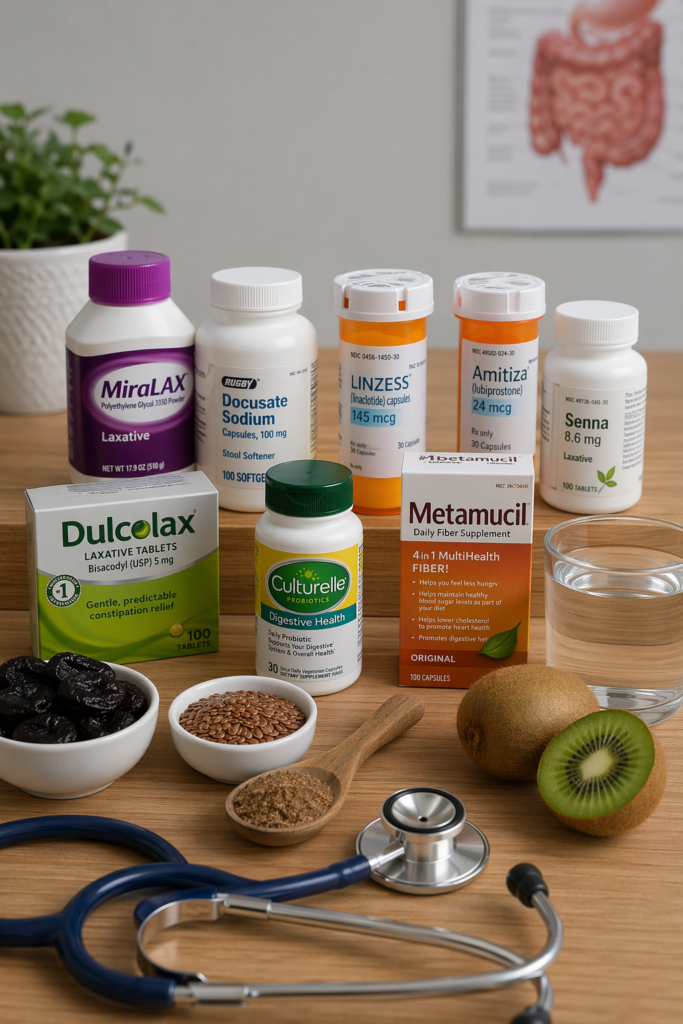
Common prescription medications include these brand names:
- Lubiprostone (Amitiza)
- Linaclotide (Linzess), plecanatide (Trulance), and prucalopride (Motegrity)
Each works in a different way. Lubiprostone can increase fluid in the bowels and may help with stool passage, stool softness, and abdominal discomfort. Linaclotide and plecanatide increase fluid secretion in the bowel. Prucalopride helps move waste through the intestines. Your provider can decide which option fits your symptoms and whether a prescription approach is appropriate for you.
Understanding prescription drug mechanisms
Prescription drugs for constipation target the problem in different ways. Some increase the amount of fluid in the bowel, which can help stool pass more easily through the digestive tract. Others improve movement through the bowel by affecting muscle contractions and transit time.
That is why treatment choice depends on your type of constipation. If lifestyle habits, fiber, or OTC products have not helped, your doctor looks at the likely cause, the pattern of your bowel movements, and your health conditions before selecting a medicine.
Side effects still matter. Lubiprostone may cause nausea, vomiting, or heartburn. Linaclotide can cause diarrhea in some people. Prucalopride may lead to stomach pain, nausea, diarrhea, or dizziness. The right treatment is the one that matches your needs while keeping risk as low as possible.
Natural and Doctor-Approved Home Remedies
Many people can get constipation relief without starting medication right away. Doctor-approved remedies often begin with simple habits that support normal bowel function and reduce strain. These steps are usually the first approach for mild or occasional symptoms.
The most common non-drug strategies are a better diet, plenty of water, and regular physical activity. These changes are practical, low risk, and often recommended before OTC or prescription treatment. The next sections cover the home habits that can help most.
Diet and hydration tips for relief
If you want natural relief, start with food and fluids. A diet rich in dietary fiber can increase stool bulk and support easier passage. Good choices include bran, oats, whole grains, fruits, and vegetables. For many people, improving fiber intake is one of the most effective home remedies.
Hydration matters just as much. Drinking plenty of water helps stool stay softer. When fiber goes up but fluid does not, constipation may feel worse instead of better. That is why doctors often suggest increasing both together.
- Add fruits, vegetables, bran, oats, and whole grains to meals.
- Raise fiber intake slowly to avoid extra discomfort.
- Drink plenty of water during the day.
These steps may support softer stools and better regularity without drugs, especially when constipation is mild or occasional.
Physical activity, routines, and prevention strategies
Movement helps the gut move too. Regular physical activity supports the natural rhythm of the bowel and may improve regular bowel movements. Even moderate exercise, done consistently, can be part of a strong prevention plan.
Routines also matter. Constipation is less likely to become a repeated problem when healthy habits are part of your day instead of a short-term fix. Prevention strategies usually work best when you keep them steady rather than doing them only when symptoms start.
To support digestive health, focus on simple actions you can maintain. Stay active, drink enough fluids, and keep fiber-rich foods in your meals. If these steps do not help, or if constipation happens more than once a week, it is smart to check in with your doctor before using medicine often.
Conclusion
In conclusion, understanding constipation and the various remedies available can significantly enhance your quality of life. From dietary changes to over-the-counter medications, many options can provide relief and improve your bowel health. Incorporating natural home remedies and maintaining an active lifestyle can also play a crucial role in preventing constipation. Remember that it’s essential to listen to your body and consult with a healthcare provider if symptoms persist. If you’re seeking personalized advice or recommendations, feel free to get in touch for a free consultation to explore the best solutions tailored for you. Your journey to better digestive health starts now!
https://www.ncbi.nlm.nih.gov/pmc/articles/PMC8521458
https://www.ncbi.nlm.nih.gov/pmc/articles/PMC6693595
https://fdc.nal.usda.gov/fdc-app.html#/food-details/1102644/nutrients
https://medlineplus.gov/constipation.html
https://fdc.nal.usda.gov/fdc-app.html#/food-details/1100440/nutrients