
Natural vs. Prescription: Best Sleep Supplements and Drugs
Key Highlights
- The best sleep aid depends on your sleep problems, age, and overall health.
- Natural supplements can support sleep quality, but results vary from person to person.
- Melatonin supplements may help you fall asleep faster, especially with jet lag.
- Magnesium glycinate is often a practical starting point for ongoing sleep issues.
- Valerian root may help insomnia, though side effects like grogginess can happen.
- Prescription sleep aids can be stronger, but they also raise concerns about side effects.
Introduction
Sleep problems can leave you tired, unfocused, and frustrated the next day. If you have been comparing sleep supplements with prescription options, you have probably noticed how confusing the choices can feel. Some products are meant to help you fall asleep fast, while others aim to improve the quality of sleep across the whole night. The right fit depends on your symptoms, your body, and how long your sleep problems have been going on.
Understanding Sleep Supplements and Prescription Sleep Drugs
Sleep supplements and prescription sleep aids are both used to manage trouble sleeping, but they are not the same. Natural options often target specific sleep issues, such as circadian rhythms, stress, or low nutrient levels. Prescription drugs are typically used when sleep disorders are more disruptive or long lasting.
That difference matters because each approach affects the nervous system in its own way. Some products gently support good sleep, while others create a stronger sedating effect. To choose wisely, it helps to understand what falls into each category and how those options work.
What Defines Natural Sleep Supplements
Natural supplements are nonprescription products used to support sleep in a more targeted way. They include minerals, hormones, herbs, and compounds the body already makes or gets from food. Common examples include magnesium, melatonin, glycine, L-theanine, valerian root, and passionflower.
Some work by supporting processes tied to sleep readiness. Melatonin supplements influence melatonin levels and circadian timing. Glycine is an amino acid linked to body temperature regulation during sleep. Magnesium may support brain health and melatonin production, which can matter if poor sleep is linked to low intake or deficiency.
For insomnia, the compiled information points to melatonin, valerian root, passionflower, magnesium, glycine, and L-theanine as useful natural supplements. The most effective choice depends on whether you struggle to fall asleep, stay asleep, or wake without feeling restored. Even natural or herbal supplements can cause drug interactions, so care still matters.
Overview of Prescription Sleep Medications
Prescription medications for sleep are drugs a licensed clinician uses when insomnia or other sleep disorders need closer medical management. These products are stronger than most over-the-counter options and are chosen based on your symptoms, health history, and how severe your sleep problems are.
In practical terms, prescription sleep aids involve more structured drug administration. Your dose, timing, and duration are usually guided by a clinician. That helps reduce problems linked to high doses, next-day sedation, and unwanted drug interactions.
The main difference from over-the-counter products is intensity and oversight. Natural sleep aids and nonprescription supplements are often used to support sleep patterns or mild sleep issues. Prescription medications are generally reserved for more serious or persistent cases, where the benefits may outweigh the higher risk profile and the need for medical supervision.
Key Differences in How They Work
The biggest difference is mechanism. A natural sleep aid may support a body process already tied to rest, while prescription drugs usually create a stronger direct effect on the nervous system. That is why one person may do well with a supplement, while another with chronic sleep disorders may need medication.
Think about the contrast this way:
- Melatonin supports timing by mimicking the role of melatonin in circadian rhythms.
- Magnesium may help if low intake affects relaxation or melatonin production.
- Glycine supports deeper sleep through body temperature regulation rather than sedation.
- Prescription drugs are typically used to produce a more immediate clinical effect.
So, over-the-counter choices often work with sleep biology, while prescription drugs more directly alter it. If your problem is jet lag or mild sleep disruption, a supplement may help. If your sleep disorders are severe, long lasting, or affecting daytime function, prescription care may be more appropriate.
Pharmacist-Recommended Sleep Supplements
When people ask about pharmacist-recommended sleep supplements, a few options come up repeatedly in the compiled information: magnesium, melatonin, glycine, L-theanine, valerian root, and passionflower. These are used for different sleep issues, so there is no single best pick for everyone.
A smart approach is to match the supplement to your symptoms. For example, magnesium supplementation may fit persistent sleep trouble, while melatonin may help with timing problems. The next sections break down how these products may support good sleep and what you should know before trying them.
Melatonin: Uses and Effectiveness
Melatonin supplements are among the most popular sleep products, and they can help some people fall asleep faster. The role of melatonin is to signal that the body should prepare for sleep under dim light conditions. That makes it especially useful when sleep timing is off.
This is why melatonin is often discussed for jet lag, shift work, and age-related changes in circadian rhythms. Older adults may benefit because melatonin levels tend to drop with age. Some neurocognitive conditions linked to melatonin deficiency may also respond better than average.
Still, melatonin is not a cure-all. It appears best for sleep onset rather than every kind of insomnia. Immediate-release forms act quickly, while sustained-release products may help people who also wake during the night. Starting with a low dose is usually the most cautious way to see how your body responds.
Magnesium for Restful Nights
Magnesium is often one of the top pharmacist-recommended supplements for better sleep because it is an essential mineral involved in brain and body function. Insomnia can be a sign of low magnesium, and many Americans do not get enough. That makes it a reasonable first sleep aid to consider.
Some findings suggest magnesium supplementation may improve sleep in older adults and may even support melatonin production. It may not work the same way for everyone, though. A few studies may have used low doses or forms that are not absorbed well, which can affect results.
For many people, magnesium glycinate stands out because it is well absorbed and pairs magnesium with glycine. It may be better suited for ongoing sleep issues than for instant results. If your goal is deeper sleep over time, this option may be worth discussing with a clinician.
Herbal Sleep Aids: Chamomile, Valerian, Passionflower
Herbal products are often chosen by people who want natural sleep aids instead of stronger drugs. In the compiled information, valerian root and passiflora incarnata, or passionflower, are the main herbs discussed. Both are linked to calming effects, especially when trouble sleeping is tied to tension or difficulty winding down.
These herbs appear to work as gentle sedatives, though not in exactly the same way. Valerian root may be more sedating and may help you fall asleep faster. Passionflower is generally described as gentler, which may appeal if you want less next-day grogginess. L-theanine from green tea is not an herb, but it is often grouped with calming natural options.
Here is a simple comparison:
- Valerian root may help with insomnia and faster sleep onset.
- Passionflower may support sleep with a milder calming effect.
- Chamomile is commonly used for relaxation, though it is not detailed in the compiled information.
- L-theanine from green tea may ease stress without heavy sedation.
Prescription Sleep Drugs: Types and Uses
Prescription medications are usually considered when sleep problems are frequent, severe, or tied to diagnosed sleep disorders. In those cases, a clinician may choose a sleep aid that is meant to work more quickly or more powerfully than natural options.
Because these drugs require medical oversight, drug administration is more structured than with nonprescription products. Your provider looks at timing, dose, side effects, and whether the medication matches your pattern of insomnia. That makes the different classes and uses worth understanding before treatment starts.
Common Prescription Sleep Medications
The outline asks for common prescription medications, but the compiled information does not list brand or generic sleep drugs. What it does make clear is how prescription treatment differs from supplements: it is used for more significant sleep disorders, involves closer follow-up, and carries more concern about side effects, drug interactions, and problems at high doses.
By contrast, the most popular sleep supplements discussed are melatonin, magnesium, glycine, L-theanine, valerian root, and passionflower. Each one fits a different need, so popularity does not always mean it is right for your situation.
| Category | General Use Based on Compiled Information |
|---|---|
| Prescription medications | Used for more serious or persistent sleep disorders under medical supervision |
| Melatonin | Often chosen for falling asleep faster, circadian issues, and jet lag |
| Magnesium | Often used for ongoing sleep support and possible deficiency-related issues |
| Valerian root | Often used for insomnia and faster sleep onset, but may cause grogginess |
How Prescription Drugs Address Insomnia
Prescription sleep aids are generally used when chronic insomnia or other sleep disorders affect daily life in a bigger way. If poor sleep has lasted for months, or if you are dealing with major daytime sleepiness, a stronger and more supervised approach may be needed.
These drugs are chosen to address the pattern of insomnia you have. Some people mainly cannot fall asleep. Others wake often or feel unrefreshed despite enough hours in bed. That is also how you choose the best supplement or medication for your specific needs: start with the pattern, not the product name.
It is also important to ask whether something else is causing the issue. The compiled information specifically notes that ongoing symptoms should be evaluated for conditions such as sleep apnea. If the root cause is medical, even the strongest sleep aid may not fully solve the problem on its own.
Comparing Sleep Drug Classes (Benzodiazepines, Non-Benzodiazepines, Antidepressants)
The outline names benzodiazepines, non-benzodiazepines, and antidepressants, but the compiled information does not explain these classes in detail. So the safest comparison is a general one: prescription drugs are stronger tools for insomnia, while supplements are usually milder and chosen to support sleep quality through different pathways.
What matters most is risk and fit. Whether the drug class is benzodiazepines, one of the non-benzodiazepines, or certain antidepressants used for sleep, the compiled information supports the need for medical supervision because stronger sedating products raise concern about next-day effects and drug interactions.
Keep these points in mind:
- Prescription classes may improve objective sleep quality more quickly.
- Stronger effects can also mean a greater risk of grogginess the next day.
- Drug interactions matter more when sedating products are combined.
- Natural options may be preferable first for milder symptoms.
Effectiveness: Natural Supplements vs. Prescription Drugs
Effectiveness depends on what kind of sleep problem you have. Natural supplements may improve sleep quality when the issue involves circadian timing, low magnesium, stress, or mild insomnia. Prescription sleep aids are more likely to be considered when symptoms are more severe or persistent.
The compiled information suggests useful support for both approaches, but the evidence base is different. Research on natural options includes small studies and some positive findings, while stronger drugs are used more clinically for chronic symptoms. The next sections compare what that means in real life.
How Well Do Natural Options Improve Sleep Quality?
Natural sleep aids can improve sleep quality, but they do not all do the same job. Melatonin may help with sleep onset. Magnesium may support more stable rest over time. Glycine may help with deeper, more restful sleep, especially if you feel you sleep lightly or wake unrefreshed.
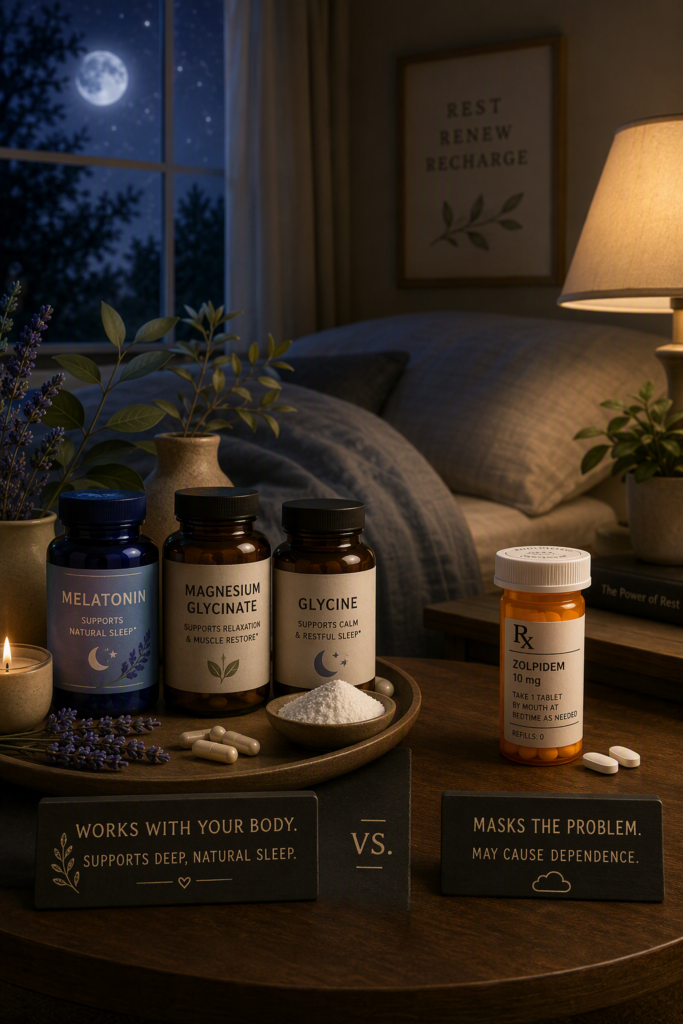
That is why choosing the best product starts with your symptoms. Jet lag is the issue, melatonin may make more sense than magnesium. If your concern is poor sleep depth, glycine or magnesium may fit better. You want a calming option, L-theanine, valerian, or passionflower may be more relevant.
In short, natural options can support better sleep, but they work best when matched to the right problem. Trial and error is sometimes part of the process. If your sleep quality remains poor for months, it is a good idea to get checked for underlying conditions instead of switching endlessly between supplements.
Scientific Evidence Behind Sleep Supplements
Scientific research on sleep supplements is promising, but it has limits. The compiled information notes that many studies are small, and not all are the kind of randomized controlled trial people hope to see. That does not make the results useless, but it does mean you should keep expectations realistic.
Some products have clearer support than others. Melatonin has practical use for circadian issues and jet lag. Magnesium, glycine, L-theanine, valerian, and passionflower all have encouraging findings from clinical trials or reviews, but several areas still need larger studies and better-designed research.
A science-backed tip is to match the supplement to the sleep issue instead of taking something at random. Another is to start low, especially with melatonin or more sedating herbs. Finally, combine any remedy with sleep hygiene, since your bedroom environment and sleep habits can strongly affect results.
Efficacy of Prescription Drugs for Chronic Insomnia
For chronic insomnia, prescription sleep aids are generally used because they can have a stronger and more immediate effect than supplements. This can be important when sleep disorders are severe enough to disrupt mood, focus, and daytime function in a major way.
That does not mean prescription drugs are automatically better for every person. They are better suited to certain situations, especially when symptoms persist and simple changes have not helped enough. In other words, they compare favorably when the sleep problem is more serious and needs medical treatment.
Even then, the compiled information stresses that ongoing insomnia should lead to evaluation for other causes, including sleep apnea or related health conditions. Prescription treatment may manage symptoms, but it should still be part of a broader plan that looks at why you are not sleeping well in the first place.
Safety, Risks, and Side Effects
Every sleep product comes with trade-offs. Some people assume natural means risk-free, but side effects and drug interactions can still happen. The main difference is often degree, not the complete absence of risk.
That is why medical advice matters, especially if you are older, pregnant, breastfeeding, taking prescription drugs, or managing chronic illness. Looking at safety before you choose a product can help you avoid preventable adverse effects. Let’s break down what to watch for with both supplements and medications.
Side Effects of Natural Sleep Supplements
Yes, sleep supplements can cause side effects, even when they are sold as natural. Magnesium supplementation is generally considered very safe, but loose stool or diarrhea can happen. People with impaired kidney function may face higher risk and should speak with a clinician first.
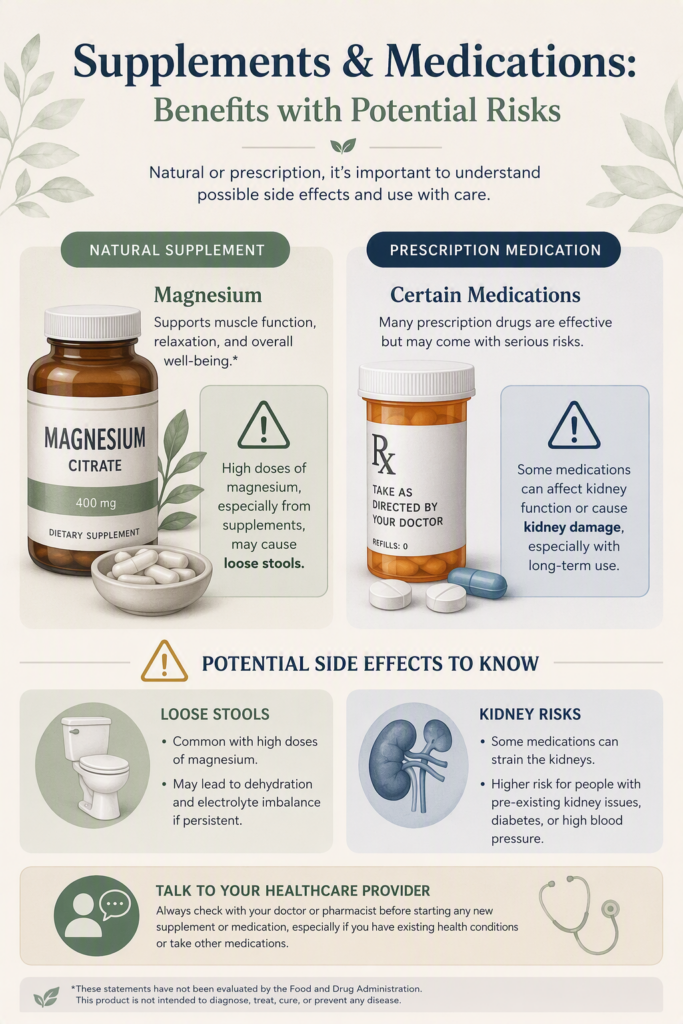
Melatonin may cause daytime sleepiness, grogginess, dizziness, or headaches. Valerian root may lead to sleepiness, dry mouth, or occasional digestive upset. Passionflower is usually well tolerated, though mild drowsiness, dizziness, and confusion are possible. With herbal supplements, sedating effects can carry into the next morning.
Some options appear easier to tolerate. Glycine has not shown serious adverse effects in the compiled information, and L-theanine also appears well tolerated. Even so, combining multiple sedating products can increase grogginess. Natural does not always mean simple, especially if you are already taking other treatments.
Safety Concerns with Prescription Sleep Medications
Prescription medications raise bigger safety concerns because they are stronger and more sedating. The compiled information does not list every risk, but it does stress that medical supervision matters more with these products than with over-the-counter sleep aids or supplements.
This is especially important for older adults, who may be more prone to dizziness, falls, and next day grogginess. Even some nonprescription sleep aids can create those issues, which is why sedating products should be chosen carefully in this age group. If you already have health conditions, extra caution is smart.
You should also remember that sleep problems can overlap with other concerns, such as blood pressure changes, chronic illness, or sleep apnea. If you are thinking about using a sleep product sold without a prescription, it still makes sense to review it with a healthcare professional before starting.
What to Know Before Choosing a Sleep Aid
Before choosing any sleep aid, ask what kind of sleep issue you actually have. Do you struggle to fall asleep, stay asleep, or wake feeling unrested? The compiled information makes it clear that matching the product to the pattern is one of the most useful ways to choose wisely.
Your health background matters too. Pregnancy, breastfeeding, age, chronic health conditions, and prescription drug use can all change what is safe. Medical advice is especially important if you are taking sedating treatments already, since drug interactions are possible with both supplements and medications.
A quick checklist can help:
- Match the product to your specific sleep complaint.
- Review all medications and supplements for possible drug interactions.
- Be careful if you are older or have kidney issues or other health conditions.
- If symptoms last for months, ask about medical evaluation for causes like sleep apnea.
Conclusion
In conclusion, choosing between natural sleep supplements and prescription sleep medications requires careful consideration of your specific needs and health conditions. While natural options like melatonin and magnesium can provide gentle support for better sleep, prescription drugs may be necessary for more severe insomnia cases. It’s essential to weigh the effectiveness, safety, and potential side effects of each option to determine what works best for you. Always consult with a healthcare professional before starting any new supplement or medication. By understanding your choices, you can take informed steps towards achieving the restful night’s sleep you deserve. If you’re looking for personalized advice on sleep supplements, don’t hesitate to get in touch for a free consultation!
https://www.pharmacytimes.org/courses/infectious-disease-day-of-education
https://pubmed.ncbi.nlm.nih.gov/33580483
https://www.aarp.org/membership/sweeps/invest-in-your-nest-10k