


Understanding Dry Skin Symptoms and Drugs That Impact You

Key Highlights
- Dry skin is a very common skin condition that often starts with tightness, flaky skin, itching, or rough patches.
- You may also notice fine lines, dry lips, or sensitive skin as water loss affects the skin barrier.
- Cold weather, dry climate, low humidity, and hot water can all worsen skin dryness.
- A side effect from acne medications, antihistamines, diuretics, statins, retinoids, or chemotherapy may trigger dry skin.
- Proper care includes gentle skin care products, fewer baths, enough water, and a rich moisturiser.
Introduction
Dry skin is a skin condition that many people deal with at some point, and it can be more than a small annoyance. Skin dryness may show up after weather changes, daily habits, or even a new medicine. If your skin suddenly feels rough, tight, or irritated, you may wonder what changed. That is a fair question. In many cases, the cause is manageable once you recognize the pattern and give your skin the support it needs.
Recognizing Dry Skin Symptoms
At first, dry skin symptoms can seem mild. Your skin may feel tight after washing, look dull, or develop flaky skin around the cheeks, hands, or legs. Some people also notice itching or a rough texture.
As it gets worse, dry skin can crack, sting, or even bleed. Sensitive skin may react more strongly to products that once felt fine. Watching for these early signs helps you act sooner and avoid more irritation.
Key Indicators and Warning Signs of Dry Skin
Some signs are easy to miss until they become uncomfortable. Dry skin often starts with a feeling of tightness, especially after a shower or washing your face. You may also see areas that look dull or uneven.
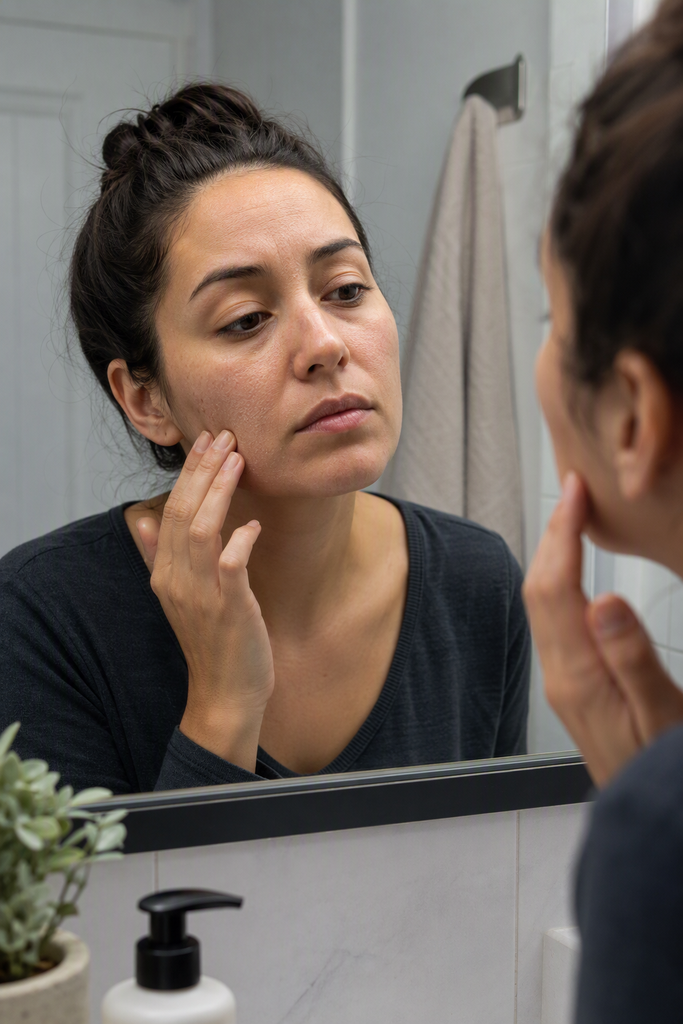
Common warning signs include both visible changes and changes in how your skin feels. The most common symptoms to watch for are:
- Flaky skin or peeling on the face, hands, or body
- Itching, burning, or stinging after applying products
- Fine lines that look more obvious than usual
- Cracks that can become sore or bleed
- Dry lips that need frequent petroleum jelly or lip balm
If these signs keep showing up, your skin may be losing water content faster than it can hold it. That is why early proper care matters. It can help protect the outer layer before the dryness becomes harder to manage.
How Dry Skin Manifests in Different Age Groups
Dry skin does not look exactly the same at every age. Your skin type, oil production, and daily routine all shape how dryness appears. A younger person may notice peeling from acne care, while someone older may feel constant roughness.
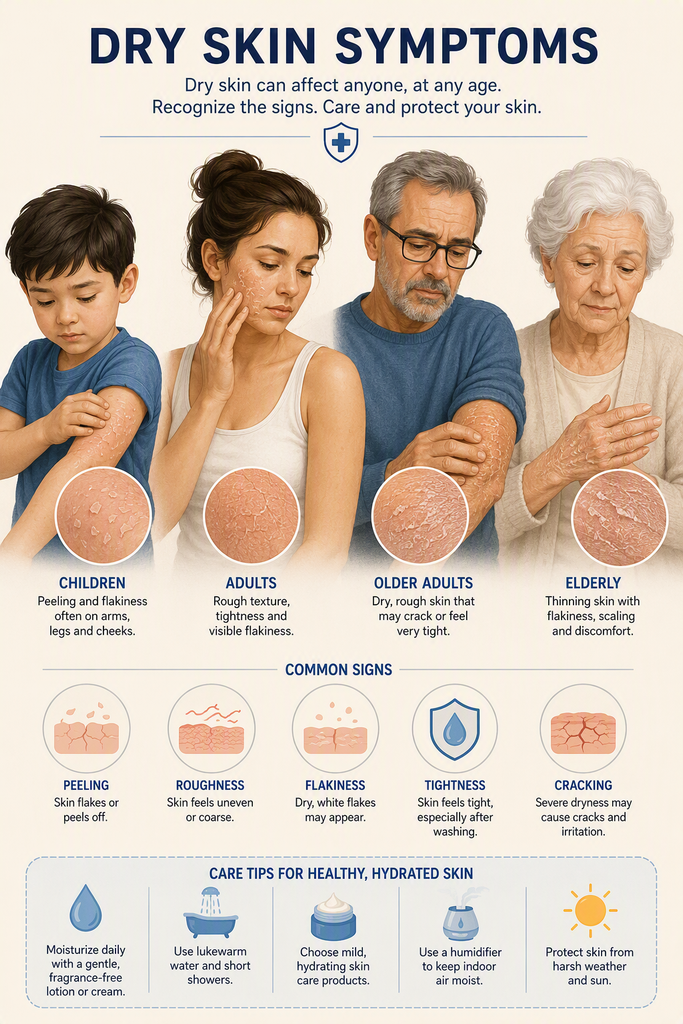
For a teen daughter, dryness may show up after acne medications or cleansers used to keep breakouts under control. In that age group, peeling, redness, and irritation are often easier to spot on the face. Sensitive skin can react quickly to active ingredients.
In older adults and elderly patients, the problem may feel more persistent. Skin can become thinner, less comfortable, and more likely to crack. Fine lines may stand out more, and hands or legs may feel especially dry during cold weather. Age changes how dryness appears, but gentle care helps every group.
Main Causes of Dry Skin in the United States
Dry skin in the United States often has more than one cause. Apart from medication, cold weather, indoor heating, and a dry climate can all increase water loss from the skin. Low moisture in the air leaves skin feeling rough and tight.
Your habits matter too. Hot showers, long baths, and harsh cleansers can strip moisture from the outer layer. When that happens, dryness of the skin can build up fast. Next, it helps to look more closely at the environment and your routine.
Environmental Factors Impacting Skin Hydration
Your surroundings can quietly work against your skin. Even if your routine has not changed, low humidity and dry air can reduce the skin’s water content. This is common during winter and in homes with heating systems.
A few environmental triggers show up often:
- Cold air outside can make skin feel tight and rough
- Indoor heat can lower humidity and increase moisture loss
- Dry air in bedrooms or offices can worsen overnight dryness
- Frequent sun exposure without protection can stress the skin barrier
That is why a humidifier can help in some homes, especially while you sleep. A little extra moisture in the air may support your skin and reduce that uncomfortable dry feeling. If the environment is part of the problem, small home changes can make a real difference.
Lifestyle Habits That Can Lead to Dry Skin
Sometimes your own routine is the biggest trigger. Hot showers, long baths, and rough drying with a towel can irritate skin that is already struggling. Even daily activities like dishwashing or repeated hand washing can make dryness worse, especially on your hands.
Harsh soaps are another common issue. Dry skin is damaged skin, so strong cleansers and thick lather are not your friend. Proper care starts with gentler choices and shorter contact with water.
| Habit | How It Can Affect Your Skin |
|---|---|
| Hot showers or long baths | Can increase moisture loss and worsen skin dryness |
| Harsh soaps or cleansers | Can irritate the outer layer and leave skin feeling tight |
| Rubbing skin dry | Can trigger more irritation than gentle patting |
| Frequent wet work in daily activities | Can worsen dryness on hands and fingers |
| Wearing rough fabrics | Can rub against dry, sensitive skin and increase discomfort |
Medications and Drugs Linked to Dry Skin
A new medication can sometimes explain sudden dry skin. This side effect does not happen to everyone, but it is a known issue with several medicine classes. If dryness started after a prescription or over-the-counter product was added, that timing matters.
The compiled information gives a pretty generalised list of drugs that may affect skin hydration. These include acne treatments, prescription retinoids, some allergy tablets, blood pressure medicine, statins, and chemotherapy drugs. The next sections break that down more clearly.
Common Prescription and Over-the-Counter Drugs That Cause Dry Skin
Several medications are known to cause dry skin as a side effect in some people. This includes both prescription and over-the-counter options. Not every drug in these groups will cause problems, but the link is important if your symptoms began after treatment started.
Acne medications are among the most common examples. Benzoyl peroxide, salicylic acid, and isotretinoin can lead to peeling and dryness. Prescription retinoids such as tretinoin and adapalene may also cause redness and flaking.
| Medicine class | Examples or notes |
|---|---|
| Acne medications | Isotretinoin, benzoyl peroxide, salicylic acid |
| Prescription retinoids | Tretinoin, adapalene |
| Antihistamines | Some allergy medicines can dry skin, mouth, and eyes |
| Blood pressure medications | Diuretics may cause dehydration linked to dry skin |
| Cholesterol-lowering medications | Statins may cause dryness in some patients |
| Chemotherapy drugs | Can lead to dryness of the skin during treatment |
How to Identify if Medication Is Affecting Your Skin
The first clue is often timing. Did your dry skin begin soon after starting a new medicine, changing a dose, or adding an over-the-counter product? If the answer is yes, a side effect becomes more likely. This is especially worth checking if the dryness was not part of your usual skin condition.
Look at the medicine classes you take. Acne treatments, retinoids, antihistamines, and some drugs used for high blood pressure are known examples. You may also notice related signs such as dry lips, peeling, or dryness in your eyes or mouth.
If the pattern fits, speak with your pharmacist or doctor. None of the tips should replace medical advice when a drug may be involved. Sometimes the problem can improve with a dose change or a different medication that still treats the same issue.
Effective Management and Prevention Strategies
If medication is drying your skin, the first things to do are simple. Drink enough water, use a rich moisturiser often, and switch to gentle skin care products. These steps can support dry skin treatment and reduce water loss from the surface.
You can also cut back on long hot showers and use fragrance-free creams or ointments instead of lighter lotions. If symptoms continue, a treatment plan with a healthcare provider may be the best next step. Product choices and timing matter, so let’s look at those more closely.
Skincare Tips and Suitable Products for Medication-Induced Dry Skin
When medication affects your skin, simple products usually work best. Choose creams or ointments over lotion, and apply them while your skin is still damp. A rich moisturiser can help seal in moisture and support the skin barrier.
Helpful options include ingredients that dermatologists often recommend:
- Petroleum jelly or lip balm for dry lips
- Creams with mineral oil, glycerin, or shea butter
- Products with lactic acid when your skin tolerates it
- Fragrance-free products rather than anything labeled only as an unscented version
It also helps to avoid products with alcohol, fragrance, deodorant soaps, and retinoids unless a clinician tells you otherwise. Some people prefer brands like QED skincare for sensitive skin, but what matters most is gentle formulation. Your best bet is a product that feels comfortable and does not sting, burn, or leave your skin tighter.
When to Consult a Healthcare Provider About Your Dry Skin
Sometimes home care is not enough. If your skin continues to crack, itch, sting, or bleed after trying gentle care, it is time to talk with a healthcare provider. Ongoing dryness can point to medical conditions that need more than over-the-counter support.
A doctor or dermatologist can check for issues such as atopic dermatitis, psoriasis, or kidney disease. If you already have a skin condition, you may need a more specific treatment plan with the right balance of active ingredients. In some cases, a short course of medication may be suggested.
You should also get help if products cause burning, if symptoms are spreading, or if you are worried about marks left behind. While topics like dark spots, a noticeable scar, dark marks, or even laser treatment and laser tattoo removal belong to different concerns, any skin change that keeps worsening deserves expert advice.
Conclusion
In summary, understanding dry skin symptoms and the medications that can impact your skin health is essential for maintaining a vibrant complexion. By recognizing the key indicators of dry skin and the various factors that contribute to its onset, you can take proactive steps toward effective management. Implementing suitable skincare tips and being mindful of your medication’s side effects will help you maintain your skin’s hydration levels. Remember, if you ever feel uncertain about your skin’s condition or if it worsens, consulting a healthcare provider is crucial for personalized advice and treatment options. For further assistance, don’t hesitate to reach out and explore how we can help you tackle your skincare concerns!
https://www.aad.org/public/everyday-care/skin-care-basics/dry/dermatologists-tips-relieve-dry-skin
https://www.instagram.com/walgreens
https://www.isdin.com/us/beauty-guide-1
https://www.schweigerderm.com/medical-dermatology/dry-skin-treatment
https://www.schweigerderm.com/providers
https://www.schweigerderm.com/skin-care-articles/fillers/lip-flip-vs-filler