
Multistate Salmonella Outbreak: What to Do for Safety
Key Highlights
- A multistate outbreak of salmonella infections can spread quickly when contaminated food moves through several states.
- Public health officials track illness reports, traceback data, and lab findings to identify the likely source.
- Current outbreak advisory updates have linked some Salmonella infection cases to recalled jalapeño peppers.
- Good food safety habits at home can lower your risk from contaminated food.
- You should watch for symptoms and contact a health care provider if you feel sick.
- Official outbreak pages give the latest advice for consumers and businesses.
Introduction
Foodborne illness can feel confusing when news breaks about a new outbreak. In the United States, Salmonella bacteria are a leading cause of illness linked to food, and outbreaks may affect people in many states at once. If you are wondering what steps to take, the best approach is to follow official updates, avoid recalled items, and pay attention to symptoms. A clear understanding of how these outbreaks work can help you protect yourself and your household.
Understanding Multistate Salmonella Outbreaks in the United States
A multistate outbreak of salmonella infections happens when related illnesses appear in more than one area of the United States. These events are part of a broader public health effort to spot patterns, connect sick people, and identify a shared food exposure.
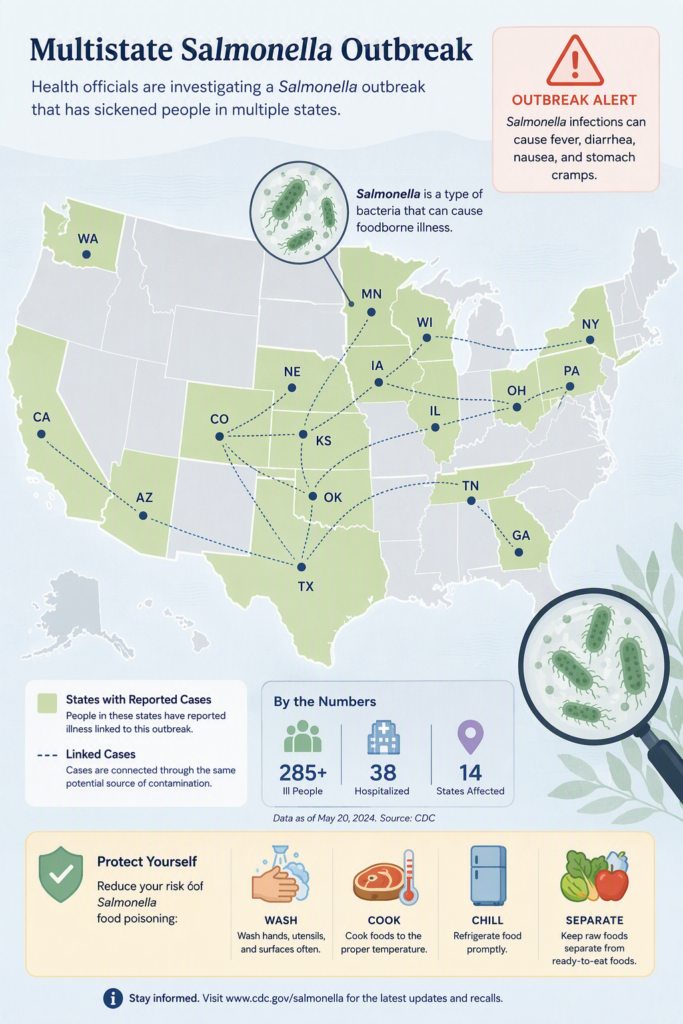
To investigate a foodborne illness outbreak, agencies review epidemiological information, lab findings, and distribution records. This outbreak response helps officials decide whether a public warning, recall, or other action is needed. The next sections explain how spread happens and why coordination matters.
How Salmonella Outbreaks Spread Across Multiple States
Salmonella bacteria can spread across state lines when a food item is grown, packed, shipped, or served in many places. That is why one contaminated ingredient can lead to illnesses far beyond one town or store. In recent updates, jalapeño peppers were identified as a likely source in one active outbreak.
To sort this out, investigators use a traceback investigation. They compare what ill people ate, where they bought or ordered food, and how the product moved through the supply chain. Regulatory officials and health agencies use these records to narrow the source of the outbreak during the timeframe of interest.
At the same time, agencies are careful with sensitive information. A particular product is not publicly named too early unless there is enough evidence. That protects the investigation while helping consumers act once the likely source becomes clear.
Why Multistate Outbreaks Require Coordinated Public Health Action
These outbreaks need teamwork because no single agency sees the full picture at first. Public health officials, local partners, and federal agencies each gather different types of information. When those pieces match, they can move faster to protect people.
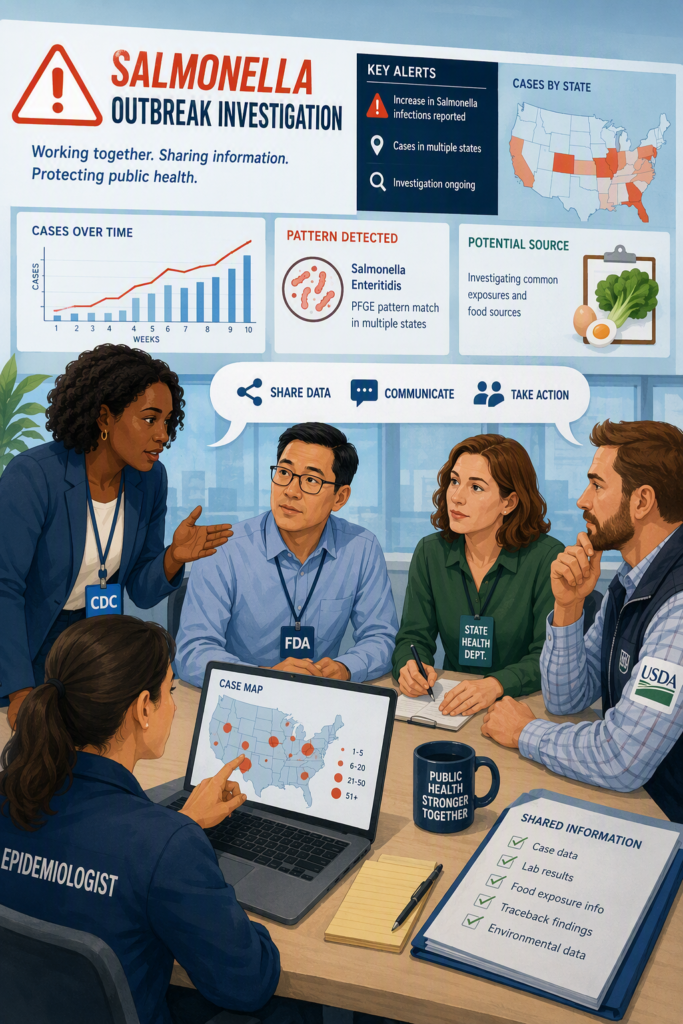
For example, traceback data, illness interviews, and lab testing may point to one food. Agencies may then start inspections, sampling, or recall actions. The compiled information explains that the Food Safety and Inspection Service may also appear in records when products under USDA oversight are involved.
After an investigation closes, agencies may post an executive investigation summary abstract tied to the reference number. During active cases, they share outbreak advisory updates so you can avoid risky foods, watch for changes, and understand if there is still a current ongoing risk.
Recognizing Symptoms and Risks of Salmonella Infection
If you think you were exposed, pay close attention to possible signs of salmonella infection. Many people recover without special treatment, but some need medical care. Early action matters if symptoms feel intense or do not improve.
You should contact a health care provider if you feel sick after eating a food connected to an outbreak or recall. The FDA also notes that reports from consumers can support outbreak or adverse event investigations. Knowing the common signs and who faces higher risk can help you respond quickly.
Common Signs to Watch for If Exposed
Symptoms can start after exposure to contaminated food, and they may feel like a typical stomach illness at first. Even so, a salmonella infection should not be brushed off if you recently ate a recalled item or were part of a known exposure setting.
Watch for signs such as these:
- Stomach cramps that come on with diarrhea or general stomach upset
- Feeling sick after eating a food named in outbreak updates
- Symptoms strong enough to limit normal daily activity
- Any illness that makes you think medical care may be needed
Some ill people recover without antibiotics, but that does not mean every case is mild. If symptoms are serious or you are unsure what to do, contact a healthcare provider. Sharing what you ate and when you ate it can help doctors and public health teams understand possible exposure.
High-Risk Groups During a Multistate Outbreak
Yes, certain high-risk groups can face a greater chance of severe illness during a Salmonella outbreak. The compiled information does not list every group in detail, but it does make clear that some people may need more urgent medical care than others.
This matters because not every salmonella infection is simple. In one outbreak update, officials noted that a small number of samples showed predicted resistance to some antibiotics. That means medical treatment decisions can become more important in harder cases.
If you or someone in your home has weaker immune systems or is having a rough course of illness, do not wait too long to seek help. A quick call to a provider can help you decide whether home care is enough or whether more immediate medical care is needed.
Critical Safety Steps and Food Handling Practices
Strong food safety habits are one of the best tools for prevention of infection during an outbreak. If a warning names contaminated food, do not eat it, serve it, or sell it. That same rule applies whether the item is produce, recalled shell eggs, or another product category.
You should also check official safety alerts often because advice can change as an investigation develops. Knowing what to do with food already in your kitchen and how to make careful choices when ordering meals can reduce risk. The next sections cover both.
What to Do With Potentially Contaminated Foods
Start by checking recent safety alerts and outbreak pages for the specific product named in the investigation. If you have contaminated food at home, do not taste it to see if it seems fine. The safest choice is to stop using it right away.
Take these steps:
- Compare the food in your home with the place of purchase and recall details
- Throw away or return any item listed in safety alerts
- Do not serve the food to family members or guests
- Clean surfaces or containers that touched it with hot soapy water
This approach is especially useful when stores or restaurants have already removed affected items, as happened with recalled jalapeño peppers from Taylor Fresh Foods and products recalled by Whole Foods. Quick action at home lowers the chance that one food turns into a larger problem for your household.
Guidelines for Eating Outside and Home Delivery Safety
Eating outside or ordering home delivery can still feel risky during an outbreak, so focus on the latest official guidance. Safety depends on whether the food business removed the affected item and whether the outbreak advisory says there is still a current ongoing risk.
In the recent jalapeño pepper outbreak, Chipotle Mexican Grill and QDOBA stopped serving the affected peppers after notification. Officials said they did not consider there to be a current ongoing risk from those establishments in this outbreak. That kind of update matters when deciding where to eat.
| Situation | What you should do |
|---|---|
| You plan on eating outside | Check outbreak updates and avoid businesses still tied to recalled products. |
| You order home delivery | Review notices for the restaurant and ask about the affected ingredient if needed. |
| You bought food from grocery stores | Check the place of purchase against recall details and product notices. |
| You are unsure about a meal | Skip it and choose another option until more information is available. |
Conclusion
In conclusion, staying informed about multistate Salmonella outbreaks is crucial for safeguarding your health and that of your loved ones. Understanding how these outbreaks spread and recognizing symptoms can prepare you to take appropriate action. Remember that proper food handling and safety practices, whether at home or dining out, play a significant role in preventing infection. By being proactive and vigilant, you can protect yourself and those around you from potential risks. If you have concerns about food safety or want more personalized advice, don’t hesitate to reach out for a consultation. Your health is worth it!
https://www.cdc.gov/foodborne-outbreaks/help-solve-outbreaks/index.html
https://www.cdc.gov/botulism/about/index.html
https://www.fda.gov/food/outbreaks-foodborne-illness/investigations-foodborne-illness-outbreaks