


Recognizing What to Do in Case of Heat Stroke Symptoms

Key Highlights
- Heat stroke happens when body temperature rises to dangerous levels, often above 104°F.
- Quick action matters, because heat stroke is a medical emergency that can damage vital organs.
- Watch for confusion, fainting, rapid pulse, hot skin, nausea, and other symptoms of heat stroke.
- First aid starts with moving the person to a cool place and using cool water or ice packs.
- Call emergency services right away and keep cooling the person while waiting for medical help.
- Heat, dehydration, heavy clothing, and strenuous activity all raise the risk.
Introduction
Heat stroke is one of the most serious heat illness conditions you can face during hot weather or intense activity. It happens when your body can no longer control a high temperature, and that can become dangerous very fast. The symptoms of heat stroke may start with dizziness, nausea, or weakness, then quickly turn into confusion, fainting, or slurred speech. If you know what to look for and what to do next, you can act faster when every minute counts.
Understanding Heat Stroke
Heat stroke is the most severe form of heat-related illness. It develops when body temperature rises so high that the body’s normal cooling system cannot keep up. This can happen in extreme heat or during strenuous physical activity.
Because it can affect the brain, heart, kidneys, and muscles, heat stroke is a medical emergency. You need fast cooling and medical help right away. The next sections explain what heat stroke is, how it differs from heat exhaustion, and why it threatens vital organs.
Definition and Overview
Heat stroke is a condition caused by the body overheating. In simple terms, it means your system can no longer lower its own temperature fast enough. A core body temperature of 104°F or higher is the main warning sign. This is not a minor heat illness.
It can develop after long exposure to a hot place, especially during hot and humid weather. It can also happen during intense physical activity when internal heat builds faster than the body can release it. In both cases, body temperature reaches a dangerous high temperature range.
What makes heat stroke so serious is the effect on vital organs. Without immediate treatment, it can harm the brain, heart, kidneys, and muscles. That is why it is treated as a medical emergency, not something to “wait out” and see if it gets better.
The Difference Between Heat Stroke and Heat Exhaustion
Heat exhaustion is a moderate heat illness, while heat stroke is the most severe stage. Heat exhaustion can lead to heat stroke if it is not treated. The key difference is that heat stroke causes brain-related changes, such as confusion, agitation, or fainting, along with a very high body temperature.
You may notice overlap between the two, including nausea, dizziness, and weakness. Still, heat stroke is a medical emergency, and heat exhaustion is a warning sign that the body is already under heavy heat stress.
| Condition | Main Features |
|---|---|
| Heat exhaustion | Dizziness, nausea, weakness, and dehydration without severe mental changes |
| Heat stroke | High body temperature, mental changes, fainting, slurred speech, possible seizures or coma |
| Urgency level | Heat exhaustion needs prompt care; heat stroke needs emergency medical services |
| Risk factors | Hot weather, dehydration, strenuous activity, poor heat adjustment, heavy clothing |
Why Heat Stroke Is a Medical Emergency
A person with heat stroke needs help right away because prolonged overheating can quickly affect blood flow and body systems. The longer the body stays overheated, the greater the danger. This is why you should call emergency services if you suspect heat stroke.
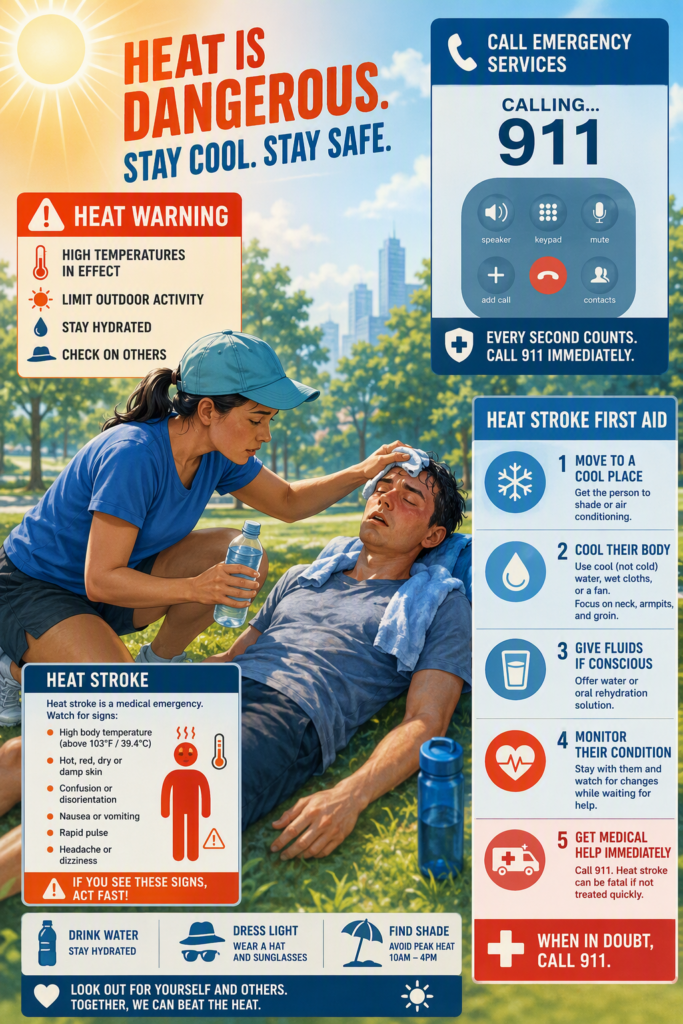
Heat stroke can injure vital organs in a short time. The brain may swell, thinking may become unclear, and damage can spread to the heart, kidneys, lungs, liver, and muscles. In severe cases, it may lead to heart failure, kidney failure, shock, coma, or death.
Fast medical treatment lowers the chance of organ damage. Even if you are not fully sure, it is safer to treat the situation as a medical emergency. Start cooling the person at once while waiting for professional medical care to take over.
Recognizing Symptoms of Heat Stroke
Recognizing the symptoms of heat stroke quickly can save a life. The most important clues are a high body temperature and mental or behavior changes that go beyond normal tiredness from heat illness.
You may see a rapid pulse, fast breathing, red or hot skin, nausea, headache, or fainting. An altered level of consciousness, such as confusion, agitation, slurred speech, or passing out, is a major warning sign. The sections below break down early signs, common symptoms, and danger signals.
Early Warning Signs to Watch For
Sometimes the symptoms of heat stroke build step by step. A person may first seem overheated, weak, or unusually tired. Then mental changes or a rising body temperature can make the situation much more serious.
Pay attention when someone has been in hot weather, direct sunlight, or doing strenuous activity. Early signs can shift fast, so do not ignore them, especially if the person is not acting like themselves.
- Dizziness or feeling faint
- Nausea or vomiting
- Headache or throbbing head pain
- Rapid pulse or fast breathing
- Muscle cramps, weakness, or unusual fatigue
- Mental changes such as confusion, irritability, or trouble speaking
If several of these appear together, treat it as a possible emergency situation. Move the person to a cool place and get medical help without delay.
Common Heat Stroke Symptoms
Once heat stroke develops, the signs of heat stroke are often more obvious. A very high temperature is the main physical clue, but behavior and awareness changes are just as important. Some people have dry, hot skin, while others may still be sweating, especially with exertional heat stroke.
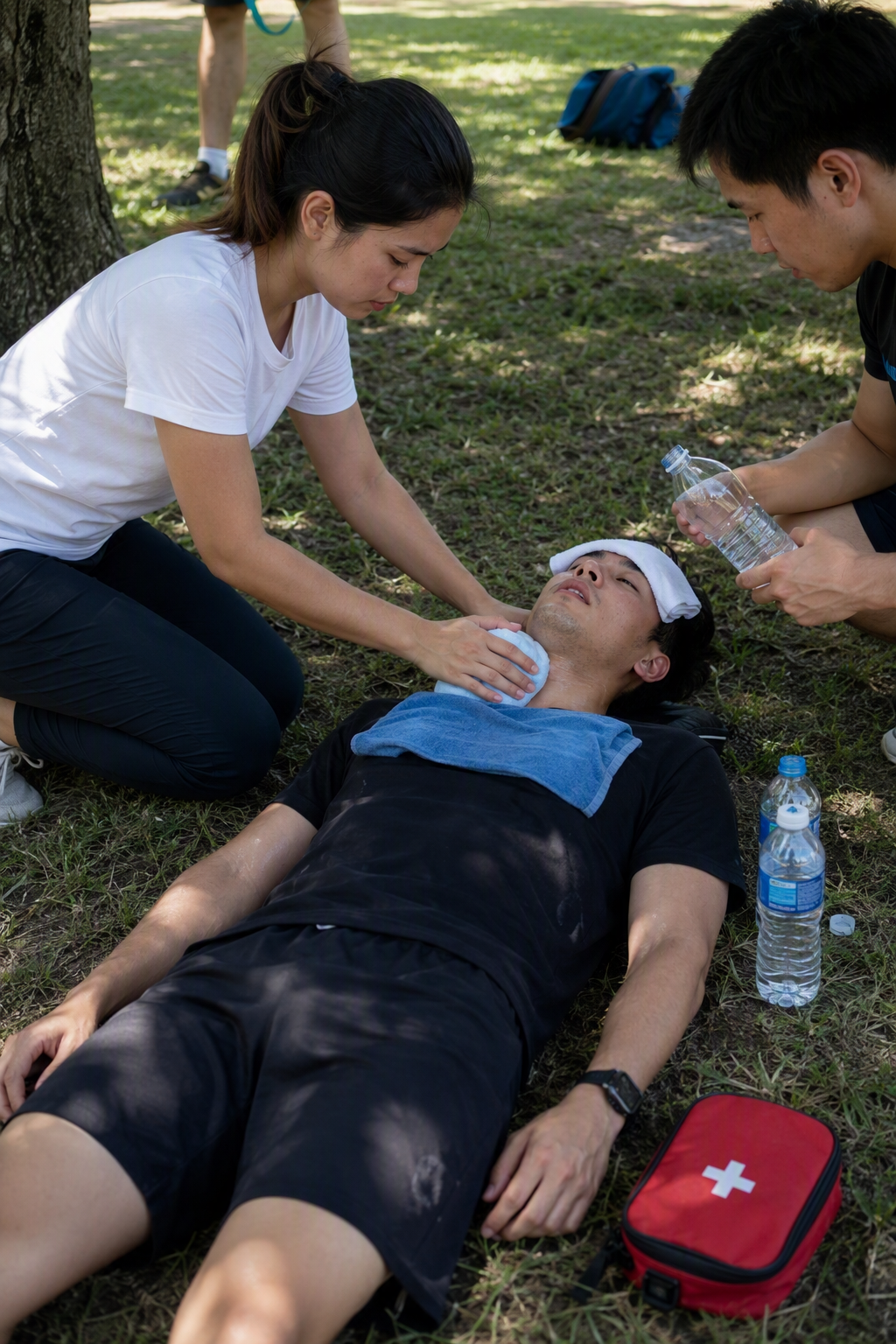
You should also watch breathing, skin color, and alertness. A person may not be able to explain what is wrong, so bystanders often notice the problem first.
- High temperature, often 104°F or higher
- Rapid pulse with fast, shallow breathing
- Flushed skin or skin that feels very hot
- Nausea and vomiting
- Slurred speech or blurred vision
- Altered level of consciousness, including confusion, fainting, seizures, or coma
These symptoms need immediate treatment. If you see them, call emergency medical services and start cooling the person at once.
When Symptoms Become Life-Threatening
Some symptoms show that heat stroke is moving into a life-threatening stage. These include collapse, seizures, severe confusion, coma, or a person who cannot respond normally. When this happens, it is already a full medical emergency.A very high body temperature that does not drop, along with signs of circulation problems such as low blood pressure, can mean the body is struggling to keep blood flow to vital organs. Fast breathing, severe weakness, and worsening mental status are also danger signals.
At this point, the risk of organ damage rises sharply. The brain, kidneys, heart, liver, lungs, and muscles can all be affected. If you notice these warning signs, do not wait for them to improve. Call emergency services, begin cooling, and stay with the person until help arrives.
Causes and Risk Factors of Heat Stroke
Heat stroke can start from outside heat, inside body heat, or both at the same time. Common causes include extreme heat, humid conditions, and strenuous activity that pushes the body beyond its cooling ability.
Some people face higher risk factors than others. Age, dehydration, certain medicines, health conditions, and lack of air conditioning all matter. In the next sections, you will see the main environmental triggers, who is most at risk, and which activities increase heat stress.
Environmental Triggers
Heat stroke often begins with the setting around you. A hot place can overwhelm the body, especially when humidity is high and there is little chance to cool off. During a heat wave, risk climbs even higher.
A home without air conditioning can become dangerous, and a parked car can heat up very quickly. Even if you are not exercising, hot weather alone can cause body temperature to keep rising.
- Extreme heat during summer or a heat wave
- Long periods in hot weather or direct sunlight
- Staying in enclosed spaces without air conditioning
- Sudden exposure to a hotter climate before acclimating
- Humid conditions that make sweating less effective
If you are caught in these conditions, cooling methods such as shade, indoor spaces, cool water, and wet towels become important protective steps.
Who Is Most at Risk for Heat Stroke?
Anyone can get heat stroke, but some groups have more risk factors. Very young children and adults over 65 have a harder time handling changes in body temperature. They also may become dehydrated more easily.
People with heart or lung disease, those who are overweight, inactive, or have had heat stroke before may face added risk. Certain medicines and alcohol can also interfere with normal cooling.
- Young children and older adults
- People in a hot place without cooling support
- Those wearing heavy clothing that traps heat
- People with chronic health conditions or dehydration
- Anyone using medicines or substances that affect sweating or fluids
If you fit one of these groups, be more cautious during hot weather and take early signs of overheating seriously.
Activities That Increase Your Risk
Physical activity creates internal body heat. When you combine that with hot weather, the risk of heat stroke rises fast. This is especially true if you are not used to exercising or working in the heat.
Exertional heat stroke can affect athletes, military members, outdoor workers, and anyone pushing too hard in high temperature conditions. Hydration matters, but fluids alone do not fully protect you if heat exposure is too high.
- Intense physical activity in hot weather
- Sports practice, distance running, or heavy labor
- Working through the hottest part of the day
- Exercise without time to adjust to heat
- Depending only on water or a sports drink without rest and cooling
To lower your risk of heat stroke, schedule effort for cooler hours and take breaks in a cool place.
Immediate Actions if Heat Stroke Is Suspected
If you suspect heat stroke, treat it as an emergency situation right away. Do not wait to see if the person improves. The first priority is to call emergency medical services and start cooling them immediately.
Move the person to a cool place, indoors or into shade, and begin simple first aid steps while waiting for medical help. Fast action can reduce harm. The next sections explain exactly what to do, when to call, and what mistakes to avoid.
First Steps to Take
When someone shows signs of heat stroke, act fast. Your goal is to lower body temperature while getting medical help on the way. Start with simple, direct first aid steps.
You do not need special equipment. Use whatever safe cooling tools are available around you. Every minute matters, so begin at once rather than waiting for symptoms to worsen.
- Call 911 or your local emergency services number
- Move the person into shade or a cool place
- Remove the person’s unnecessary clothing
- Use cool water on the skin by spraying, sponging, or pouring
- Place ice packs or cold, wet towels on the head, neck, armpits, and groin
- Fan the person while cooling to help lower temperature
Keep monitoring them until emergency medical services arrive. If possible, cover as much skin surface as you can with cooling methods.
When and How to Call Emergency Services
Yes, you should call emergency services if you suspect heat stroke. Do this as soon as you notice a very high temperature, confusion, fainting, slurred speech, seizures, or collapse. These are not symptoms to manage at home without professional medical services.
When you call the local emergency services number, clearly state that you suspect heat stroke. Share the person’s symptoms, what they were doing before the emergency situation began, and whether they are awake, confused, or unconscious. That kind of health information helps responders prepare.
Do not drive the situation by guesswork alone if the person is unstable. Heat stroke treatment usually needs an emergency room because cooling and monitoring for complications may be required. Keep cooling the person while waiting for emergency medical services.
What Not to Do When Providing Help
Good intentions can still lead to mistakes. When heat stroke is suspected, some common actions may delay medical care or create new risks. Focus on safe cooling and fast emergency response.
One important point is that heat stroke is different from a fever. Medicines used to lower a fever do not fix this problem. Also, a confused person may not safely handle drinks.
- Do not delay calling for medical care
- Do not give fever-reducing medicine
- Do not give fluids to drink if the person is confused or less alert
- Do not leave the person alone in the heat
- Do not stop cooling too soon if help has not arrived
An ice bath may be used in medical settings, especially for exertional cases, but if it is not practical, use cold water, wet towels, fans, and ice packs over as much skin surface as possible.
Administering First Aid for Heat Stroke
The recommended first aid for heat stroke is simple: call for help, move the person to a cool place, and cool the body as quickly as possible. Use cool water, wet towels, ice packs, or a cool shower if available and safe.
These first aid steps are meant to lower temperature until medical treatment takes over. The goal is safe, steady cooling without wasting time. Below, you will find practical ways to cool someone down and useful precautions to remember.
Safely Cooling Down the Person
Cooling should begin as soon as you suspect heat stroke. You do not need to wait for medical help to arrive. The faster you lower heat exposure, the better the chance of recovery.
Choose the quickest safe method you have. Indoors, shade, airflow, and water can all help. If the person can be moved safely, get them away from the hot place first.
- Move them to a cool place or shaded area
- Remove extra clothing so heat can escape
- Sponge or spray the skin with cool water
- Use a cool shower or cool tub if available and safe
- Apply ice packs to the neck, armpits, and groin
- Place cold, wet towels over the body and replace them often
Keep fanning the person to boost evaporation. Continue cooling until medical help takes over, especially if the person remains confused or weak.
Practical First Aid Tips and Precautions
A calm approach helps. First aid for heat stroke should stay focused on cooling, observation, and getting emergency care. You are buying time until trained professionals can provide full medical treatment.
It also helps to notice changes while you wait. Watch whether the person is becoming more alert or more confused. Pay attention to breathing, pulse, and signs of circulation.
- Stay with the person and keep them as still as possible
- Continue cooling with cold water, towels, or fans
- Place ice packs on key areas where blood vessels are close to the skin
- Do not rely on a sports drink as treatment for a confused person
- Share helpful information with responders about symptoms and heat exposure
- Watch for worsening mental state, breathing trouble, or collapse
These steps support safer first aid, but they do not replace emergency medical care.
Conclusion
In conclusion, recognizing and responding to heat stroke symptoms can be a matter of life and death. Understanding the key signs, knowing the risk factors, and being prepared to act swiftly can make all the difference in a crisis. Whether you’re outdoors during the summer or involved in strenuous activities, always prioritize hydration and awareness of your body’s signals. Remember, heat stroke is a severe medical emergency that requires immediate action. If you suspect someone is experiencing heat stroke, don’t hesitate to call for emergency help. Your proactive approach can save a life. For more information on how to stay safe in extreme heat conditions, feel free to reach out for guidance and support.
Frequently Asked Questions
How long does recovery from heat stroke usually take?
Recovery from heat stroke varies. With fast medical treatment and medical help, some people recover well, especially if body temperature is lowered quickly. Others may need longer recovery if vital organs were affected. Lasting problems can continue for weeks, months, or even longer in severe cases.
Can you prevent heat stroke and what steps should be taken?
Yes, heat stroke prevention is often possible. Limit exposure to extreme heat, drink enough fluids, wear light clothing, rest in shaded or air-conditioned spaces, and use cool water to stay comfortable. Know your risk factors, and ease into hot-weather activity instead of pushing too hard too soon.
Are there specific warning signs heat stroke is becoming life-threatening?
Yes. Heat stroke becomes life-threatening when symptoms of heat stroke include severe confusion, collapse, seizures, coma, or a very high body temperature that is not improving. These signs suggest vital organs may be at risk. Call emergency services immediately and start rapid cooling right away.
https://my.clevelandclinic.org/health
https://my.clevelandclinic.org/health/diseases
https://order.store.mayoclinic.com/flex/mmv/frstadf
https://www.instagram.com/americancprcareassociation
https://www.albertahealthservices.ca:443/findhealth/default.aspx