


Best Remedies and Drugs for Lactose Intolerance

Key Highlights
- Lactose intolerance affects many people in the U.S. and can disrupt your digestive system after dairy products.
- Common symptoms of lactose intolerance include bloating, gas, diarrhea, and abdominal pain after milk products.
- The best over-the-counter options are often lactase enzyme tablets, drops, or other lactose intolerance supplements.
- Natural remedies include probiotics, smaller servings of dairy, and choosing lactose-free foods.
- Many people ask what works fastest, what is safe daily, and which remedies feel most effective.
- Simple lifestyle changes can ease symptoms and help you keep better nutrition
Lactose intolerance happens when your digestive system has trouble breaking down the natural sugar in milk products. That can lead to uncomfortable symptoms after eating or drinking dairy. If this sounds familiar, you are not alone. In this blog, you will learn what lactose intolerance is, how it is diagnosed, which remedies and drugs may help, and what natural steps can make daily eating easier without giving up good nutrition.
Understanding Lactose Intolerance in the United States
Many people in the United States live with lactose intolerance, and the symptoms can appear soon after milk products or other dairy foods. Your digestive system may not fully handle lactose, which is the natural sugar found in dairy milk.
For many readers, the most useful health information is simple: track what you eat, notice when symptoms of lactose intolerance show up, and see how your body responds when you cut back. That pattern often helps point to the problem before testing confirms it.
Common Symptoms and Diagnosis Methods
The symptoms of lactose intolerance usually begin after your digestive system struggles to break down lactose. You may notice abdominal pain, gas, bloating, or diarrhea after dairy foods. These signs can look like other stomach issues, so it helps to watch when they happen and what you ate.
A healthcare professional may suspect lactose intolerance based on your symptoms and whether they improve after you reduce dairy. A hydrogen breath test can confirm it. For this test, you drink a liquid with high lactose, then your breath is checked at regular intervals. Too much hydrogen suggests poor lactose digestion.
Common signs include:
- Abdominal pain or cramping
- Bloating and gas
- Loose stools after milk products
- Symptoms tied to a possible underlying condition
Causes and Risk Factors
Lactose intolerance develops when lactase production is too low. Lactase is the enzyme your small intestine uses to digest lactose. Without enough of it, lactose passes through and causes discomfort. That is why lactase enzyme supplements can help some people digest dairy products more easily.
Sometimes the problem is linked to an underlying condition. If that condition is treated, your body may recover some ability to digest lactose, though it can take months. This is different from a milk allergy, which involves a different body response.
Important risk factors and causes include:
- Low lactase production in the small intestine
- Certain health conditions affecting digestion
- Eating amounts of dairy that exceed your tolerance
Best Over-the-Counter Drugs for Lactose Intolerance
For most people, the best over-the-counter drugs for lactose intolerance are lactase enzyme supplements. These products act like the digestive enzyme your body may not make in enough amounts. They can help you digest lactose before symptoms start.
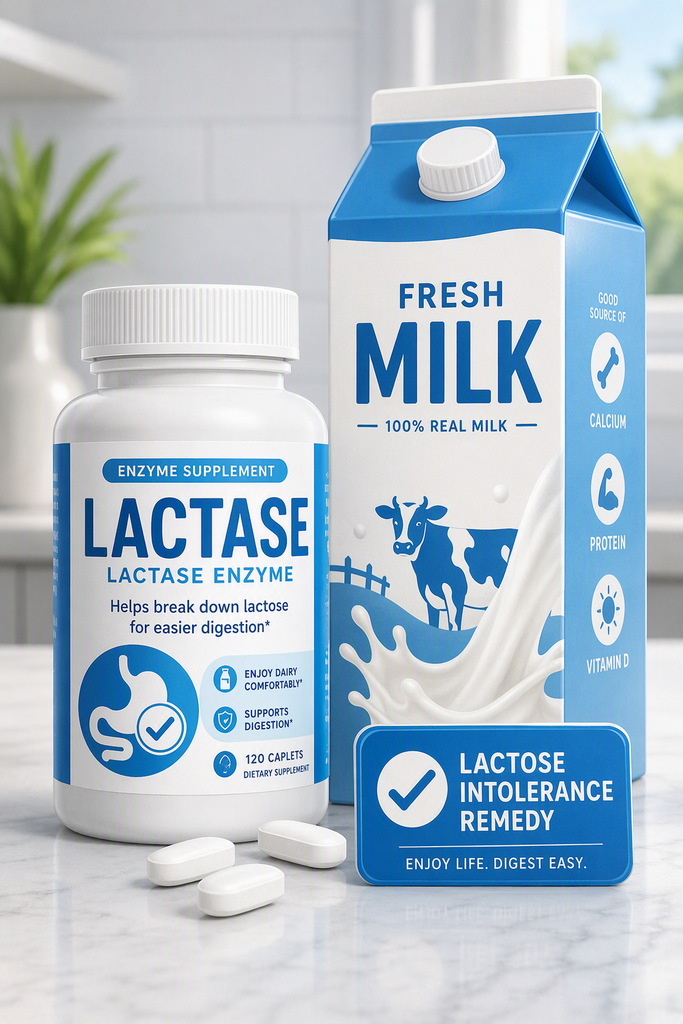
You can find lactose intolerance supplements as tablets, chewable tablets, drops, and other counter products. Some are taken right before eating dairy, while lactase drops can be added to milk. They do not help everyone, but they are often the first nonprescription option worth trying.
Popular Lactase Enzyme Supplements
Lactase enzyme tablets are a common choice because they are easy to carry and simple to use before meals. These over-the-counter supplements supply the enzyme that helps your digestive system break down lactose. If they work well for you, they may reduce gas, bloating, and cramps after dairy.
Some people prefer chewable tablets because they are convenient at restaurants or while traveling. Others use liquid drops at home by adding them to milk before drinking it. The main goal is the same: help your body process lactose more smoothly.
| Supplement type | How it is used | Main benefit |
|---|---|---|
| Lactase enzyme tablets | Taken just before a meal or snack | Helps digest lactose in dairy foods |
| Chewable tablets | Chewed at the first bite | Easy and portable |
| Lactase drops | Added to a carton or serving of milk | Helps break down lactose before drinking |
Tips for Choosing Effective Lactose Intolerance Pills
Not every lactose intolerance pill works the same way for every person. Your best choice often depends on the amount of lactose in your meal, how sensitive you are, and whether you want tablets, chewable tablets, or drops. Many people take them right before dairy because that is when they work best.
Daily use may be reasonable for some people, but it is smart to talk with a health care provider if you need them often or still have symptoms. If a product helps, you may notice relief quickly when eating dairy.
Look for these points when comparing lactase products:
- A form you will actually use consistently
- Directions that match the amount of lactose you eat
- Clear timing instructions before meals or snacks
- An option like chewable tablets if you need convenience
- A response that improves symptoms without guesswork
Prescription Medications for Lactose Intolerance Relief
Most lactose intolerance care does not start with prescription medications. Instead, a healthcare professional usually suggests diet changes, lactose-free products, or enzyme support first. That is because many cases improve with simpler steps.
Still, prescription treatments may come into the picture when lactose intolerance is tied to another medical issue. In that situation, the focus is often on treating the root cause rather than lactose alone. That makes the next question important: when are prescription options actually needed?
When Are Prescription Options Recommended?
Prescription medications are usually considered when your symptoms point to an underlying condition rather than routine lactose intolerance alone. If treating that condition helps your gut recover, your body may regain some ability to digest lactose over time. This process can take months.
You should speak with a health care provider if symptoms are ongoing, confusing, or more intense than expected after small amounts of dairy. That is especially important if simple changes have not helped.
In practice, prescription options are recommended when a provider thinks severe lactose intolerance may be part of a larger digestive problem. The goal is not just short-term relief. It is to understand what is happening and choose treatment that matches the cause.
Benefits and Considerations of Prescription Treatments
Prescription treatments can help when your digestive system is affected by another health issue. In those cases, treating the deeper problem may reduce lactose intolerance symptoms and improve your ability to handle dairy later. That can be more useful than relying only on symptom control.
At the same time, prescription treatments are not necessary for everyone. Many people do well with diet changes, lactose-free choices, and lactase support. If you are considering a stronger approach, talk through the expected benefit and any concerns with your provider.
Keep these points in mind:
- Prescription treatments are usually for an underlying cause
- They may take time to improve symptoms
- They are not the first step for most people
Natural Remedies That Help with Lactose Intolerance
Natural remedies for lactose intolerance often focus on making milk products easier to handle instead of forcing your body to tolerate too much at once. Small food changes can make a real difference in daily comfort.
You might try probiotics for gut health, smaller amounts of dairy, or lactose-free substitutes. Some people also do better with cultured products like yogurt. These approaches are simple, practical, and often used along with enzyme support. Next, let’s look at the home strategies people use most.
Herbal Solutions and Home Treatments
Home treatments for lactose intolerance are mostly about lowering your exposure to lactose while protecting your nutrition. You may not need to remove all dairy. Many people do better with smaller servings of dairy, especially when eaten with meals. Trial and error can help you learn your own limit.

Another useful step is switching some foods. Soy milk and rice milk are common milk substitutes, and they can help reduce symptoms while still fitting into your routine. If you want even more variety, many people also look for oat milk options in stores.
Helpful lifestyle changes include:
- Choose smaller servings of dairy at one time
- Drink milk with meals instead of by itself
- Use soy milk or rice milk in place of regular dairy milk
Probiotics for Improving Digestive Comfort
Probiotics are living organisms that support gut health and may help your digestive system handle lactose a little better. They are found in some yogurts with live cultures and in supplement form. If other methods have not helped enough, probiotics may be worth trying.
They are often used for general digestive comfort, including issues like diarrhea and irritable bowel syndrome. For lactose malabsorption, the benefit may come from helping your gut process food more smoothly. They are generally considered safe for many people.
You can try probiotics through:
- Yogurt with active or live cultures
- Capsule supplements
- A routine that includes balanced nondairy foods
- Tracking how your body responds over time
Conclusion
In conclusion, managing lactose intolerance can be made easier with the right remedies and treatments. From over-the-counter lactase enzyme supplements to prescription options, there’s a variety of solutions that cater to individual needs. Additionally, exploring natural remedies, such as herbal solutions and probiotics, can provide enhanced digestive comfort. It’s essential to find what works best for you through trial and error, considering your symptoms and lifestyle. Taking proactive steps towards managing lactose intolerance not only improves your daily comfort but also enhances your overall well-being. If you’re curious about personalized options and further guidance, don’t hesitate to reach out for a free consultation.
Frequently Asked Questions
Are lactose intolerance pills safe for daily use?
Many lactose intolerance pills use lactase enzyme and are taken when you eat dairy. Some people use them for daily use, but if you need them often or still have symptoms, talk with a health care provider. Ongoing symptoms may mean you need a different plan.
How fast do remedies for lactose intolerance work?
Some lactose intolerance remedies work quickly. Lactase tablets or chewables are usually taken right before dairy so they can help digest lactose during the meal. Food changes may take a little longer, but they can still bring quick relief from symptoms of lactose intolerance once triggers are reduced.
What are the possible side effects of common drugs and supplements?
Common lactose intolerance drugs and supplements are often well tolerated, but they do not help everyone. If your digestive system still reacts, the issue may be the food amount or an underlying cause. Review any concerns, symptoms, or side effects with a healthcare professional for safer guidance.
https://www.webmd.com/drugs/2/index
https://www.webmd.com/digestive-disorders/digestive-diseases-lactose-intolerance
https://www.webmd.com/diet/foods-high-in-lactose
https://www.lactaid.com/products/lactaid-fast-act-caplets
https://nymag.com/strategist/article/best-irritable-bowel-syndrome-remedies.html