


How to Test for Lactose Intolerance: A Complete Guide

Key Highlights
- Lactose intolerance happens when your body does not make enough lactase enzyme to digest lactose in dairy foods.
- Common symptoms of lactose intolerance include bloating, gas, abdominal pain, rumbling, nausea, and diarrhea after dairy.
- A lactose intolerance test may include a breath test, blood test, or stool test, depending on your age and symptoms.
- The hydrogen breath test is one of the most common ways to check how your body handles lactose.
- During testing, you may drink a flavored liquid with lactose, then give breath or blood samples over time.
- Getting tested can help you confirm the cause of symptoms and plan meals with less discomfort.
Introduction
If dairy products seem to upset your stomach, you may be wondering if lactose intolerance is the reason. This condition affects how your digestive system handles lactose, the sugar found in milk. When lactose is not broken down well, symptoms of lactose intolerance can show up after eating or drinking certain foods. Testing can help you move from guessing to knowing. Once you understand what is happening, you can make better choices about food and symptom relief.
Understanding Lactose Intolerance
Lactose intolerance is a reaction in your digestive system to lactose, a type of sugar in milk products. It happens when your body does not have enough lactase enzyme to break that sugar down in the small intestine.
When lactose stays undigested, it moves through the gut and can lead to symptoms of lactose intolerance such as gas, bloating, cramps, and diarrhea. If you notice a pattern after dairy, testing may help confirm the cause and rule out something else.
What Causes Lactose Intolerance?
The main cause of lactose intolerance is lactase deficiency. Your small intestine needs lactase to break lactose into smaller parts your body can absorb. If you do not make enough, lactose is not processed well.
That leaves undigested lactose moving into the large intestine, where bacteria break it down. This process creates extra gas and draws in more water, which can trigger cramps, bloating, and loose stools. These symptoms often appear after milk or other dairy foods.
In many people, lactase levels naturally drop with age. Some people develop secondary lactose intolerance after injury, infection, surgery, or disease affects the small intestine. Conditions linked to this include celiac disease, inflammatory bowel disease, and other causes of damage to the bowel lining.
Signs and Symptoms to Watch For
You may want testing if your symptoms seem to follow dairy foods. The pattern matters. Some people react after milk, ice cream, or cream, while others only notice trouble after larger servings.
Common symptoms of lactose intolerance can include:
- Bloating and a swollen stomach
- Abdominal pain or cramping
- Gas, rumbling, or gurgling
- Diarrhea, with or without nausea
Keep in mind that these symptoms can overlap with irritable bowel syndrome and other digestive problems. Timing can also vary because food takes time to move through your system. If symptoms keep returning after dairy, that is a good reason to talk with a health care provider about testing.
Who Is Most at Risk in the United States?
Risk is not the same for everyone. Lactose intolerance becomes more common as people get older because lactase deficiency often increases over time. Family background also plays a role in how likely you are to keep digesting milk products well into adulthood.
Information discussed by the National Institute of Diabetes points to differences across demographics. People with Asian, Native American, and Hispanic backgrounds are more likely to have lactose intolerance. People with Northern European, African, and Middle Eastern backgrounds may be more likely to continue producing lactase.
| Group or Factor | General Risk Pattern |
|---|---|
| Older children and adults | Higher risk as lactase production often drops with age |
| Asian background | More likely to have lactose intolerance |
| Native American background | More likely to have lactose intolerance |
| Hispanic background | More likely to have lactose intolerance |
| Northern European background | More likely to maintain lactase production |
Reasons to Get Tested for Lactose Intolerance
A lactose intolerance test can help you understand whether dairy is truly behind your digestive trouble. If symptoms of lactose intolerance keep coming back, guessing may only add frustration. Clear answers help you adjust your diet with more confidence.

Testing also helps a health care provider separate lactose intolerance from another food intolerance or bowel issue. That matters because similar symptoms can come from several conditions. The next sections explain when testing makes sense and what else might need to be considered.
When Should You Consider Testing?
Think about a lactose intolerance test if milk products seem to trigger repeated digestive problems. Maybe you feel fine most of the time, then notice trouble after cereal with milk, ice cream, or creamy foods. That pattern is useful information.
You should consider testing if you have:
- Repeated uncomfortable symptoms after dairy
- Symptoms that affect meals, work, or sleep
- New digestive issues after illness, surgery, or treatment
- Concerns that an underlying condition may be involved
Another reason to get checked is uncertainty. Many people remove foods without knowing the real cause. Since some conditions can damage the small intestine and lead to secondary lactose intolerance, getting evaluated can help you avoid missing something that needs medical attention.
Distinguishing Symptoms from Other Conditions
Digestive symptoms after eating do not always point to lactose intolerance. Gas, bloating, cramps, and diarrhea can also happen with irritable bowel syndrome, celiac disease, or other forms of food intolerance. That is why the full picture matters.
It also helps to know that lactose intolerance is not the same as a milk allergy. A milk allergy involves the immune system reacting to a milk protein, and it can cause symptoms beyond the gut. Lactose intolerance is a problem with digesting milk sugar.
A provider may look at whether your symptoms suggest:
- A food intolerance linked to lactose
- A milk allergy with immune system involvement
- Another bowel condition such as celiac disease
Medical Tests for Diagnosing Lactose Intolerance
Doctors use several tools to confirm lactose intolerance. The most common options are a hydrogen breath test, a blood test that checks sugar changes after lactose, and a stool acidity test. Each lactose intolerance test looks at how your body handles lactose in a different way.
The right test depends on your age, symptoms, and medical history. Adults often have a breath test or blood test, while infants and small children may have a stool acidity test. Here is how each one works and what you can expect.
The Lactose Tolerance Blood Test Explained
A lactose tolerance blood test checks whether your body absorbs lactose properly. First, a health care professional takes a blood sample to measure your starting blood sugar. Then you drink a liquid that contains lactose.
Over a period of time, more blood samples may be taken to see whether your glucose level rises. If your small intestine breaks down and absorbs lactose well, your blood sugar should go up. If it does not rise much, lactose may not be getting absorbed as expected.
This test helps with the diagnosis of lactose intolerance when more information is needed. You can expect finger sticks or blood draws, some waiting between samples, and possible mild digestive symptoms after drinking lactose. The test is useful, though some people may find the repeated sampling a little inconvenient.
Hydrogen Breath Test: How It Works
The hydrogen breath test is one of the most common ways to check for lactose malabsorption. You start by giving a breath sample, then drink a lactose-containing liquid. After that, you breathe into a collection device at set times.
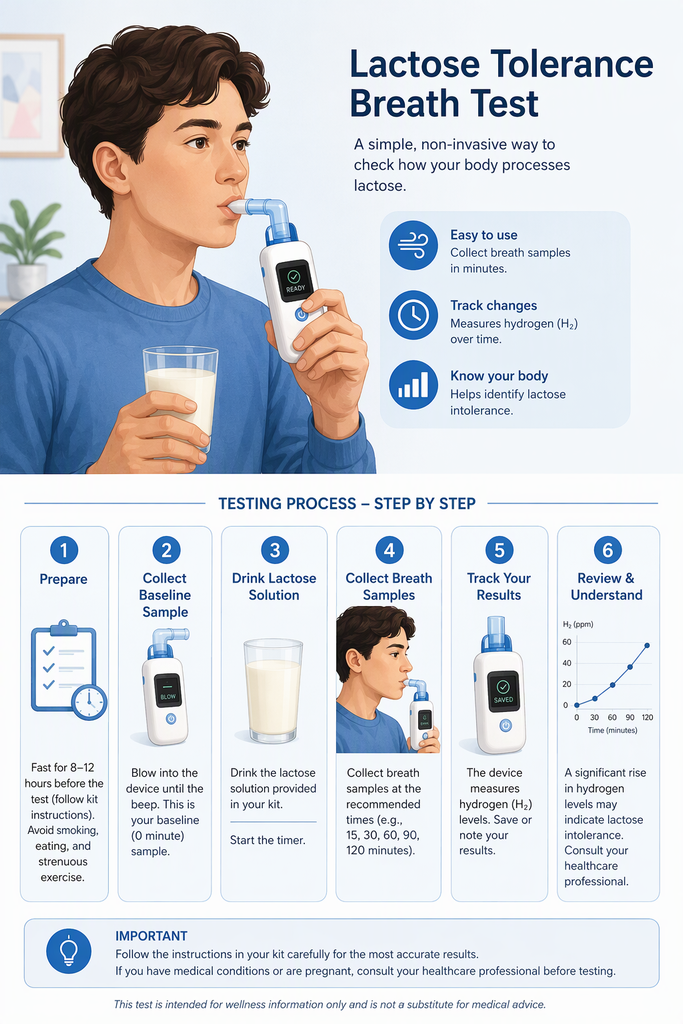
Why does this work? If your body’s ability to absorb lactose is reduced, the lactose reaches your colon undigested. Bacteria there ferment it and produce gas. That raises breath hydrogen, and the amount of hydrogen in your breath can be measured.
Higher breath hydrogen levels after lactose suggest poor absorption. The test is noninvasive, which many people prefer. You may notice your usual symptoms during the test if lactose triggers them, but the process itself is simple and does not involve needles.
Stool Acidity Test: When Is It Used?
The stool acidity test is usually used for infants and small children. They may not be able to complete a breath test well, so this option gives providers another way to look for lactose digestion problems.
After the child consumes lactose, a stool sample is checked for lactic acid and other byproducts. These can appear when undigested lactose passes through the digestive system because the small bowel did not absorb it properly.
This test can support the diagnosis when symptoms of lactose intolerance are present in a young child. It is especially helpful when age makes other testing harder. Parents should know that it does not treat the problem, but it can help explain why certain milk products are causing trouble.
Preparing for Lactose Intolerance Testing
Preparation matters because it can affect your lactose intolerance test results. Your health care provider may give you specific dietary restrictions or other pre-test steps based on the type of test you are having. Following those instructions closely helps improve accuracy.
You should not assume every test is the same. A breath test, blood test, or stool test may involve different directions. Asking questions ahead of time can make the day go more smoothly. Let’s look at the common steps and what test day may feel like.
Dietary Restrictions and Pre-Test Steps
Before testing, your health care professional may tell you how to adjust your diet for a short period of time. The goal is to avoid anything that could interfere with the results and make the test harder to interpret.
Common pre-test steps may include:
- Following temporary diet instructions before the appointment
- Arriving ready to drink a flavored liquid with lactose if required
- Setting aside enough time, since testing may take a period of time
Because directions can vary, it is smart to confirm them in advance. If you are being tested for lactose intolerance after a recent illness or bowel problem, mention that too. The provider may want to consider whether symptoms could be tied to a temporary issue affecting your intestine.
What to Expect on Test Day
On test day, the exact process depends on the type of lactose intolerance test. For a breath test, you will usually give an initial breath sample, drink a lactose liquid, and then provide more breath samples while your breath hydrogen levels are measured over time.
For a blood-based test, a blood sample is taken before and after you drink lactose. You may feel slight pain from the needle, but the discomfort is usually brief. Then you wait between samples while the team tracks changes in blood sugar.
Some people notice uncomfortable symptoms during testing because lactose is part of the procedure. That can include bloating, cramps, or gas if lactose is your trigger. Even so, the testing process itself is generally straightforward and closely monitored.
Alternatives to Clinical Testing
Not everyone starts with a clinic visit. Some people first try at-home lactose intolerance tests or change their diet to see whether symptoms improve. These options may be useful for a first look, but they do not always give the same clarity as formal testing.
That is important because dairy products may not be the only issue. A food allergy or another digestive problem can look similar at first. If you use an at-home approach, it helps to know both its limits and its value.
At-Home Lactose Intolerance Tests: Are They Reliable?
At-home lactose intolerance tests may offer clues, but they should be viewed carefully. They are not always enough for a firm diagnosis of lactose intolerance, especially if your symptoms are severe, inconsistent, or overlap with other digestive conditions.
Here is where they may help:
- They can prompt you to notice patterns after a certain amount of lactose
- They may support a conversation with a provider about symptoms
- They can be a first step before formal medical evaluation
Still, home results should not replace medical advice when the picture is unclear. If you get a positive result from one of these tests, bring that information to your provider. A formal lactose intolerance test may still be needed to confirm what is really happening and rule out other causes.
Elimination Diet as a Self-Assessment Method
An elimination diet is a simple self-check many people try first. You remove dairy foods and milk products for a short time, then watch whether lactose intolerance symptoms improve. After that, you slowly reintroduce lactose and note how your body responds.
This method can be helpful because it focuses on real-life eating patterns. Some people discover they react only to larger servings, while others tolerate hard cheese better than milk or ice cream. It can also reveal whether symptoms change with different foods or amounts.
Even so, an elimination diet does not confirm every food intolerance. It also cannot tell you whether symptoms come from lactose alone or from another condition. If symptoms keep coming back, a medical test offers a clearer answer.
Next Steps After Testing
Once your test results are back, the next step is understanding what they mean for daily life. A diagnosis of lactose intolerance can explain long-standing symptoms, but it does not mean you must avoid every dairy food forever. Tolerance levels vary from person to person.
Your health care provider can help you decide what to do next. That may include trying lactase supplements, adjusting portion sizes, or checking whether another issue is involved. The sections below show how results are usually read and how people often manage this condition.
How to Interpret Test Results
Interpreting test results depends on the test type. In general, providers look for signs that your body is not absorbing lactose well. The findings are then matched with your symptoms, because numbers alone do not tell the full story.
For example, a provider may look at:
- Low change in blood glucose after lactose
- High breath hydrogen levels after drinking lactose
- Whether the results fit symptoms linked to lactose malabsorption
No test is perfect in isolation, which is why context matters. A diagnosis of lactose intolerance is strongest when the test findings and your symptom pattern point in the same direction. If results are unclear, your provider may consider another test or another explanation for your digestive issues.
What to Do if Diagnosed with Lactose Intolerance
If you are diagnosed with lactose intolerance, start by learning your personal limit. Some people can handle small amounts of dairy foods, especially with meals, while others feel better avoiding more of them. You may not need a one-size-fits-all plan.
Helpful options include:
- Using lactase supplements before foods with lactose
- Choosing lower-lactose or lactose-free products
- Trying alternatives such as rice milk or soy milk
Nutrition still matters. If you cut back on dairy, pay attention to calcium and vitamin D, since dairy foods are common sources of both. If your symptoms are confirmed through a home test, speak with a provider before making big diet changes so you can build a plan that is both safe and practical.
Special Considerations for Children and Adolescents
Children and teens can be tested for lactose intolerance, but the approach may be different from what adults get. Age, symptoms, and the child’s ability to complete a test all matter. The goal is still the same: to find out whether milk products are causing digestive trouble.
Because the small intestine and digestion can be affected by other conditions, pediatric testing methods are chosen with care. Once testing is done, diet changes should also support growth. The next sections cover how testing works for kids and how families can adapt meals.
Pediatric Testing Methods
Pediatric testing methods depend on the child’s age and symptoms. Older children may be able to complete a lactose intolerance test similar to an adult, such as certain blood tests or a breath-based study. Younger children often need a different option.
In infants and toddlers, the stool acidity test is commonly used. It can show whether lactose is being absorbed properly after feeding. This is useful when a child cannot reliably perform a breath test or explain symptoms clearly.
Doctors also think about other causes before making a final call. A milk allergy, for example, is not the same as lactose intolerance and may need a different evaluation. That is why pediatric testing methods are chosen to fit both the child’s age and the need to rule out other explanations.
Adapting the Diet for Kids
If your child has lactose intolerance, diet changes should be practical and balanced. Some kids can handle small amounts of dairy foods, while others need more support. The best plan is one that reduces symptoms without missing key nutrients.
Families often try lactose-free products or milk alternatives such as rice milk or soy milk. Some also use powder lactase enzyme or other lactase products to help with foods that contain lactose. This can make meals easier without cutting out every familiar food.
As you make changes, remember growth needs. Children who eat less dairy may need attention to vitamin D and calcium intake. A provider can help you decide whether food choices alone are enough or if a supplement should be considered.
Frequently Asked Questions (FAQ)
Curious about lactose intolerance? Many people wonder how to recognize the symptoms, such as abdominal pain or gastrointestinal distress, after consuming dairy products. A common inquiry involves the efficacy of tests like the hydrogen breath test or stool acidity test—are they reliable for diagnosing lactose malabsorption? Some might also question the role of secondary lactose intolerance related to an underlying condition, such as irritable bowel syndrome or inflammatory bowel disease. Understanding these aspects can demystify the lactose intolerance testing process.
How Accurate Are Lactose Intolerance Tests?
A lactose intolerance test is most useful when results match your symptoms of lactose intolerance. A rise in breath hydrogen or changes seen from a blood sample can support the diagnosis of lactose intolerance. Accuracy improves when your provider also considers your eating pattern, symptoms, and medical history.
Are There Any Risks Involved With Testing?
Most forms of lactose intolerance test carry little risk. A breath test is noninvasive, while a blood sample may cause slight pain or brief soreness. You may also notice temporary digestive symptoms after drinking lactose, but serious complications are not expected from standard testing.
How Quickly Will I Get My Results?
Timing depends on the lactose intolerance test. Some blood tests and breath hydrogen levels may be reviewed soon after the procedure, while final test results may take longer based on the clinic. Your health care provider can tell you when to expect answers and next steps.
Conclusion
In summary, understanding lactose intolerance is crucial for managing your digestive health. By recognizing the signs, knowing when to seek testing, and exploring various testing options, you empower yourself to make informed decisions about your diet and lifestyle. Whether you opt for clinical tests or consider at-home assessments, knowing how to interpret your results is essential for your well-being. Remember, if you suspect lactose intolerance, it’s important to consult with a healthcare professional for proper guidance. Taking these steps will not only alleviate discomfort but also enhance your quality of life. For personalized support, don’t hesitate to get in touch for a free consultation.
https://medlineplus.gov/lab-tests/lactose-tolerance-tests
https://my.clevelandclinic.org/health/diagnostics/24508-blood-tests
https://www.northshoregastro.org/2023/11/03
https://medlineplus.gov/abdominalpain.html