

How to Manage Your Anti-Anxiety Drugs Effectively

Key Highlights
- Follow your treatment plan closely and ask your healthcare provider how your anxiety medication should be taken.
- Learn the basics of drug administration, including timing, food instructions, and what to do with a missed dose.
- Track anxiety symptoms and note any side effects, such as sleep changes, stomach upset, or weight gain.
- Use reminders, routines, and pill organizers to stay consistent every day.
- Never stop medication suddenly without medical guidance.
- Tell your provider about all medicines, supplements, and over-the-counter products you use.
Introduction
Managing medicine for an anxiety disorder can feel like a lot at first. You may wonder if you are taking it the right way, what changes to expect, or how it fits into your broader mental health care. The good news is that a clear treatment plan can make things much easier. When you understand your medicine, follow directions, and stay in touch with your doctor, you can handle treatment with more confidence and fewer surprises.
Understanding Anti-Anxiety Medications
Anti-anxiety medication can be a safe and effective part of care for many people. Some people use it alone, while others combine it with therapy. Your doctor chooses the type of medication based on your symptoms of anxiety, medical history, and other mental health conditions.
In some cases, medicines used in the treatment of depression are also used for anxiety. That is why it helps to know what each option does. The next sections explain common classes and how they work in the body.
Common Types of Anti-Anxiety Drugs
Several classes are used to treat anxiety. Selective serotonin reuptake inhibitors are often first-line options. Serotonin and norepinephrine reuptake inhibitors are also commonly used. Benzodiazepines may help with short-term relief, while tricyclic antidepressants are sometimes used but can cause more side effects.
Here is a simple text table that compares each type of medication:
| Type of medication | Main point |
|---|---|
| Selective serotonin reuptake inhibitors | Often effective for anxiety disorders and usually have fewer side effects than tricyclic antidepressants |
| Norepinephrine reuptake inhibitors and serotonin-based SNRIs | Increase serotonin and norepinephrine and are also first-line choices for many anxiety disorders |
| Benzodiazepines | Work well for short-term relief of physical symptoms of anxiety but may lead to tolerance and dependence |
| Tricyclic antidepressants | Can help some anxiety disorders but may cause dry mouth, constipation, blurry vision, and blood pressure changes |
Groups like the Anxiety and Depression Association of America explain these options in patient-friendly ways. Your doctor will decide which one best fits your needs.
How These Medications Work in the Body
Different medicines work in different ways. A serotonin reuptake inhibitor helps by blocking the reabsorption of serotonin in the brain. This can leave more serotonin available, which may improve mood and reduce anxious feelings over time.
Other medicines act on both serotonin and norepinephrine. Some, like benzodiazepines, can quickly promote relaxation and reduce muscular tension and other physical symptoms of anxiety. That faster effect is one reason they are often used for short-term support rather than long-term daily treatment.
Because each medicine acts differently, drug administration matters. You need to know when to take it, how often to take it, and whether it should be taken with food or on an empty stomach. Those details help you use it safely and effectively.
Getting Started with Your Medication
Starting a new medication is easier when you know what to ask. Before your first dose, learn when to take it, how often to take it, and what benefits or side effects to expect. This keeps your treatment plan clear from day one.
It also helps to read the patient information leaflet carefully. That gives you practical details about use and warnings. Once you know the basics, you can begin treatment with less guesswork and more peace of mind.
Steps to Begin Treatment Safely
A safe start begins with a full conversation. Your health care provider needs the big picture before treating an anxiety disorder. That includes your current symptoms, your medical history, and every product you take, not just prescriptions.
Before you start, make sure you cover these basics:
- Share your full list of medicines, vitamins, herbal products, and over-the-counter drugs.
- Tell your provider about past reactions, heart conditions, or other health concerns.
- Ask whether the medicine should be taken with food, without food, in the morning, or at night.
- Find out how long it may take before you notice results.
One more step matters: ask who to contact after hours if side effects show up. A pharmacist can also help explain directions, possible interactions, and safe use. Clear answers at the start can prevent problems later.
What to Expect in the First Weeks of Use
The first weeks can feel uncertain. Some medicines take several weeks before you notice steady changes in mental health symptoms. Others, such as certain short-term options, may work faster. Your doctor should explain what timeline fits your prescription.

Early on, you may notice side effects before you notice benefits. That can be frustrating, but it does not always mean the medicine is wrong for you. Watch for:
- Sleepiness or insomnia
- Stomach upset or headache
- Changes in physical symptoms, such as tension or restlessness
Keep track of what you feel each day. If symptoms become severe, unusual, or hard to handle, contact your doctor. It is better to ask early than to guess. This early monitoring sets the stage for better day-to-day medication habits.
Ensuring Consistent Medication Management
Consistency matters with many anxiety medicines. Missing doses can make it harder to judge how well your treatment is working. Good drug administration is not only about the right pill. It is also about the right daily dose at the right time.
That is why a simple routine can help so much. When your medicine becomes part of your schedule, it takes less mental effort to remember. The next tips can help you stay on track.
Strategies to Remember Your Daily Dose
The best way to remember a daily dose is to connect it to something you already do. Think about your normal daily activities. Do you always eat breakfast at the same time? Brush your teeth before bed? Those moments can become anchors.
Try a few simple reminders:
- Set a phone alarm for the same time every day.
- Keep your medicine in a safe, visible place you check regularly.
- Link your dose to breakfast, dinner, or another steady habit.
- Use a weekly pill organizer to show whether you already took it.
- Mark each dose in a paper planner or app.
Small systems work better than relying on memory alone. If your days change often, use more than one tool at the same time. A backup reminder can help on busy days, travel days, or stressful days.
Setting Up Routines and Reminders
Routines do more than prevent missed doses. They can also support your overall anxiety disorder care. A stable pattern around sleep, meals, and medicine may reduce confusion and help you notice physical symptoms more clearly.
You can build routines with a few practical steps:
- Take your medication at the same point in your morning or evening routine.
- Use digital reminders and keep refills on your calendar.
- Pair medication tracking with regular physical activity or another healthy daily habit.
Over time, routines become easier. They also help you spot changes faster. If you suddenly feel more tired, more tense, or less focused, you can see whether the issue may be your medicine, your schedule, or something else worth discussing with your doctor.
Handling Missed or Late Doses
A missed dose happens to many people, especially when life gets busy. What matters is how you respond. The safest choice is to follow the instructions that came with your medicine and stick to your treatment plan.
If you are unsure, do not guess. Ask your healthcare provider or pharmacist what to do for that specific drug administration issue. The exact advice can differ by medication, so personalized guidance is important.
What To Do If You Skip a Dose
If you skip a dose, start by checking your patient information leaflet. It may explain what to do if a missed dose happens. Since medicines work in different ways, the instructions can vary, and your treatment plan should guide the next step.
Use this approach:
- Read the medication directions for missed dose advice.
- Contact your pharmacist or doctor if the directions are unclear.
- Return to your normal schedule only as instructed by your provider.
Avoid making up your own rule. Taking extra medication without guidance can create new problems. If missed doses happen often, tell your doctor. That does not mean you failed. It simply means your routine may need an adjustment that better fits your daily life.
When to Contact Your Healthcare Provider
Sometimes you need more than a quick reminder. You should contact your healthcare provider if you miss doses often, feel confused about instructions, or notice symptoms after missing medicine. Your health care provider can review your plan in light of your medical history.
Reach out if:
- You missed several doses or are not sure when to restart.
- You feel new or worsening symptoms after a skipped dose.
- You are taking other medicines that may raise the chance of interactions.
It also makes sense to call if you are thinking about stopping treatment because of side effects or frustration. Your doctor may adjust timing, dosage, or the type of medicine. Getting help early can keep a small problem from turning into a bigger one.
Recognizing & Managing Side Effects
Side effects are one of the main reasons people worry about anxiety medicine. Some are mild and temporary, while others need medical attention. Knowing what to watch for can help you respond calmly instead of feeling caught off guard.
Common problems may include sleep changes, stomach upset, sexual side effects, or weight gain. Some medicines can also affect blood pressure or cause other physical symptoms. Understanding these potential risks helps you know when to monitor and when to call your doctor.
Common Side Effects and Their Signs
Different forms of anxiety medication can cause different side effects. SSRIs and SNRIs may lead to insomnia or sleepiness, stomach upset, headache, sexual dysfunction, or weight gain. Tricyclic medicines may cause dry mouth, constipation, blurry vision, urinary retention, or a drop in blood pressure when standing.
Watch for signs like these:
- Feeling unusually sleepy or unable to sleep
- Nausea, headache, or stomach discomfort
- Dry mouth or blurry vision
- Dizziness when standing up
- Unexpected weight gain over time
Benzodiazepines can reduce physical symptoms quickly, but long-term use may bring tolerance and dependence concerns. If you notice a symptom and are not sure whether it is medicine-related, contact your doctor anyway. You do not need to be certain before asking for help.
Tips for Minimizing Discomfort
Some side effects improve with time, but that does not mean you should stay silent. If discomfort is affecting your day, let your doctor know. A small change to your treatment plan may lead to fewer side effects without giving up the benefits.
A few helpful habits can support you:
- Track symptoms daily so you can describe patterns clearly.
- Ask whether changing the timing of your dose may help.
- Keep up with regular physical activity as part of your overall routine.
Simple lifestyle changes may also make treatment easier to tolerate. Still, never change the dose or stop the medicine on your own. Your doctor can tell you whether the problem is expected, temporary, or a reason to consider another option.
Monitoring Your Medication Effectiveness
Medication management is not only about taking pills on time. You also need to know whether they are helping. That means paying attention to anxiety symptoms, daily functioning, and overall mental health.
Ask yourself a few practical questions. Are panic, worry, or tension becoming easier to handle? Is your quality of life improving? Tracking these changes gives your doctor useful information and makes your treatment plan easier to adjust when needed.
Signs Your Medication Is Working
Improvement is not always dramatic. Often, the first signs are smaller than people expect. You may notice that the symptoms of anxiety feel less intense, or that you recover faster after a stressful moment. Daily life may start to feel more manageable.

Positive signs can include:
- Fewer panic attacks or less severe episodes
- Less avoidance linked to social anxiety or other triggers
- Better sleep, steadier focus, or improved quality of life
Sometimes the benefit shows up in ordinary moments. You may complete tasks more easily, participate more in conversations, or feel less overwhelmed by routines. These changes matter. They help show whether your medicine is moving you in the right direction.
What to Do If You Don’t Notice Improvements
If you do not notice progress, do not assume treatment has failed. Some medicines take time, and some people need adjustments before they find the right fit. What matters is reviewing your treatment plan with your healthcare provider instead of giving up or stopping suddenly.
Your next steps may include:
- Share a clear record of symptoms, side effects, and timing with your doctor.
- Ask whether the dosage, schedule, or medicine should be reviewed.
- Discuss whether cognitive behavioral therapy could be added to your care.
Medication is only one part of treatment. For some people, combining medicine with therapy improves results. Your doctor can help decide whether more time, a change in medication, or another approach makes the most sense.
Organizing Multiple Medications
Taking more than one medicine can make treatment feel harder to manage. Different timing, different instructions, and different refill dates can create confusion fast. That is why an organized medication schedule matters.
The more structured your system is, the easier it becomes to take each type of medication correctly. Good organization also helps you spot expired pills, avoid mix-ups, and discuss concerns clearly with your health care provider.
Creating a Medication Schedule
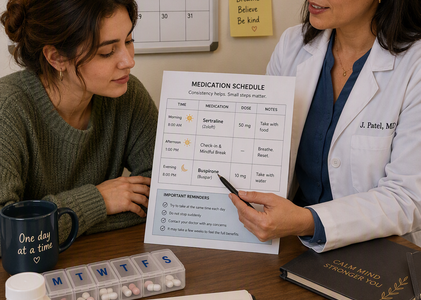
A written medication schedule can simplify everything. List each medicine, when to take it, and any food instructions. If one medicine is taken in the morning and another at night, spell that out clearly. You should not have to rely on memory.
Your schedule can work better if you:
- Match each dose to steady daily activities, such as breakfast or bedtime.
- Include refill dates and check-ins with your doctor.
- Keep the plan near other routine habits, like meals or regular physical activity.
This kind of system reduces mistakes. It also helps if you need to talk with a doctor, pharmacist, or family member about your medicines. When the schedule is visible and simple, following it becomes less stressful.
Using Pill Organizers & Tracking Tools
Pill organizers and tracking tools can make a big difference, especially if you take more than one medicine. A weekly organizer lets you see right away whether you already took a dose. Tracking tools on your phone can add reminders and refill alerts.
Useful tools include:
- Pill organizers labeled by day and time
- Digital tracking tools with reminders and dose logs
- A folder for medicine details, including empty medicine packaging when needed for reference
If you use online services for refills or information, stick to secure websites. Keeping a clear record also helps you compare labels and instructions. That lowers the chance of mistakes and gives you a more reliable system for daily use.
Communicating With Your Doctor
Good communication can make medication management much smoother. Your healthcare provider needs honest details about what you are feeling, what side effects you notice, and how well the medicine fits your life. That information helps shape safe decisions.
If you are thinking about a change, ask for professional medical advice before doing anything on your own. You can also use official websites or pharmacy information to prepare questions, but your doctor should guide the final decision.
How to Discuss Dosage or Medication Changes
Talking about change does not have to be awkward. Your health care provider expects these conversations. The key is to be specific. Instead of saying a medicine feels wrong, explain what has changed, when it started, and how it affects your day.
Before your appointment, prepare notes on:
- Current dosage, schedule, and how consistently you take it
- Side effects, symptom changes, and daily challenges
- Questions about whether your treatment plan should be adjusted
This makes the discussion more productive. It can help your doctor decide whether to wait longer, change timing, adjust the dose, or consider another medicine. Clear examples from daily life often give the best picture of what is working and what is not.
Questions to Ask During Check-ups
Check-ups are your chance to gather useful answers. Do not leave without understanding what the medicine should do, how long it may take, and what warning signs matter. Good questions support better mental health care and safer decisions.
Consider asking:
- What benefits should I notice, and when should I notice them?
- What potential risks or side effects should I watch for?
- Are any of my other medicines, supplements, or habits likely to interfere?
Bring accurate personal information, including your current list of medicines and symptoms. If you feel rushed, ask for clarification anyway. Professional medical advice works best when you and your doctor share complete, clear information.
Safety Considerations
Safety goes beyond taking medicine on time. It also includes how you stop treatment, how you store medicine, and how you get rid of pills you no longer need. These steps help lower potential risks at home.
Pay attention to expiration date details and keep track of unused medicines. Safe medication disposal matters too. The next sections cover why stopping suddenly can be risky and why other products, including supplements, should always be reviewed with your doctor.
Guidelines for Stopping Medication Safely
It is not safe to stop many anxiety medicines suddenly without guidance. Abrupt discontinuation may cause other health risks. If you want to stop, talk with your health care provider first. They can tell you what steps are appropriate for your medicine and situation.
Keep these safety points in mind:
- Never stop a prescribed medicine without medical guidance.
- Ask your doctor what to do with leftover or unused medications.
- Follow disposal instructions instead of storing unneeded pills indefinitely.
If medicine must be discarded, follow approved disposal directions. Some products may have special instructions, including reference to a flush list, while others should be removed through community take-back options. Your pharmacist can help you understand the safest option for your prescription.
Combining Anti-Anxiety Drugs with Supplements or OTC Products
Mixing medicines without guidance can be risky. Anti-anxiety drugs may interact with supplements, vitamins, or over-the-counter drugs in ways that are not obvious. That is why your doctor and pharmacist need your full list of medicines.
Before adding anything new:
- Tell your doctor about all supplements, vitamins, and nonprescription products you use.
- Ask a pharmacist to review possible interactions.
- Get professional medical advice before combining products on your own.
Even products that seem mild can create potential risks when paired with prescription medicine. The safest habit is simple: check first, take later. That one step can help prevent avoidable side effects and dangerous interactions.
Frequently Asked Questions (FAQ)
In managing anxiety medications, many individuals have common concerns. Questions often arise about side effects, especially weight gain or how different types of antidepressants, like selective serotonin reuptake inhibitors and tricyclic antidepressants, may impact daily activities. It’s essential to discuss any symptoms of anxiety and treatment plans with your healthcare provider. Additionally, inquiries about safety, such as proper drug administration, disposal of unused medications, and the importance of following the FDA’s guidelines, can help ensure effective management of your mental health conditions.
How long until anti-anxiety drugs take effect?
The timeline depends on the type of medication. Some anxiety medication may help physical symptoms sooner, while others take several weeks to show steady benefits. Your treatment plan should include a clear time frame, so ask your doctor what to expect for your specific mental health needs.
Can anti-anxiety medication be stopped suddenly?
No, many of these medicines should not be stopped suddenly. Doing so may create potential risks and side effects. Speak with your health care provider before making changes so your treatment plan can be adjusted safely, and ask how to handle any unused medicines afterward.
Is it safe to take anxiety meds with other substances?
Not always. Anxiety medication can interact with supplements and over-the-counter drugs, which may increase potential risks. Before combining anything, get professional medical advice from your doctor or pharmacist. Sharing your full list of products is the safest way to avoid harmful interactions.
Conclusion
Managing your anti-anxiety medications effectively is crucial for achieving the desired benefits while minimizing potential side effects. By understanding how these drugs work, setting up consistent routines, and communicating openly with your healthcare provider, you can enhance your treatment journey. Remember, it’s essential to monitor your progress and stay informed about any changes you experience. Embracing these strategies will empower you to take control of your mental health and lead to a more balanced life. If you have further questions or need personalized advice, don’t hesitate to reach out for a consultation. Your mental well-being deserves attention and care.
https://medlineplus.gov/ency/article/000917.htm
https://www.ncbi.nlm.nih.gov/books/NBK279594
https://medlineplus.gov/ency/article/000957.htm
https://www.ncbi.nlm.nih.gov/books/NBK531477
https://medlineplus.gov/encyclopedia.html
https://medlineplus.gov/panicdisorder.html
https://fallonhealth.org/en/find-insurance/navicare
https://www.fda.gov/drugs/special-features/dont-be-tempted-use-expired-medicines