


Effective Dog Allergy Treatment and Drugs You Should Know

Key Highlights
- Dog allergies usually need more than one approach, not a single fix. A good treatment plan may include allergy drugs, flea control, diet changes, and skin support. Some breeds are indeed more prone to dog allergies that require medication due to their genetic makeup and sensitivity to environmental triggers. Prescription medication can help control itching and inflammation, but side effects must be monitored.
- A good treatment plan may include allergy drugs, flea control, diet changes, and skin support.
- Prescription medication can help control itching and inflammation, but side effects must be monitored.
- Environmental allergens like pollen and dust mites often trigger long-term skin problems.
- Over-the-counter options exist, yet they often work less well for chronic allergy symptoms.
- Your vet can confirm the cause and build a safer, more effective plan.
Introduction
Dog allergies can be frustrating for both you and your pet. When your dog keeps itching, licking, or getting ear problems, the cause may be an immune response to something harmless in food or the environment. That is why learning the basics matters. Once you understand common signs and available treatment options, it becomes easier to get help early, reduce flare-ups, and support your dog’s comfort over the long term.
Recognizing Dog Allergies: Key Signs Every Owner Should Know
Many pet parents expect sneezing to be the main clue, but the symptoms of dog allergies often look different. In allergic dogs, the immune system usually creates skin irritation first. That means scratching, paw chewing, and recurrent ear trouble may be the biggest clinical signs you notice at home.
If these allergic reactions are ignored, discomfort can build and secondary problems may follow. Dogs that keep itching can develop skin damage or infections over time. Spotting early changes helps you decide when medical treatment is needed, especially if signs keep coming back or start affecting daily comfort.
Common Symptoms of Dog Allergies
The most common signs of seasonal allergies in dogs are usually skin related, not just nose or eye problems. If your dog seems restless, keeps rubbing on furniture, or licks the paws nonstop, allergies may be behind it. Itchy skin is often the clearest clue.
Common symptoms include:
- Itchy skin with frequent scratching, biting, or chewing
- Ear infections that return again and again
- Hair loss from constant licking or rubbing
- Skin rashes, red patches, or hot spots
- Watery eyes or mild eye redness in some dogs
You may also see dry skin, crusting, or darker thickened areas over time. Some dogs get red, inflamed skin around the eyes, belly, paws, or ears. These skin symptoms can come and go with exposure to pollen, mold, or other triggers, which is why patterns across the year are worth noticing.
How to Differentiate Allergies From Other Health Issues
Not every itchy dog has allergies. Different conditions can cause similar skin problems, including other forms of skin disease or infections. That is why a definitive diagnosis matters. If you treat at home without knowing the cause, you may miss the real issue and delay the right treatment plan.
Watch for patterns that make allergies more likely:
- Recurrent ear infections along with ongoing itching
- Symptoms that flare up seasonally or after certain exposures
- Paw licking, belly redness, and repeated skin irritation
- Signs that improve briefly, then return
Medical treatment is especially important when scratching is intense, skin damage is visible, or secondary infections may be developing. Respiratory signs alone, without skin issues, are less typical for canine allergies and may point to another health problem. A veterinarian can sort out the difference and guide next steps.
Types of Allergies Affecting Dogs
There are several types of allergies seen in dogs, and each type of allergy can look a little different. The most common is flea allergy dermatitis. Atopic dermatitis, which is linked to environmental allergens, is also very common. Food allergies and contact reactions can happen too.
These chronic conditions often begin early in life and continue long term. Some dogs react to just one trigger, while others deal with more than one problem at the same time. The next sections break down the main categories and what they usually look like.
Environmental Allergies in Dogs
Environmental allergies happen when a dog’s immune system overreacts to things in the surroundings that are usually harmless. Common triggers include pollen, mold, and dust mites. In dogs, these reactions often show up as skin symptoms rather than classic hay fever signs.
Typical features include:
- Itching on the paws, ears, belly, or around the eyes
- Flare-ups during certain seasons or after outdoor exposure
- Red, irritated skin that comes and goes
- Repeated ear or skin trouble over time
Treatment options for environmental allergies in dogs may include allergen avoidance, prescription medication, Cytopoint, allergy shots, topical products, skin-supportive diets, and fatty acid supplements. Because these cases are often chronic, many dogs do best with a combination plan. Your vet may also recommend allergy testing if the pattern strongly suggests atopic dermatitis.
Food Allergies and Sensitivities
Food allergies are less common than many owners think, but they do happen. Unlike short-term stomach upset, true food allergies usually need a careful food trial to identify the trigger. The goal is not quick symptom relief but finding and avoiding the ingredient that causes the allergic response.
Clues that may raise concern include:
- Ongoing itching that does not fit a clear seasonal pattern
- Skin or ear problems that keep returning
- Need for a supervised food trial with a hypoallergenic diet
If your dog improves during a structured diet trial, your vet may recommend a long-term dog food plan built around avoidance. Some dogs also need help with skin health through balanced nutrition, including fatty acids. If signs are persistent or getting worse, that is a strong signal your dog needs medical guidance rather than guesswork at home.
Diagnosing Allergies in Your Dog
A proper diagnosis matters because many problems can mimic allergies. Flea bites, infections, and other skin conditions may create similar clinical signs. Without a definitive diagnosis, it is easy to pick the wrong product and waste time while your dog stays uncomfortable.
During the diagnostic process, your vet reviews history, symptoms, and response patterns. In some cases, allergy testing or referral to a veterinary dermatologist is useful, especially when environmental disease is suspected. Knowing the cause helps shape safer, more targeted treatment choices.
When to See a Veterinarian for Allergy Testing
You should see a veterinarian when the symptoms of dog allergies are persistent, severe, or keep returning. Mild itching once in a while is one thing. Recurrent flare-ups, skin damage, or ear problems are different. That is when professional help becomes important.
Consider scheduling an exam if your dog has:
- Ongoing scratching, paw chewing, or hot spots
- Repeated ear infections or worsening skin irritation
- Poor response to home care or over-the-counter products
A veterinarian can decide whether allergy testing is appropriate and whether a veterinary dermatologist would help. This step can improve the treatment plan by identifying likely triggers, reducing trial and error, and helping prevent complications. If your dog’s comfort, sleep, or daily routine is being affected, it is time to get expert support.
Methods Used by Vets to Identify Dog Allergies
Vets use several methods to work toward a definitive diagnosis. The right method depends on the history and the suspected cause. No single test fits every dog, which is why the workup often starts with symptoms, pattern tracking, and ruling out other conditions.
Here is a simple comparison:
| Method | What it helps with | Notes |
|---|---|---|
| Clinical history and exam | Reviews pattern of itching and skin signs | First step for most dogs |
| Food trial | Evaluates possible food allergies | Requires strict diet control |
| Skin testing | Helps identify environmental allergens | Often used with specialist input |
| Allergy testing for planning | Supports immunotherapy choices | Best used after allergies are strongly suspected |
If your dog needs medical treatment, these tools help your vet move beyond guessing. Environmental cases may lead to immunotherapy planning, while food-related cases rely more on a carefully controlled food trial. The process may take time, but it supports better long-term decisions.
Treatment Options for Dog Allergies
Dog allergy treatment usually aims to do three things: reduce itching, calm inflammation, and protect skin health. Since the immune system is overreacting, treatment often combines symptom relief with steps that lower exposure to triggers. That is why there is rarely one perfect fix.
Instead, vets often build a multimodal plan. Depending on the cause, treatment options may include flea prevention, prescription drugs, allergy shots, special diets, topical care, or supplements. The best plan is the one that fits your dog’s symptoms and response over time.
Prescription Medications for Dog Allergies
The most effective allergy medicines for dogs are usually prescription options chosen by a veterinarian. Common choices include Apoquel for itch and inflammation, Atopica for atopic dermatitis, Cytopoint injections for long-lasting itch relief, and prednisone for short-term flare control. Allergy shots, also called allergen-specific immunotherapy, may help certain dogs with confirmed environmental triggers.
These options differ in how they affect the immune response:
- Apoquel and Cytopoint are often used for ongoing symptom control
- Atopica may help long-term but can take weeks to show improvement
- Prednisone works fast, but steroid use brings a higher risk of side effects
Yes, prescription allergy and immune support drugs can help your dog’s symptoms, especially when used as part of a full treatment plan. Still, response varies by dog, and your vet will weigh benefits against side effects and long-term goals before choosing the best fit.
Over-the-Counter Allergy Medicines for Dogs
Over-the-counter allergy medicines for dogs usually mean antihistamines such as loratadine, cetirizine, or diphenhydramine. These products are easy to find and may be used in some cases, but they often do not work as well as prescription medication for chronic allergic skin disease.
Important differences include:
- Over-the-counter antihistamines may offer limited help for long-term skin irritation
- They are more often used for sudden allergic reactions like hives or facial swelling
- Some human products contain ingredients that are unsafe for dogs
The main difference between over-the-counter and prescription allergy drugs for dogs is strength, reliability, and veterinary oversight. Prescription treatments are usually more effective for ongoing disease, while OTC drugs may have a lower benefit for chronic cases. Because there is still a risk of side effects and drug interactions, ask your vet before giving any human-labeled product.
Understanding FDA-Approved Allergy Drugs for Dogs
FDA-approved allergy drugs matter because they have been evaluated for veterinary use, dosing, and safety standards. That does not mean every product is right for every dog, but it does give vets trusted options for addressing clinical signs like itching and inflamed skin.
Common treatment options in this group include Apoquel and Cytopoint, with other vet-guided drugs used depending on the case. Even with FDA-approved choices, monitoring for side effects and treatment response is still an important part of care.
Latest Drug Developments and Approvals
If you are wondering whether there are any new FDA-approved drugs for treating dog allergies, the compiled information points most clearly to current approved options already used in practice for allergic skin disease and atopic dermatitis. The focus remains on better itch control, targeted action, and longer-lasting relief.
Key advances highlighted include:
- FDA-approved Apoquel for allergic itching and inflammation
- FDA-approved Cytopoint as a targeted injectable option for itch relief
- Continued use of immunotherapy planning for confirmed environmental cases
These developments matter because they give vets more ways to match treatment to the dog in front of them. Some medications act quickly, while others support long-term management. In real life, newer use patterns are less about one miracle drug and more about combining safe, effective tools to improve comfort and reduce flare-ups.
Comparing Benefits and Uses of Popular Medications
Popular medications differ in speed, purpose, and how they fit into long-term care. Prescription medication usually plays the biggest role in controlling an ongoing allergic response, while OTC antihistamines may be less reliable for chronic skin disease. The best choice depends on the trigger, symptom severity, and treatment goals.
Here is a quick comparison:
| Medication or Option | Main benefits | Main uses | Side effects or limits |
|---|---|---|---|
| Apoquel | Fast itch control | Long-term allergic skin disease | Needs vet supervision |
| Cytopoint | Targeted, lasting relief | Ongoing itch management | Injection schedule varies |
| Atopica | Helps atopic dermatitis | Long-term control | May take weeks to work |
| Prednisone | Rapid relief | Short flare-ups | Higher side effects with longer use |
| OTC antihistamines | Easy access | Sudden mild allergic reactions | Often limited benefit for chronic cases |
The biggest difference between prescription and over-the-counter options is consistency and intended use. Prescription drugs often do more to improve quality of life in dogs with chronic symptoms, while OTC products need careful vet guidance.
Managing Environmental Allergies in Dogs
Medication is only one piece of the puzzle. Environmental allergens can keep triggering your dog unless you also reduce exposure where possible. That is why allergen avoidance is often part of long-term management, especially for dogs with atopic dermatitis or seasonal flare-ups.
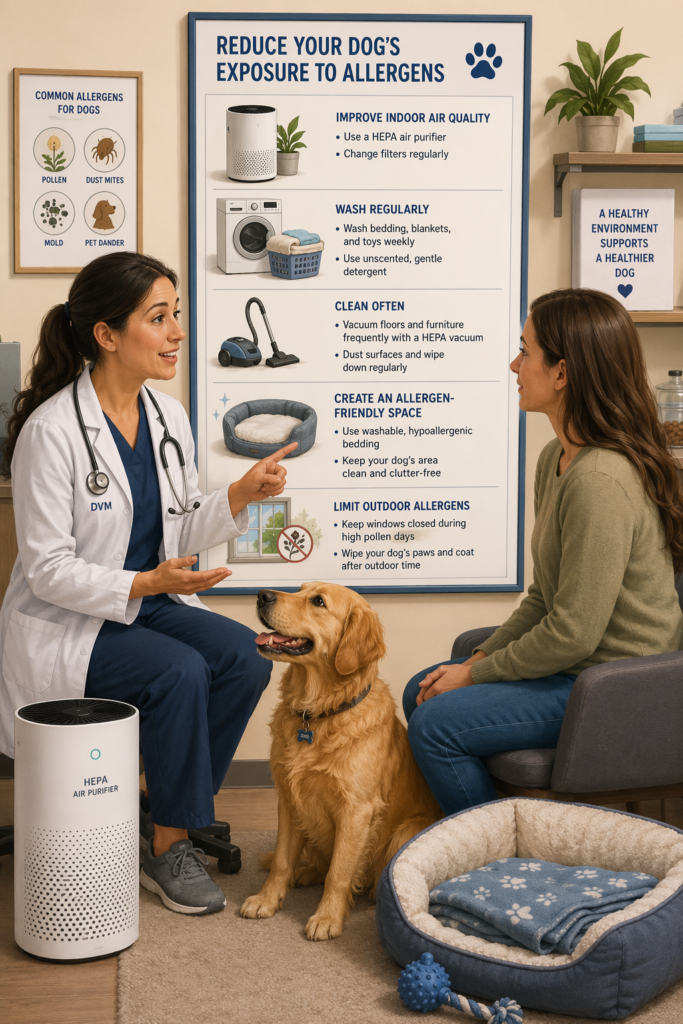
Practical steps at home can support the skin barrier, improve coat health, and add immune support alongside medical care. While these methods may not replace medication in moderate or severe cases, they can help reduce irritation and make flare-ups easier to manage.
Reducing Allergen Exposure at Home
You cannot remove every trigger, but simple home remedies can lower exposure to environmental allergens and support your dog’s comfort. This matters for dogs reacting to pollen, dust mites, or flea bites. Small changes done consistently often help more than one-time cleanup.
Try these allergen avoidance steps:
- Use consistent flea prevention for all pets in the home
- Wash bedding regularly to reduce dust mites and debris
- Keep skin and coat clean with vet-recommended grooming products
- Wipe paws or problem areas after outdoor exposure
- Follow your vet’s advice on sprays, wipes, or shampoos for localized flare-ups
These steps are part of treatment options for environmental allergies in dogs, but they work best with a broader plan. If symptoms remain strong despite good home care, your dog may need prescription support, diet changes, or further evaluation for confirmed atopy.
Immune Support Strategies and Supplements
Immune support can play a useful role in allergy management, especially when the goal is to improve healthy skin while other treatments control itching. Supplements are not a cure, but they may help the skin heal and strengthen the body’s defenses during flare-ups.
Supportive options mentioned in the compiled information include:
- Omega-3 fatty acids for skin and coat support
- Fish oil or similar fatty acid supplements
- Special diets that support the skin barrier
- Vet-approved nutrients that promote healthy skin
Yes, prescription allergy drugs and immune support measures can work well together. Medications may reduce the allergic response, while supplements and nutrition help skin recover. Still, supplements are not regulated like medications, so it is smart to choose them with veterinary guidance to improve safety and avoid ineffective products.
Considering Breed and Individual Risk Factors
Not all dogs face the same allergy risk. Some allergic dogs seem to develop problems early and need long-term care, while others have milder or more limited flare-ups. These differences can reflect dog breeds, age of onset, trigger exposure, and likely genetic predisposition.
Individual response also matters. Two dogs with similar signs may need very different plans. One may improve with flea prevention and diet support, while another needs stronger medication. Looking at breed and lifestyle together helps create better, more realistic management.
Dog Breeds That Are More Prone to Allergies
Are some breeds more prone to dog allergies that require medication? The compiled information does not list specific dog breeds, so it is best not to assume based on breed alone. What it does show is that many allergic conditions begin within the first few years of life and may continue long term, which suggests hereditary factors and genetic predisposition can matter.
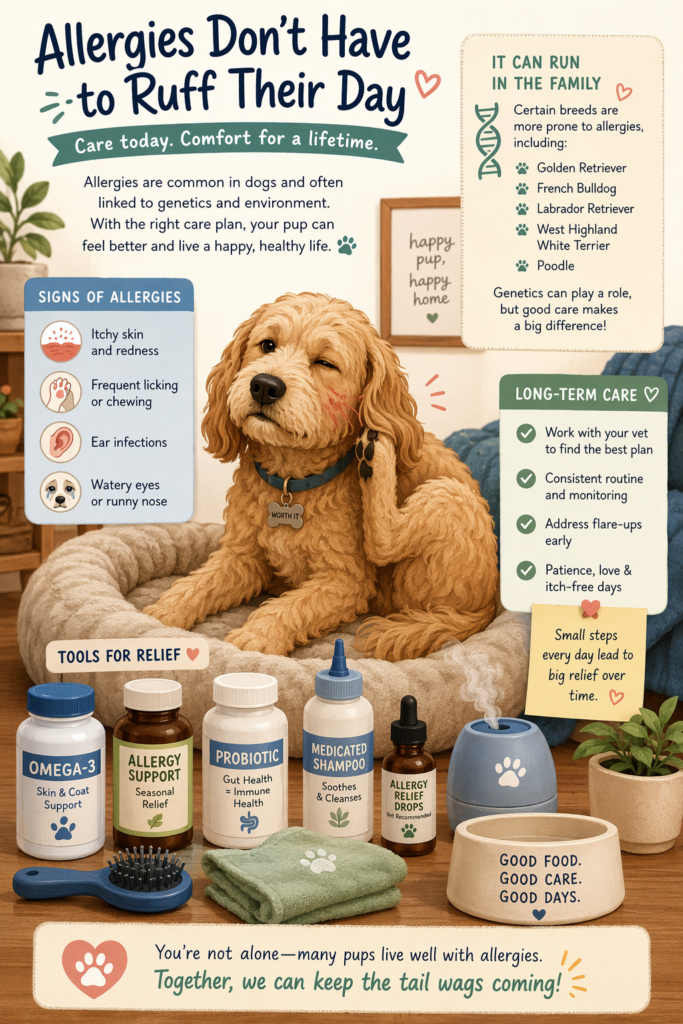
What owners should keep in mind:
- Early, repeated signs may point to a chronic skin disease pattern
- Family or breed tendencies can influence allergy management needs
- Individual severity still matters more than breed label alone
In practice, medication decisions should be based on symptoms, trigger type, and response to care rather than guesswork. If your dog has persistent itching, ear trouble, or recurring flare-ups, a veterinarian can assess whether long-term treatment is needed, regardless of breed background.
Customizing Allergy Management for Your Dog
No two allergy cases are exactly alike, so individualized care matters. Your dog’s treatment plan should reflect the trigger, the severity of symptoms of dog allergies, and how well previous steps have worked. Some dogs need medication often. Others benefit from a lighter plan centered on prevention and skin support.
To manage symptoms without medication when possible, focus on:
- Strict flea prevention and trigger reduction
- Vet-guided diet changes if food is suspected
- Regular skin and ear care with recommended products
- Ongoing monitoring so flare-ups are caught early
This kind of customized care can protect quality of life and reduce the need for stronger treatment in some dogs. Still, if home management is not enough, adding prescription support may be the safest next step. The goal is not avoiding medicine at all costs. It is choosing what truly helps your dog stay comfortable.
Conclusion
In summary, understanding and managing your dog’s allergies is crucial for their overall well-being. By recognizing the signs and types of allergies, seeking proper diagnosis, and exploring various treatment options, you can significantly improve your furry friend’s quality of life. Remember that each dog is unique, and customizing an allergy management plan based on their specific needs can yield the best results. Always consult with your veterinarian for guidance tailored to your dog’s health. If you’re looking for personalized advice or recommendations, don’t hesitate to reach out for a free consultation. Your pup deserves the best care possible!
Frequently Asked Questions
Do dog allergy medicines have side effects?
Yes, some dog allergy treatments can cause side effects, especially with steroid use or long-term prescription medication. The risk of side effects depends on the drug, dose, and duration. That is why veterinary supervision matters. Your vet can balance symptom relief with safety and monitor your dog over time.
How do I manage my dog’s allergy symptoms without medication?
You can sometimes manage mild allergy symptoms with home remedies such as flea prevention, bedding hygiene, paw wiping, special diets, topical care, and allergen avoidance. Immune support through omega-3 supplements may also help skin health. If symptoms keep returning, medical treatment is the better next step.
What is the difference between over-the-counter and prescription allergy drugs for dogs?
Over-the-counter options are usually antihistamines with limited benefit for chronic skin disease, while prescription medication is more targeted for long-term allergy control. Prescription drugs are chosen as part of a treatment plan and often work better. Both can have side effects, so always check with your veterinarian first.
https://www.kinship.com/dog-health/vet-advice-dog-scooting
https://www.kinship.com/dog-health/dog-itching-seasonal-allergies
https://www.zoetisus.com/petcare/blog/canine-allergy-supplements
https://www.chewy.com/vetmedin-pimobendan-chewable-tablets/dp/173264