


Finding Relief from Pollen Allergy: Myths and Facts

Key Highlights
- Pollen allergies are a common cause of seasonal allergies in the United States.
- Your allergy symptoms may include sneezing, itchy eyes, watery eyes, and nasal congestion.
- Tree pollen, grass pollen, and weed pollen can all trigger allergic reactions.
- Allergy relief often involves lifestyle steps, allergy medications, or allergy shots.
- Pollen counts and daily pollen levels can help you plan outdoor time more carefully.
- Quick action during allergy season can reduce discomfort and help you breathe easier.
Introduction
If you dread spring, summer, or fall because of sneezing and itchy eyes, you may be dealing with a pollen allergy. This common form of allergic rhinitis can make allergy season feel longer and harder than it should. The good news is that you do have options. With the right habits, treatments, and timing, you can reduce symptoms and feel more comfortable day to day. Let’s clear up the myths and facts so you can manage pollen allergy symptoms with more confidence.
Understanding Pollen Allergies in the United States
Across the United States, pollen allergies affect millions of people and often return at the same times each year. These reactions are commonly called seasonal allergic rhinitis, and they happen when pollen from plants, trees, grasses, or weeds gets into your nose, eyes, or lungs.
For many people, allergy symptoms show up as sneezing, congestion, watery eyes, or throat irritation. Since pollen seasons change by region and weather, your symptoms may start earlier or last longer than you expect. To manage them well, it helps to understand what pollen allergy is and which pollens are most likely to bother you.
What is a pollen allergy and how common is it?
A pollen allergy is a type of allergic rhinitis triggered by pollen in the air. Pollen is a fine powder released by flowering plants, trees, grasses, and weeds. When you breathe it in, it can reach your nose, eyes, or lungs and start causing problems.
What causes a pollen allergy? Your immune system mistakenly treats pollen like a threat. It releases chemicals to fight it off, and that creates an allergic reaction. That is why you may notice sneezing, a runny nose, itchy eyes, or a stuffy nose during allergy season.
This problem is very common in the United States. About 20 million people have seasonal allergies due to pollen. Groups such as the Allergy Foundation of America also help raise awareness about how widespread these allergies are and how much they can affect daily life.
Common types of pollen that trigger allergies
Not all pollen acts the same. The main allergy triggers are tree pollen, grass pollen, and weed pollen. Each one appears at different times, which is why symptoms can shift across the year. In many places, tree pollen starts first, grass follows, and weed pollen comes later.
Here are the common pollen sources that affect many people:
- Tree pollen often peaks from March through May, though warmer areas may see it earlier.
- Grass pollen usually appears in late spring and summer.
- Weed pollen often starts in summer and continues into fall.
- Ragweed is a major weed pollen trigger and can travel long distances.
Which type of pollen triggers allergies most? It depends on where you live, the season, and the amount of pollen in the air. Checking pollen counts can help you connect your symptoms with local pollen levels and better time your outdoor activities.
Causes and Triggers of Pollen Allergy
Pollen allergies start with exposure, but your body’s response is what creates the trouble. When pollen is in the air, it can enter your nose, eyes, or lungs and set off an allergic reaction. That reaction can be mild on some days and much stronger on others.
So what changes from day to day? Common allergy triggers include the type of pollen around you, how much is in the air, and whether pollen counts are high. Weather and outdoor habits can also make symptoms flare. The next sections explain how the body reacts and what can make pollen allergies worse.
How pollen allergy develops in the body
Pollen allergy develops when your body misreads pollen as something harmful. Instead of ignoring it, your immune system reacts as if it needs to defend you. This reaction leads to the symptoms commonly linked with allergic rhinitis, especially in certain seasons.
Once pollen enters your nose, eyes, or lungs, your body releases chemicals to fight it. That causes the allergic reaction behind sneezing, swelling, watery eyes, and nasal problems. For some people, touching pollen or getting it in the eyes can also trigger symptoms.
If your symptoms keep coming back, a health care provider can help confirm the cause. Diagnosis often includes questions about timing and symptoms, plus testing. Blood tests can look for a specific antibody your body produces against pollen, helping identify whether pollen is behind your reactions.
Factors that can make pollen allergies worse
Some days feel much worse than others, and there is usually a reason. During pollen season, the air may carry more irritants, especially on warm or windy days. If you are outside when pollen is high, your symptoms can build quickly and feel harder to control.
A few common factors can make symptoms worse:
- High pollen days, especially in the morning and early afternoon
- Windy weather that spreads pollen farther
- Lawn mowing or spending time around cut grass
- Warmer climates where pollen season may start earlier or happen more than once
You cannot prevent getting pollen allergies, but you can stop them from getting worse by reducing exposure. Staying indoors when pollen is high, closing windows, and washing off pollen after being outside are simple steps that can make a real difference. Climate change is often discussed with allergens, but your daily exposure still matters most for symptom control.
Recognizing Symptoms of Pollen Allergy
Pollen allergy symptoms can look a lot like a cold, which makes them easy to miss at first. The difference is that they often return with the seasons and show up after time outside. Paying attention to patterns can help you spot the cause sooner.
Many people notice nasal symptoms first, such as a runny nose, sneezing, or congestion. Others struggle more with itchy eyes or throat irritation. Knowing the usual signs can help you respond faster and decide when it is time to get medical advice.
Typical signs and symptoms to watch for
If you are wondering how to recognize pollen allergies, start with timing and symptoms. They often show up when plants are pollinating and may return year after year. Many people feel worse after spending time outdoors, especially when pollen levels are elevated.
Common allergy symptoms include:
- Nasal congestion, sneezing, and a stuffy nose
- Runny nose and itchiness in the nose or throat
- Watery eyes, red eyes, and itchy eyes
- Puffy eyes or swelling around the eyes
Some people also develop a cough, sore throat, or reduced sense of smell or taste. If you have asthma, pollen can make breathing symptoms worse. The most common signs are usually nose and eye symptoms, but the exact pattern can vary from person to person.
When pollen allergy symptoms become serious
Most pollen allergy symptoms are uncomfortable rather than dangerous, but some situations need closer attention. If symptoms keep interfering with sleep, work, or daily routines, they should not be ignored. Ongoing congestion, coughing, or eye irritation can wear you down over time.
Things become more concerning when you have severe symptoms or breathing trouble. Shortness of breath, worsening asthma, or symptoms that do not improve with basic care are signs to contact a health care provider. A strong allergic reaction deserves medical guidance, even if it started as a seasonal problem.
You should also seek help if you are unsure what is triggering your symptoms. A provider can identify the likely cause, review your current medicines, and help you build a treatment plan that fits your needs and reduces repeat flare-ups.
Effective Relief Strategies for Pollen Allergy
Getting allergy relief often takes more than one step. Some people do well with simple daily changes, while others need allergy medications to keep symptoms under control. The best way is the one that matches your symptoms, your schedule, and how strongly your body reacts.
In some cases, home remedies can ease mild symptoms, and allergy shots may help when problems keep returning. You do not need to rely on guesswork. The next sections cover quick symptom management and practical at-home options that can support better breathing and fewer flare-ups.
Quick ways to manage pollen allergy symptoms
When pollen is high, fast action matters. The best way to get quick allergy relief is to lower exposure and treat symptoms early. If you come inside after being outdoors, getting pollen off your body and clothes can help stop symptoms from building through the day.
These steps can help during peak seasons:
- Stay inside when pollen levels are highest or on windy days
- Close windows and use air conditioning or fans
- Shower and wash your hair after outdoor time
- Use a nasal spray or eye drops if your provider recommends them
You can also wear a dust mask, hat, and sunglasses outside to limit contact. If nasal congestion is your biggest problem, a treatment plan with the right medicine may help more than waiting until symptoms get worse. Acting early usually works better than trying to catch up later.
Home remedies and natural relief options
If you want simple natural remedies, focus on reducing the pollen around you. Home care will not cure pollen allergies, but it can lower your exposure and ease allergy symptoms. These steps are especially useful when combined with the advice of a health care provider.
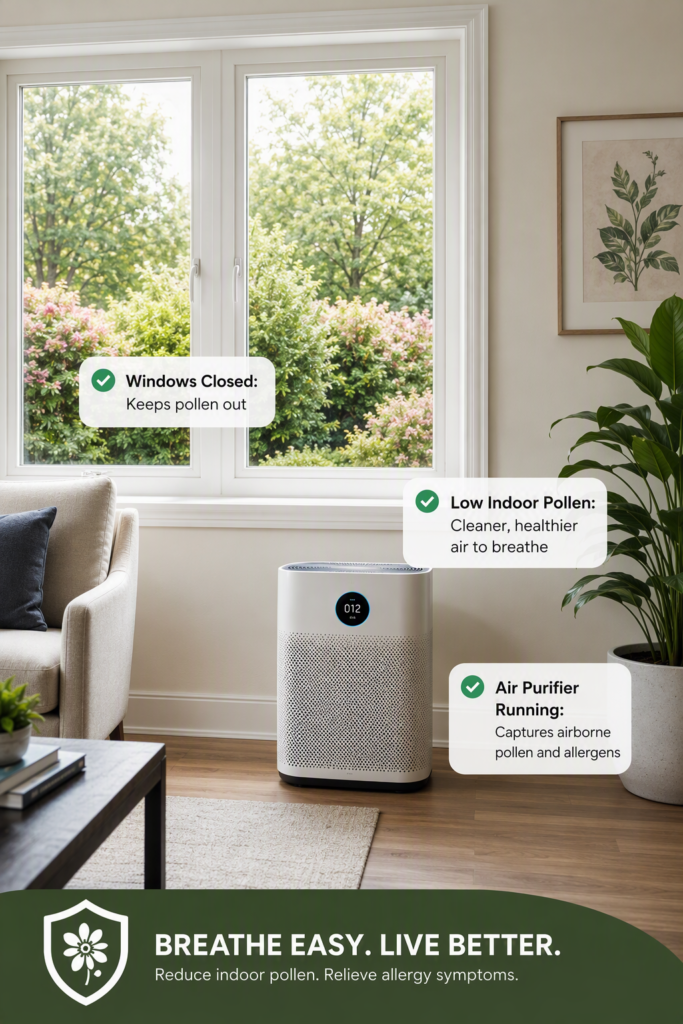
Helpful home remedies include:
- Using HEPA filters in your home
- Washing clothes after they have been outside
- Showering before bed to remove pollen from skin and hair
- Staying indoors during high pollen periods
Some people also ask about nasal irrigation with a saline solution. While home care often centers on exposure control, gentle rinsing may help support comfort for nasal symptoms if advised by your provider. For immediate relief, your best home strategy is usually to get indoors, clean off pollen, and keep your sleeping space as pollen-free as possible.
Medical Treatments and Medications for Pollen Allergy
When home steps are not enough, allergy medications can make a big difference. Both over-the-counter and prescription options are used for pollen allergy, depending on how strong or frequent your symptoms are. Some target sneezing and itching, while others reduce swelling in your nasal passages.
You may hear about nasal steroids, antihistamine nasal sprays, decongestants, and other choices. Each works differently, and side effects can vary from person to person. That is why it helps to understand your options before choosing what to try next.
Over-the-counter and prescription allergy medications
Many allergy medicines can improve pollen symptoms. Common over-the-counter options include antihistamines such as cetirizine or loratadine, plus steroid nasal sprays such as fluticasone. Some products combine an antihistamine with a decongestant. If these do not help enough, a provider may prescribe stronger treatment.
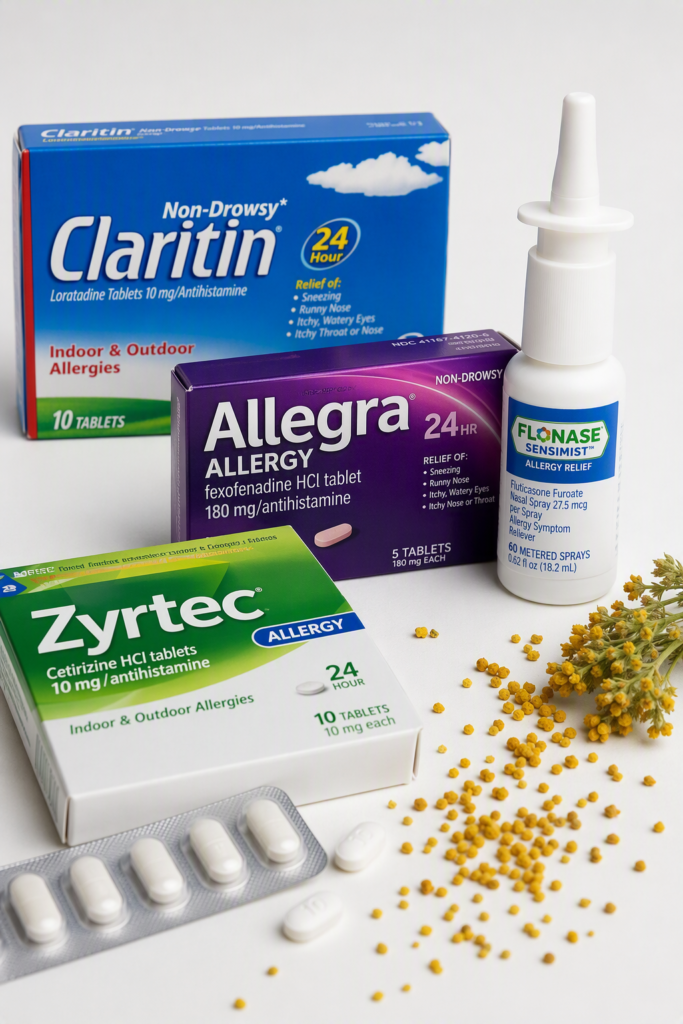
Here is a simple text table of common options:
| Type of treatment | How it helps |
|---|---|
| Antihistamines | Block histamine to reduce sneezing, itching, and runny nose |
| Steroid nasal sprays | Lower inflammation in the nasal passages |
| Decongestants | Shrink nasal passages to ease stuffiness |
| Combination products | Blend antihistamine and decongestant effects |
| Leukotriene inhibitors | Reduce inflammation linked to allergic reaction |
| Allergy shots | Build tolerance to pollen over time |
The best over-the-counter choice depends on your symptoms. A nasal antihistamine or steroid nasal sprays may help if your main problem is nasal symptoms. Decongestants can help short term, but they are not for everyone and should not be used too long because of possible side effects.
When to consult a healthcare provider about your allergies
You should contact a healthcare provider if you think pollen is causing your symptoms and you are not sure which type of pollen is responsible. A proper diagnosis can help you avoid trial and error, especially if symptoms return every year or last longer than expected.
It is also smart to get help if over-the-counter care is not giving enough relief. A provider can review your medicines, check for side effects, and decide whether you need prescription treatment or allergen immunotherapy such as allergy shots. They may also use skin testing or blood tests to confirm the cause.
Be extra careful if you have other health problems. Decongestants may not be a good fit for some people, including those with blood pressure concerns. If you have severe symptoms, asthma flare-ups, or trouble breathing, do not wait to get medical advice.
Conclusion
In conclusion, navigating the world of pollen allergies can be challenging, but understanding the myths and facts surrounding it can empower you to take control of your health. By recognizing the symptoms, knowing the triggers, and employing effective relief strategies, you can significantly alleviate discomfort associated with pollen allergies. Remember, whether it’s natural remedies or medical treatments, there are options available to help you breathe easier during peak pollen seasons. Don’t hesitate to seek professional advice if your symptoms persist. For personalized guidance tailored to your needs, consider reaching out for a free consultation with an allergy specialist. Your journey to relief begins with informed choices!
Frequently Asked Questions
What are the best over-the-counter treatments for pollen allergies?
Common over-the-counter allergy medications include antihistamines and steroid nasal spray options. These can provide allergy relief for sneezing, itching, and other nasal symptoms. If congestion is your main issue, a provider may help you decide whether antihistamine nasal sprays or another nasal spray is the better fit.
Can lifestyle changes really reduce pollen allergy symptoms?
Yes, lifestyle changes can help reduce pollen allergies by lowering your exposure. Staying indoors when pollen levels are high, closing windows, washing clothes, and showering after outdoor time may ease allergy symptoms. If that is not enough, talk with a health care professional about adding medical treatment.
When should someone see a doctor for pollen allergy issues?
See a health care provider if symptoms keep coming back, over-the-counter treatment is not helping, or you develop severe symptoms such as breathing trouble. Medical advice is also important if you have other health problems or want testing to identify the exact trigger, as groups like the Allergy Foundation of America encourage.
https://www.webmd.com/allergies/default.htm
https://www.webmd.com/allergies/medical-reference/default.htm
https://www.ncbi.nlm.nih.gov/books/NBK538186