
Taking Medication While Fasting: Tips for Safe Practices
Key Highlights
- Most pills and capsules used in intermittent fasting do not affect the fasting process.
- Liquid, chewable, or sugary products may interfere with your medication schedule and your fast.
- Blood pressure and thyroid medicines are often easier to fit into an eating window or fasting window.
- Some drugs must be taken with food to avoid side effects or stomach upset.
- Your healthcare provider can help adjust timing for safer fasting.
- Careful planning matters most if you have diabetes, blood pressure issues, or another chronic condition.
Fasting can support good health for some people, but medication adds an extra layer to the fasting process. You may be asking a simple question: can you take your medicine and still stay on track with your fast? The answer depends on the product, the timing, and whether it needs food. Some options are easier to manage than others. Before changing anything, it helps to get medical advice so your routine supports both safety and your goals.
Understanding Fasting and Medication Use
Fasting is not one fixed plan. Different forms of fasting have different rules, and that matters when you think about medication use. Some people fast for weight loss, some for health improvement, and others for religious reasons or medical procedures.
So, can you take your prescribed medication during fasting without breaking the fast? Sometimes yes. It depends on the specific product, whether it has calories or additives, and whether your medical condition requires food with the dose. Understanding the type of fast comes first.
Different Types of Fasting (Intermittent, Religious, Medical)
Not all fasting works the same way. Your dietary approach shapes what counts as acceptable during fasting hours. That is why the type of fast always matters before you decide when to take general medications or supplements.
Here are common forms of fasting:
- Intermittent fasting uses a fixed schedule, such as 12:12 or 16:8, with a fasting window and an eating window.
- Religious fasting follows faith-based rules and may limit food, drink, or both during a set period of time.
- Medical procedures may require short-term fasting before a test or treatment.
- Clean fasting is stricter, while dirty fasting is a more forgiving approach.
For Ramadan fasting, the general idea is the same: timing matters. If medication must be taken with food, it is usually better placed outside fasting hours, based on medical advice. The safest plan depends on the medicine and your health needs.
Common Reasons for Fasting in the United States
People in the United States fast for several reasons, and each reason can affect how carefully they need to manage medication. Someone fasting for weight loss purposes may focus on calories and insulin levels. Someone fasting because of a medical condition may need a more cautious plan.
Common reasons include:
- weight loss purposes
- health improvement
- religious reasons
- preparation for medical procedures
That difference matters. A person fasting for blood sugar support may worry about insulin response, while someone fasting for faith may follow different rules during a certain number of hours. Ramadan fasting is one example of religious fasting where medication timing often needs extra planning, especially when the medicine should be taken with food or at a fixed schedule.
Overview of Medication Types That May Affect Fasting
Some types of medications are less likely to interfere with fasting than others. The first type of medication to think about is a plain tablet or capsule without sweeteners or added calories. These are often easier to fit into a fasting routine.
Below is a simple text table showing how common types of medications may affect fasting:
| Type of medication | Fasting impact |
|---|---|
| Plain pills or capsules | Often fasting-friendly if they do not contain sugars or fillers |
| Blood pressure medications | Often safe during fasting, depending on instructions |
| Thyroid medications | Usually fine if taken as directed |
| Liquid medicines | May contain sugar or additives that can affect the fast |
| Chewables | May include carbs, sweeteners, or flavoring |
| Diabetes medications | May need food and closer timing control |
So, are there certain medicines that should not be taken during fasting? Yes, some diabetes medications, sugary liquids, antacids, and products that require food may be harder to use during a fasting window without adjustments.
How Fasting Impacts Medication Absorption and Effectiveness
Fasting can change how your body handles medicine. During a fasting window, your digestive system is not processing meals in the usual way, and that may affect how some products feel or work. It can also matter if your goal is blood sugar control.
At the same time, fasting can influence insulin levels and other metabolic responses. That is why one medicine may be fine while another may cause discomfort or need food. To answer the safety question clearly, it helps to look at empty stomach use and liquids next.
Taking Medicine on an Empty Stomach
Taking medicine on an empty stomach while fasting is sometimes safe, but not always. The main issue is the type of medication. Many plain tablets and capsules do not contain calories, so they may fit into fasting better than sweetened or food-dependent products.
Still, safety is not only about breaking a fast. Some medicines can cause stomach irritation, nausea, or other side effects if you take them without food. This is common with products that specifically say to take them with a meal. In those cases, following the label matters more than protecting the fast.
There is also the question of insulin response. Some medicines or supplements may stimulate digestion or affect insulin levels, which can work against the goal of your fasting. If a product causes discomfort or needs food for proper use, shifting it to your eating window is often the safer choice.
Effects of Water and Other Liquids on Medication During Fasting
A common question is whether taking medicine with water breaks an intermittent fast. Plain water usually does not. In clean fasting, plain or mineral water is generally allowed, and zero-calorie drinks may also fit, depending on your rules.
What matters more is what comes with the medicine:
- mineral water is usually acceptable during a fasting window
- black coffee or plain tea may also fit a clean fast
- sweetened liquids can change whether medication break intermittent fasting becomes a concern
The medicine itself is often the bigger issue, not the water. If the product is a sugar-free capsule or tablet, it may be fine. If it is a syrup, chewable, or flavored liquid, it may affect your fasting progress. You should also drink plenty of fluids when needed, especially during longer fasting hours.
Guidelines for Safe Medication Practices While Fasting
Safe fasting with medicine starts with careful planning. You need to know which items are fine during a fasting window and which ones belong with meals. Labels, ingredients, and directions all matter, especially for products with added sugars or food instructions.
If you are asking how to set up your medication schedule during intermittent fasting, the short answer is this: match medicine timing to the product requirements and get medical guidance when needed. The next sections break that down in practical terms.
Timing Medication Doses Around Fasting Hours
The timing of doses can make fasting much easier. If your medicine does not require food and does not contain sweeteners, it may fit during fasting hours. If it needs a meal, it is usually better placed inside your eating window.
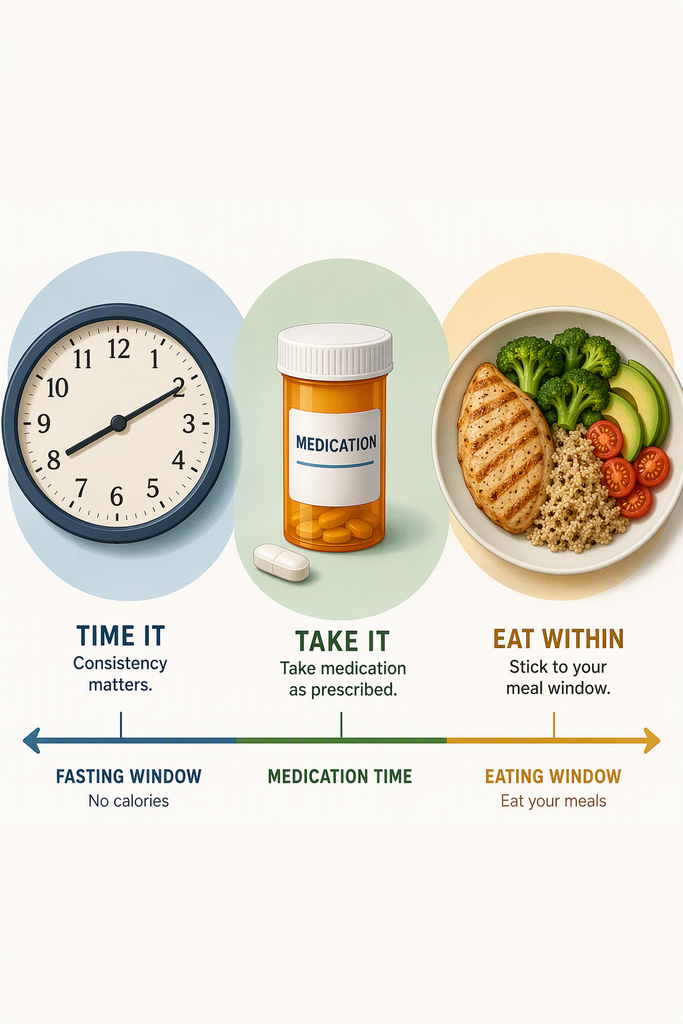
A simple way to think about it is this:
- keep medicines that require food close to your first meal or another meal inside the eating window
- keep medicines that follow a fixed schedule at the same time of day unless a doctor tells you to change it
This matters because a schedule that looks convenient may not actually be safe. A missed dose, a long gap, or taking the wrong medicine on an empty stomach can create problems. When in doubt, build your fasting plan around the medicine rather than forcing the medicine into the fast.
Medication Scheduling for Intermittent Fasting
Your intermittent fasting schedule should work with your medicine, not against it. If you take a product that needs food, place it during your eating window. If you use a plain capsule or tablet that does not need meals, it may be easier to keep your usual routine.
That said, one plan does not fit everyone. Your medication schedule depends on the medicine instructions and your medical condition. A person using thyroid medicine may have different timing needs than someone taking diabetes medications or NSAIDs.
It also helps to look at the full day, not just one dose. Ask yourself: does this medicine need food, does it contain sugar, and does it need a fixed schedule? Those answers can guide your fasting routine. If the schedule feels hard to manage, that is a sign to seek medical guidance before continuing.
Medication Practices During Ramadan Fasting
Ramadan fasting often requires special planning because food and drink are avoided during fasting hours for a set period of time. If you take medicine regularly, timing becomes very important. Some products may fit outside the daily fast, while others may need a different approach.
Helpful points include:
- review whether the medicine must be taken with food
- identify any liquid or chewable products with sugar or additives
- get medical advice if you take medicine more than once a day or on a strict schedule
Religious fasting should not lead to unsafe medication use. If the medicine is essential, your healthcare provider can help you understand the safest option. This is especially important for a chronic illness, blood sugar concerns, or any condition where missed or delayed doses may raise risk.
Consulting a Healthcare Provider About Medication and Fasting
If you take regular medication, it is smart to talk with a healthcare provider before starting a fast. This is especially true if you have a chronic illness or use medicine that must be taken with food or at exact times.
A quick conversation can help you avoid side effects, missed doses, and problems with your fasting plan. Good medical advice gives you a safer path forward. Next, let’s look at when to call your doctor and how plans can be adjusted for individual needs.
When to Speak with Your Doctor Before Starting a Fast
You should speak with a healthcare provider before fasting if your routine includes daily medicine, dose timing rules, or products that need food. This matters even more if you are fasting for weight loss or health improvement and plan to do it for a long period.
It is especially important if you have:
- a chronic health condition such as diabetes, high blood pressure, kidney disease, or coronary artery disease
- an upcoming medical test or procedure that already involves special fasting instructions
This step is not just a formality. A doctor can help decide whether your current plan is realistic and safe. If your medicine affects blood sugar, digestion, or hydration, changing your fasting pattern on your own may create problems. A short review now can prevent bigger issues later.
Customizing Medication Plans for Individual Health Needs
Medication plans often need to be customized because health needs are different. One person may do well with a simple adjustment, while another may need closer monitoring. That is why medical guidance matters more than general advice from the internet.
For example, diabetes medications may need careful timing because fasting can affect blood sugar and insulin response. Blood pressure medications may be easier to continue, but timing and hydration still matter. If you have kidney disease, the need for fluids and medicine timing can make fasting more complex.
Good medication scheduling should support both treatment and your goal of fasting. A tailored plan may include shifting a dose into the eating window, choosing a different form of capsules or tablets, or avoiding products with sweeteners. The safest approach is the one built around your actual condition and prescription routine.
Medications, Supplements, and Over-the-Counter Products During Fasting
Prescription drugs are only part of the picture. Supplements, vitamins, and over-the-counter products can also affect your fast. Some are simple and low risk, while others contain sugar, carbs, or ingredients that stimulate digestion.
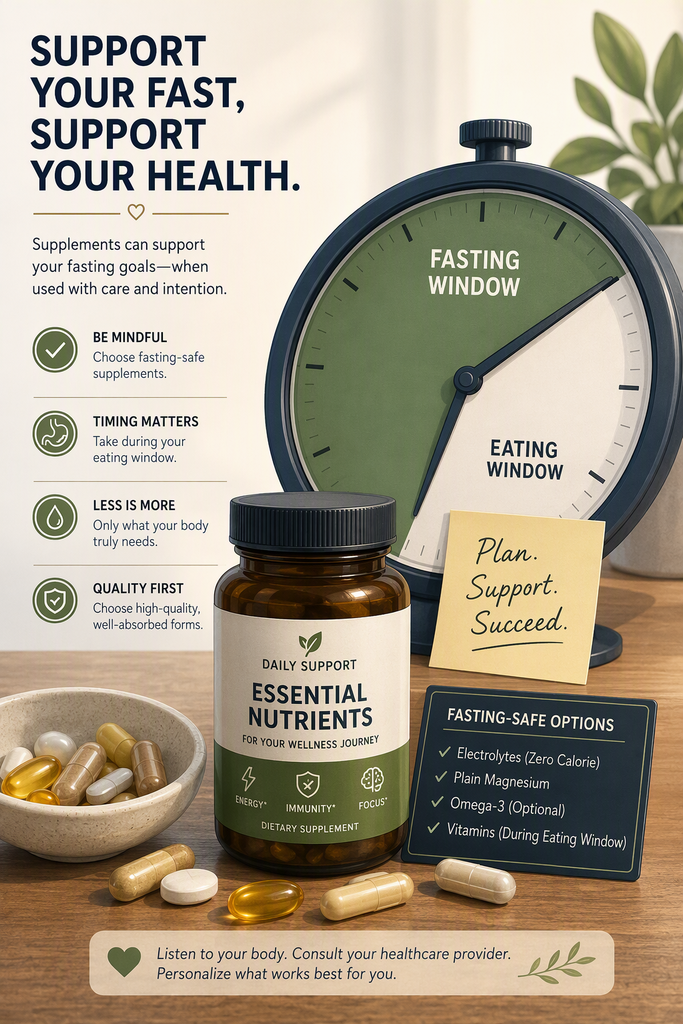
So, can over-the-counter medicines be taken while fasting? Sometimes, yes. It depends on the form, the ingredients, and whether the product needs food. To protect your fasting progress, it helps to separate fasting-friendly options from those that are more likely to interfere.
Which Medicines May Break a Fast
Some medicines are more likely to break a fast than others. The main things to watch are calories, sugar, carbs, and whether the product stimulates digestion or insulin response. This can matter in both clean fasting and dirty fasting, though a dirty fast may allow a little more flexibility.
Products that may be more likely to cause a medication break during a fasting window include:
- cough syrups
- chewable vitamins or supplements
- antacids with sugar or dairy
There are also medicines that may not technically contain many calories but still should not be taken during fasting because they require food. Examples of meds in that group include steroids, NSAIDs, and some diabetes medications. So yes, certain medicines should be handled with extra care during fasting, even in a dirty fast.
Guidelines for Taking Supplements and Over-the-Counter Products
Supplements can be tricky because some fit fasting well and others do not. In general, plain options without sugar or carbs are easier to manage. The label matters, and so does the form of capsules, tablets, powders, or gummies.
A few examples help:
- electrolytes are essential substances with a positive or negative electrical charge when dissolved in water, and they are generally fasting-friendly
- gummy vitamins may contain sugar and carbohydrates, which can interfere with your fast
Some products sit in the middle. Collagen may work if it is unflavored and unsweetened. Probiotics may also fit if the capsules do not have sugar coatings. On the other hand, protein powders, amino acids, and fat-soluble vitamins may be a poor fit during fasting because they can trigger an insulin response or need food for absorption.
Conclusion
In conclusion, understanding how to navigate medication use while fasting is crucial for maintaining both health and wellness. By being mindful of how different types of fasting can impact medication absorption, you can take steps to align your medication schedule with your fasting regimen effectively. It’s essential to consult with a healthcare provider to customize your medication plan according to your individual health needs and fasting practices. By following the guidelines outlined in this blog, you can safely manage your medications while enjoying the benefits of fasting. If you have more questions or need personalized advice, consider reaching out to a healthcare professional for guidance tailored to your specific situation.
Frequently Asked Questions
Is it safe to take prescription medicine while fasting?
It can be safe during intermittent fasting, but it depends on the medicine. Many plain tablets, including some blood pressure drugs, may fit the fasting process. Others need food or contain additives. If you take regular prescriptions, ask your healthcare provider before changing medication use or timing.
Does medication with water break an intermittent fast?
Plain water or mineral water usually does not break an intermittent fasting plan. The bigger issue is the medicine itself. During a fasting window, a sugar-free tablet may be fine, but syrups or chewables may cause a medication break and may be better saved for the eating window.
What if my medication must be taken with food but I am fasting?
If your medicine must be taken with food, it is usually best to move it into your eating window rather than take it in the fasting window. This helps protect your digestive system and lowers side effects. If timing is difficult because of your medical condition, get medical advice first.
https://www.britehealth.com/en-de/guides/medications-before-or-after-eating
https://www.britehealth.com/en-de/medications/dapagliflozin
https://www.britehealth.com/en-de/medications/metformin-gogs6
https://www.britehealth.com/en-de/medications/glimepiride
https://www.aspect-health.com/blog/3-day-fasting-what-is-it-and-how-to-get-the-most-out-of-it