


How Much Exercise Per Week Is Right for Your Health?

Key Highlights
- Adults should aim for a clear weekly activity target to support good health benefits. A common goal is 150 minutes of moderate physical activity or 75 vigorous minutes. You can also use an equivalent combination of both activity types during the week. While meeting the recommended weekly activity target offers significant health benefits, consistently exceeding the suggested minutes of moderate physical activity or equivalent combination may increase the risk of overuse injuries, fatigue, or other health concerns. It’s important to balance physical activity levels to avoid potential risks associated with excessive exercise.
- A common goal is 150 minutes of moderate physical activity or 75 vigorous minutes.
- You can also use an equivalent combination of both activity types during the week.
- Strength work should train major muscle groups on at least 2 days weekly.
- Spreading physical activity over 4 to 5 days can make goals feel easier.
- Older adults and people with medical conditions may need activity choices adjusted safely.
Introduction
If you have ever wondered how much exercise is enough, you are not alone. Physical activity guidelines give a simple target that helps you build better habits without overcomplicating your week. The goal is not perfection. It is regular movement that supports real health benefits, from heart health to everyday function. Whether you look at advice from a department of health or another public health source, the message is clear: moving more, and sitting less, matters.
Recommended Weekly Exercise Guidelines for Adults in the United States
For adults, the recommended amount is at least 150 minutes of moderate activity a week or 75 minutes of vigorous activity. You can also use an equivalent combination of both. That gives a practical answer to how many minutes of exercise adults should get each week.
In the United States and elsewhere, physical activity guidelines often focus on steady, realistic health promotion. You do not need to do everything in one day. It helps to spread movement over 4 to 5 days, or even daily. The details below make those targets easier to understand and use.
Minimum and Optimal Amounts of Physical Activity
Yes, there is a minimum target that can support health benefits. Physical activity recommendations for adults point to 150 minutes of moderate work each week or 75 minutes of vigorous work. Even exercising once or twice a week can reduce the risk of heart disease or stroke, which shows that some activity is better than none.
Here is a simple text table that breaks down the minimum amounts of physical activity and an optimal activity pattern for consistency:
| Activity goal | Weekly target |
|---|---|
| Moderate activity | 150 minutes of moderate physical activity |
| Vigorous activity | 75 minutes of vigorous intensity activity |
| Mixed approach | An equivalent combination of moderate and vigorous work |
| Best weekly rhythm | Spread sessions over 4 to 5 days a week, or every day |
If you are asking how much exercise may help you live longer, the guidance still points back to meeting these weekly goals and staying active every day. The biggest gains come from regular effort, less sitting, and following physical activity recommendations over time.
Moderate vs. Vigorous Activity—What’s the Difference?
The main difference is intensity. Moderate physical activity raises your heart rate, makes you breathe faster, and leaves you feeling warmer. At this level, you can still talk, but you probably cannot sing. Vigorous physical activity pushes harder. You breathe fast enough that speaking more than a few words becomes difficult.
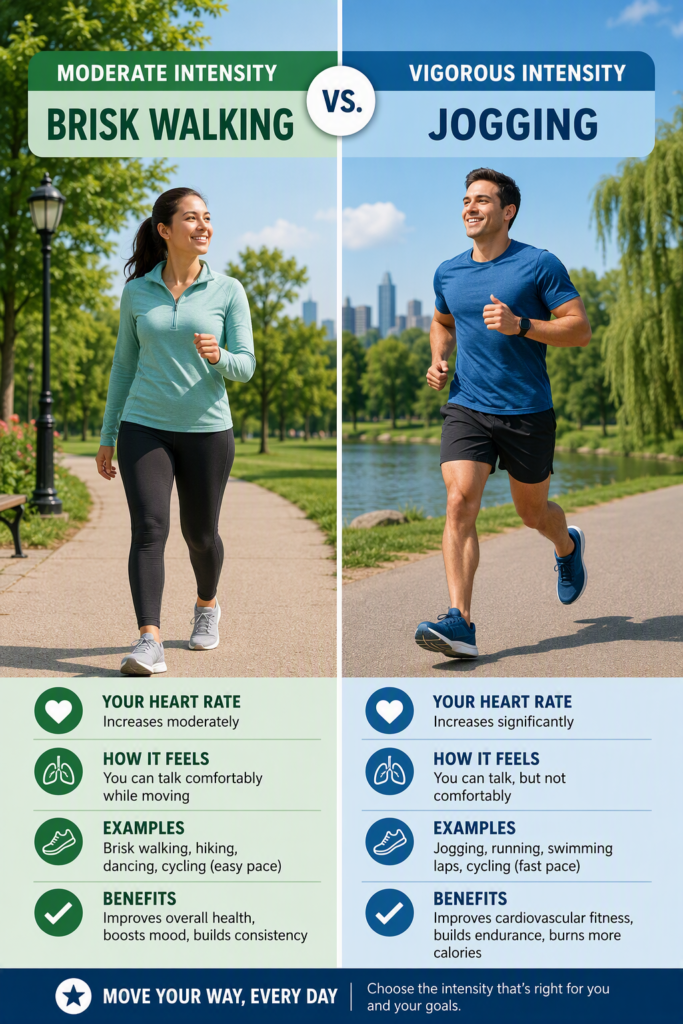
That means the weekly recommendation can be broken down this way: 150 minutes of moderate work or 75 minutes of vigorous intensity activity. Many moderate activities can become vigorous if you increase the effort.
- Moderate activities include brisk walking, water aerobics, dancing, and hiking.
- Examples of vigorous activities include running, swimming, and biking fast or uphill.
- Walking up stairs, skipping, aerobics, gymnastics, and martial arts can count too.
- Short bursts of maximum effort, such as sprint intervals, fit very vigorous activity.
How Different Types of Exercise Contribute to Your Health
Not all movement does the same job, which is why the guidance includes both aerobic activity and strength training. Aerobic work supports your weekly minutes goal, while muscle work builds strength in the major muscle groups. Both matter if you want broad health benefits.
There is also flexibility. Moderate and vigorous exercise can offer similar health benefits when the weekly total matches the guideline. The source information focuses on meeting the target safely and consistently, not on warning about going above it. Next, let’s look at which activities count.
Aerobic Activities That Count Toward Weekly Goals
Many kinds of aerobic activity can help you reach your weekly goal. If you need minutes of moderate intensity activity, think about movement that raises your breathing and body temperature while still letting you talk. A brisk walking routine is one of the simplest ways to begin.
Moderate aerobic activity can come from everyday options or more structured workouts. The key is choosing something you can repeat often enough to build a routine.
- Brisk walking, water aerobics, dancing, and riding a bike count as moderate work.
- Doubles tennis, pushing a lawn mower, hiking, and rollerblading also fit.
- Vigorous activities include running, swimming, and biking fast or on hills.
- Walking up stairs, skipping, and aerobics can raise the intensity too.
You can reach your target with one type of exercise or by mixing several. That variety makes it easier to match your fitness, schedule, and preferences while still meeting your weekly goal.
Muscle-Strengthening Exercises and Their Importance
Aerobic minutes are only part of the picture. Strength training should be done on at least 2 days a week, and it should work the major muscle groups: legs, hips, back, abdomen, chest, shoulders, and arms. That is a core part of the guidance, not an optional extra.
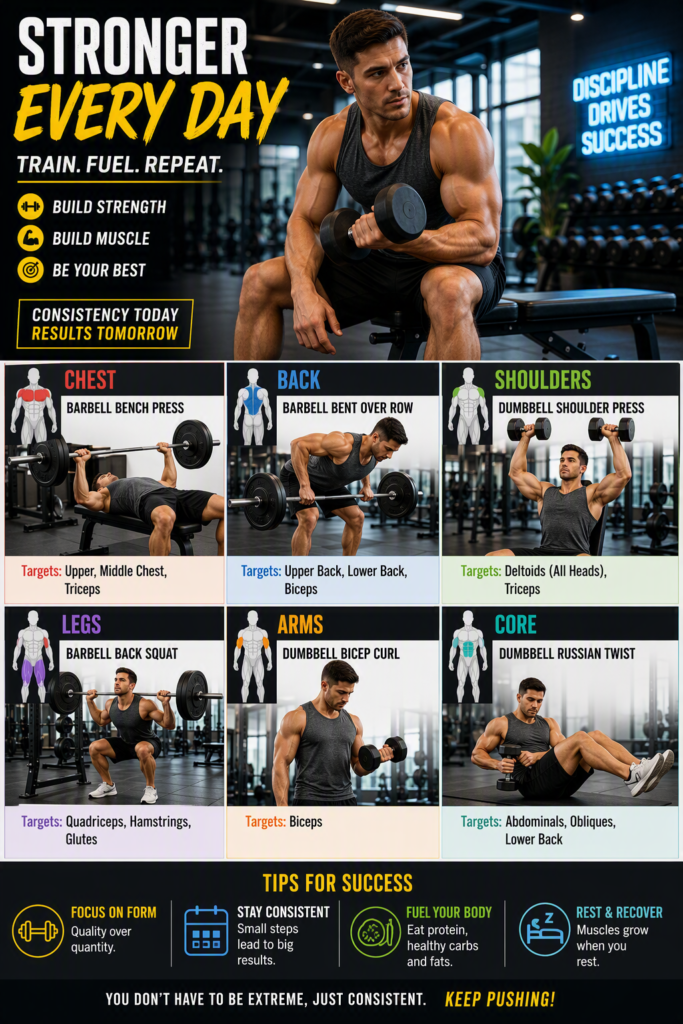
Strength exercises can be simple and practical. You might use body weight for push-ups and sit-ups, lift weights, use resistance bands, or do yoga, Pilates, tai chi, heavy gardening, or even carry heavy shopping bags. The goal is to work hard enough that you need a short rest before repeating the movement.
Yes, the guidance does suggest how to spread exercise across the week. Try to spread activity over 4 to 5 days, or daily if that suits you. Strength work can happen on the same or different days as your aerobic sessions.
Adapting Exercise Recommendations for Age and Health Conditions
Exercise advice is not one-size-fits-all. Your activity levels, age groups, and overall health information all shape what is safe and realistic. The source guidance is written for adults 19 to 64, but it also points readers to separate recommendations for children, young people, and older adults.
Health promotion still starts with the same idea: move regularly and choose activities that fit your body. If you have medical conditions or concerns, you should speak with a doctor first. The next section covers special situations that may call for extra care.
Exercise Needs for Older Adults and Special Populations
Some groups may need to adjust how they follow the guidance. The source notes that these recommendations are also suitable for disabled adults, pregnant women, and new mothers, with changes based on comfort, experience, and medical conditions. There are also separate guidelines for older adults and younger age groups.
If you are returning to exercise after pregnancy, your physical activity choices should reflect your earlier activity levels. Strength work should still be included, and more intense exercise can be added after a postnatal check if you feel able.
- Older adults should look for guidance written for their age group.
- New mothers can build up after the 6- to 8-week postnatal check.
- Vigorous activity is not recommended if you were inactive before pregnancy.
Conclusion
In conclusion, understanding the right amount of exercise per week is crucial for maintaining optimal health. By following the recommended guidelines, you can ensure that you’re striking a balance between moderation and intensity, tailored to your personal needs. Remember, engaging in a variety of activities not only supports physical health but also enhances your mental well-being. Whether you’re new to exercising or looking to adjust your routine, the key is consistency and enjoyment. If you’d like personalized guidance on how to implement these recommendations into your lifestyle, don’t hesitate to reach out for a free consultation. Your journey to better health starts today!
https://tools.cdc.gov/campaignproxyservice/subscriptions.aspx
https://www.niddk.nih.gov/health-information/weight-management/keep-active-eat-healthy-feel-great