


Fish Oil Benefits: What Science Says You Should Know

Key Highlights
- Fish oil supplies omega-3 fatty acids that support heart health, brain function, and eye development.
- The best-known health benefits include help with lower triglycerides, blood pressure, and inflammation.
- Fish oil supplements can be useful if you do not eat enough oily fish each week.
- EPA and DHA are the main fatty acids in fish oil and play key roles in the body.
- Some people notice mild side effects, so dosage and product quality matter.
Introduction
Fish oil is one of the most widely used dietary supplements, and for good reason. It provides omega-3 fatty acids that your body needs for many daily functions. The benefits of fish oil may include support for heart health, brain function, eye development, and inflammation balance. If you do not eat much fatty fish, fish oil supplements may help fill the gap. Still, it is smart to understand what fish oil does, where it comes from, and how to use it well.
Understanding Fish Oil and Omega-3 Fatty Acids
Fish oil comes from oily fish and is valued because it is rich in omega-3 fatty acids. These healthy fats are important for brain development, eye health, and normal body function. Many people use fish oil as one of their regular dietary supplements.
You can get these fats from food, but supplements are often used when dietary intake is low. The health benefits tied to fish oil depend largely on its omega-3 content, especially EPA and DHA. To see why that matters, it helps to start with where fish oil comes from.
What is fish oil and how is it sourced?
Fish oil is a fat extracted from oily fish such as herring, tuna, anchovies, and mackerel. These are some of the main sources of fish oil used in foods and supplements. Because many Western eating patterns are low in omega-3s, fish oil is often used for dietary supplementation.
Inside the body, omega-3 fatty acids from fish oil become part of cell structures and help support normal signaling, inflammation balance, and organ function. That is one reason fish oil is linked with benefits for the heart, brain, eyes, and skin.
If you prefer dietary sources, you do have options beyond capsules. Oily fish remain the top choice, while plant foods provide a different omega-3 called ALA. Fish oil supplements are often used when whole-food intake is low or inconsistent.
Types of omega-3 fatty acids in fish oil (EPA and DHA)
The two main omega-3 fatty acids in fish oil are eicosapentaenoic acid and docosahexaenoic acid. You will usually see them listed as EPA and DHA. Both are polyunsaturated fatty acids, and both are central to the effects of fish oil.
EPA is often linked to inflammation balance and cardiovascular health. DHA is especially important for brain development, brain function, and eye development. Together, these fatty acids help support tissues throughout the body.
Once consumed, EPA and DHA are used in cell membranes and take part in signaling pathways. That is how omega-3s in fish oil work in the body. Their wide reach helps explain why fish oil is studied for heart disease, mental health, cognitive decline, and other health conditions.
Science-Backed Health Benefits of Fish Oil
Fish oil has been studied for years, and several health benefits appear promising. Research from clinical trials and more than one systematic review suggests that fish oil supplementation may support heart health, brain function, inflammation control, and some aspects of aging.
At the same time, not every result is equally strong. Some outcomes are clearer than others, and benefits may depend on dose, baseline diet, and health status. The strongest interest usually centers on the heart and the brain, which we will look at next.
How fish oil supports heart health
One of the main health benefits of taking fish oil supplements is support for heart health. People who eat more fish often show a lower risk of heart disease, and fish oil has been linked with better triglyceride levels, lower triglycerides, and support for healthy blood pressure.
Fish oil may also help with several cardiovascular disease risk factors at once. Research suggests omega-3s can reduce triglycerides, may help limit plaque formation that hardens arteries, and may reduce the severity of coronary heart disease outcomes in some groups.
That does not mean fish oil replaces medical care. The American Heart Association and similar guidance often place food first, especially fatty fish. Still, if you do not eat much fish, fish oil supplements may be a practical option to support cardiovascular health and lower risk of heart disease.
Brain function and mental wellness benefits
Your brain contains a high amount of polyunsaturated fatty acids, so omega-3 intake matters. Fish oil may be beneficial for brain function or mental health because DHA and EPA help support normal brain health and signaling.
Research suggests that people with some mental health conditions may have lower omega-3 blood levels. Higher intake may help improve symptoms in certain cases, including depression, though results vary and more study is still needed.
There is also interest in aging and memory. People who eat more fish tend to show a slower rate of cognitive decline, and some research suggests omega-3 supplements may help reduce the risk linked with dementia and Alzheimer’s disease. That makes fish oil a notable topic in healthy aging discussions.
Fish Oil’s Role in Reducing Inflammation and Supporting Immunity
Fish oil is often discussed for inflammation because omega-3 fatty acids can influence how the body responds to stress and chronic irritation. Its anti-inflammatory effects are one reason fish oil is studied for joint concerns and several long-term health conditions.
There is also growing interest in how balanced inflammation may support the immune system over time. Fish oil is not a cure, but it may play a useful supporting role. To understand that better, let’s look at how these effects work and where the limits are.
Mechanisms behind fish oil’s anti-inflammatory effects
Fish oil’s anti-inflammatory effects come from the way omega-3 fatty acids act in cell membranes and signaling pathways. In simple terms, they help shift the body away from some processes tied to ongoing inflammation. That is how omega-3 fatty acids in fish oil work in the body.
This matters most in health conditions where inflammation stays active for long periods. Fatty acid supplementation has been studied in people with rheumatoid arthritis, where fish oil may help reduce joint pain, stiffness, and even the need for some medications.
Still, more is not always better. High doses should not be taken casually, especially if you have medical concerns or use other supplements and medicines. Fish oil may support symptom control in some people, but the results depend on the person, the dose, and the condition being treated.
Immune system support and longevity benefits
Fish oil may support the immune system indirectly by helping the body manage inflammation more effectively. When inflammation is better balanced, the body may be better positioned to handle everyday stressors. Fish oil also naturally contains small amounts of vitamin D and vitamin A.
Can fish oil help improve longevity or slow aging? The best answer is that it may support healthy aging rather than act as an anti-aging shortcut. Omega-3 intake has been linked with slower cognitive decline, and that can matter for long-term quality of life.
Its broader health benefits may also help by improving risk factors tied to chronic illness, especially cardiovascular risk. That said, fish oil is only one part of the picture. Food quality, activity, and medical care still play a much bigger role in longevity.
Fish Oil for Skin, Eye, and Joint Health
Fish oil is not only about the heart. It is also linked with skin health, eye health, and joint mobility because omega-3s are used in tissues all over the body. That gives fish oil a broader set of potential health benefits than many people expect.
In practical terms, this means fish oil may help support the way your skin looks and feels, how your eyes function over time, and how comfortably your joints move. The next sections break those effects down one by one.
Benefits for skin health and appearance
Your skin contains omega-3 fatty acids, so it makes sense that fish oil has a role in skin health. One of the benefits of fish oil is support for the skin barrier, which can influence comfort, moisture balance, and overall appearance.
Research has also explored fish oil in inflammatory skin disorders such as psoriasis and dermatitis. While it is not a stand-alone treatment, the healthy fats in fish oil may help support skin function from the inside.
When choosing a supplement, freshness matters. Omega-3 fats can oxidize, which is why some products include vitamin E as an antioxidant. That does not change the core effect of the fatty acids, but it may help protect product quality. For many people, skin support is one of several reasons to consider fish oil.
Fish oil’s impact on eye health and vision
Fish oil is often linked with eye health because docosahexaenoic acid is a major structural fat in the eye. DHA supports eye development early in life and remains important for vision across the lifespan.
People who do not get enough omega-3s may face a greater risk of some eye issues as they age. Eating fatty fish has been associated with a reduced risk of age-related macular degeneration, though supplement findings are less consistent.
Are there any side effects of using fish oil supplements for eye support? The same common issues apply here as with any use: fishy aftertaste, bad breath, and other mild side effects in some people. Taking fish oil with meals and choosing a fresh, quality product may help reduce those problems.
Joint mobility and flexibility support
If stiff joints slow you down, fish oil may offer some support. Among its better-known health benefits is help with joint pain and morning stiffness, especially in inflammatory conditions such as rheumatoid arthritis.
Research suggests fish oil may improve comfort and joint mobility in some people. It may also reduce the need for certain medications in rheumatoid arthritis care, though it should be seen as support rather than a replacement for treatment.
For the average adult, this can mean easier daily movement and a lower risk of activity limits caused by ongoing discomfort. While results differ from person to person, better flexibility and steadier movement are meaningful reasons why fish oil remains popular for joint support.
How to Add Fish Oil to Your Daily Routine
Adding fish oil to your routine can be simple. You can focus on dietary sources like oily fish, or you can use dietary supplements if your usual dietary intake is low. The right choice depends on your habits, preferences, and any health conditions you manage.

Whole foods are often the better starting point because they provide healthy fats in a natural form. Still, supplements can help when fish is not regularly on your plate. Let’s look at dosage, product choice, and food options next.
Recommended daily dosage, choosing supplements, and dietary sources
If you are wondering about the recommended daily dosage of fish oil for adults, broad omega-3 guidance from the National Institutes of Health lists about 1,100 mg per day for women and 1,600 mg per day for men in total omega-3 intake. Food-first advice also matters, with dietary guidelines suggesting at least 8 ounces of seafood weekly.
When choosing fish oil supplements, read the label carefully. A useful target is at least 500 mg of EPA and DHA per 1,000 mg of fish oil. For dietary supplementation, freshness, purity testing, and absorbable forms all matter. If you have health conditions, check with a health care provider.
| Factor | What to look for |
|---|---|
| Daily dosage | Match overall omega-3 needs and your usual diet |
| EPA + DHA content | At least 500 mg per 1,000 mg fish oil |
| Form | Triglyceride forms may absorb better than ethyl esters |
| Quality | Third-party tested, fresh, not rancid |
Foods rich in omega-3s as alternatives to supplements
Yes, there are foods rich in omega-3s besides fish oil supplements. In fact, whole foods are usually the preferred place to start. Fatty fish provides EPA and DHA directly, while some plant food sources provide ALA, another omega-3 fat.
If you want to raise intake through meals, focus on a mix of seafood and plant options. This can help you build a more natural pattern of healthy fats without relying only on pills.
- Salmon and other fatty fish are among the best food sources of marine omega-3s.
- Herring, mackerel, anchovies, and tuna also provide omega-3 fats.
- Flaxseed oil offers plant-based ALA.
- Canola oil can add small amounts of omega-3 to your diet.
- Whole foods often give more nutritional value than supplements alone.
Potential Side Effects and Safety Considerations
Fish oil is widely used, but it is not risk-free. Most side effects are mild, yet they can still affect comfort and consistency. Product quality, dosage, and timing all play a part in how well you tolerate fish oil.
It is also important to think about your full health picture. People with certain health conditions or those taking medicines should speak with a health care provider before using high doses. The next two sections cover what to watch for and who should be more careful.
Common side effects and how to minimize them
Are there any side effects of using fish oil supplements? Yes, but they are often manageable. The most common side effects are mild side effects rather than serious reactions. Many people notice them most when taking larger amounts or lower-quality products.
Typical complaints include taste and stomach-related issues. High doses may raise the chance of problems, which is why careful use matters. Choosing a fresh supplement and taking it with food may help.
- Fishy aftertaste is one of the most common complaints.
- Bad breath can happen in some users.
- A rancid-smelling product may be harder to tolerate.
- Taking fish oil with meals may reduce digestive discomfort.
- Avoid unnecessary high doses unless your clinician recommends them.
If side effects continue, switching products or using more dietary sources may be a better fit for you.
Who should avoid fish oil and possible interactions
Some people should be more cautious with fish oil. If you have a seafood allergy, chronic health conditions, or take prescription medicines, do not assume supplements are automatically safe. It is wise to review use with a clinician first.
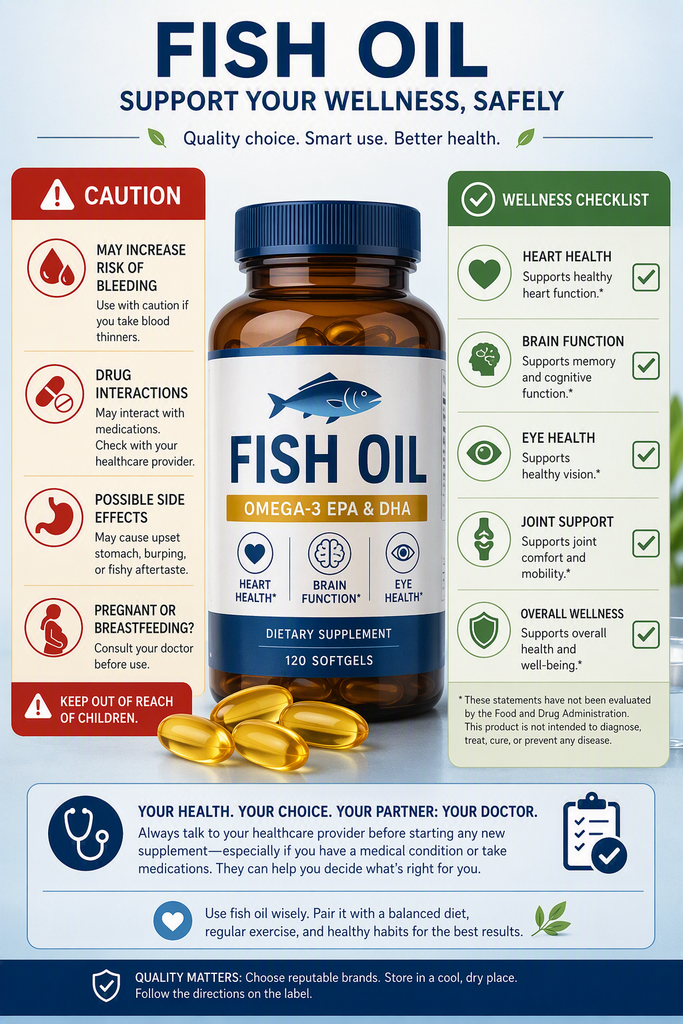
Possible risks of taking fish oil for certain health conditions include medication interactions, especially with blood-thinning drugs or hormonal medicines such as birth control pills. Since omega-3s can affect blood levels and body responses, those combinations deserve attention.
There is also concern in some discussions about the risk of atrial fibrillation with higher intake in certain people. That does not mean everyone should avoid fish oil, but it does mean dosing should be thoughtful. Dietary guidelines and food-first choices remain a sensible baseline for most adults.
Conclusion
In conclusion, incorporating fish oil into your daily routine can yield a multitude of health benefits. From supporting heart and brain health to reducing inflammation and enhancing skin appearance, the advantages are backed by scientific research. By understanding the types of omega-3 fatty acids and how they function within your body, you can make informed choices about your health. Remember to consider potential side effects and consult with a healthcare professional if needed. To experience these benefits firsthand, why not get started today? Embrace a healthier lifestyle by exploring the various ways you can add fish oil to your diet. Feel free to reach out for a free consultation to learn more about integrating fish oil and omega-3s into your nutrition plan!
Frequently Asked Questions
Is there strong scientific evidence supporting fish oil’s benefits?
Yes, there is scientific support for several fish oil benefits, especially in heart health, triglyceride control, inflammation, and some areas of brain health. Clinical trials and more than one systematic review suggest fish oil supplementation can help, though results vary by outcome, dose, and the person being studied.
Can fish oil slow aging or boost longevity?
Fish oil may support healthy aging more than directly boost longevity. Its health benefits may help by improving risk factors tied to chronic disease and cognitive decline. Dietary supplementation can be useful when intake is low, but it works best as one part of a broader healthy lifestyle.
What is the best time of day to take fish oil supplements?
There is no single best time for everyone, but taking fish oil supplements with a meal may improve comfort and reduce fishy aftertaste. Match use to your regular dietary intake and routine so you remember it. If you are unsure about timing or dose, ask a health care provider.
https://resources.healthgrades.com/contributors/heidi-moawad-m-d
https://resources.healthgrades.com/contributors/rashida-ruwa-rn
https://resources.healthgrades.com/right-care/cholesterol/how-much-omega-3-per-day
https://my.clevelandclinic.org/health/drugs/20502-fish-oil-omega-3-fatty-acids-capsules-rx
https://resources.healthgrades.com/right-care/depression/depression