


Women’s Healthy Tips on Pregnancy: Essential Guide for Moms

Key Highlights
- Start prenatal care early and keep every visit to support a healthy pregnancy.
- Take a daily prenatal vitamin with folic acid to help lower the risk of birth defects.
- Choose healthy foods like whole grains, dairy products, fruits, and healthy fats.
- Aim for healthy weight gain based on your body mass index and your provider’s advice.
- Stay active with safe physical activity, including moderate aerobic activity each week.
- Avoid alcohol, smoking, drugs, raw sprouts, and high-mercury fish like king mackerel.
Introduction
Pregnancy can bring excitement, questions, and plenty of advice from every direction. What matters most is focusing on habits that support a healthy pregnancy day by day. That includes taking a prenatal vitamin, eating well, staying active, and keeping up with medical visits. You also need to watch your weight gain in a steady, healthy way. With simple steps and the right support, you can protect your health and give your baby a strong start.
Building the Foundations of a Healthy Pregnancy
A healthy pregnancy starts with steady basics. Early prenatal care, healthy food, enough water, and a daily prenatal vitamin with folic acid all help support your baby’s growth. These steps can also lower the chance of certain birth defects and help your body handle change more smoothly.
Just as important, talk openly with your provider about risk factors like high blood pressure, diabetes, medicines, or family history. Getting answers early helps you stay safe through each stage of pregnancy. The next sections break these essentials into practical tips you can use every day.
Key pregnancy health tips for expecting moms
Some habits matter more than others when you want a healthy pregnancy. Start care as soon as you know you are pregnant, and stay involved in every visit. Ask questions, share your health history, and bring up any symptoms that worry you.
Focus on a few basics:
- Take your prenatal vitamin every day, especially one with folic acid.
- Follow a balanced eating plan that supports healthy weight gain.
- Stay alert for warning signs like high blood pressure, bleeding, pain, or swelling.
- Keep moving with safe activity if your provider says it is okay.
One common mistake is assuming “eating for two” means doubling food. You usually need more nutrients, not twice as much food. Missing appointments is another problem. Regular checkups help catch issues early and keep both you and your baby on track.
Managing common pregnancy symptoms
Many pregnancy symptoms are common, but that does not mean you should ignore them. Mild discomfort can happen, yet some changes need medical attention. Knowing the difference helps you stay safe throughout the months ahead.
Watch for symptoms that deserve a call to your provider:
- High blood pressure symptoms or unusual dizziness
- Excessive swelling, especially if it comes on quickly
- Pain, bleeding, or contractions
- Signs of urinary tract or bladder infections
Hydration can help with constipation, hemorrhoids, excessive swelling, and urinary tract concerns. It may also lower the chance of early labor linked to not getting enough water. Keep track of how you feel, and do not wait if something seems off. Quick action often prevents small concerns from becoming bigger health problems.
Essential Prenatal Care and Medical Visits
Prenatal care is one of the most important parts of a healthy pregnancy. You should schedule a visit as soon as you know you are pregnant, or even if you think you might be. Routine prenatal care helps your provider monitor your baby’s growth and spot health problems early.
These visits also give you time to discuss stress, symptoms, medicines, supplements, and your prenatal vitamin. If something feels wrong, speak up right away. Next, let’s look at how often visits usually happen and which tests and vaccines are commonly recommended.
Recommended prenatal appointment schedule in the United States
Most pregnant women need regular prenatal care throughout pregnancy. A common schedule is at least once a month during the first 6 months, which is through about 28 weeks of pregnancy. After that, visits usually become more frequent during the last 3 months.
Your provider may want to see you more often if you have risk factors, symptoms, or other medical care needs. That can include high blood pressure, diabetes, bleeding, or a history that needs closer follow-up.
| Stage of pregnancy | Typical visit pattern |
|---|---|
| Early pregnancy to 28 weeks of pregnancy | About once a month for routine prenatal care |
| After 28 weeks of pregnancy | More often during the last 3 months |
| Any point with risk factors or problems | Extra visits based on symptoms and medical care needs |
Screening tests and vaccinations during pregnancy
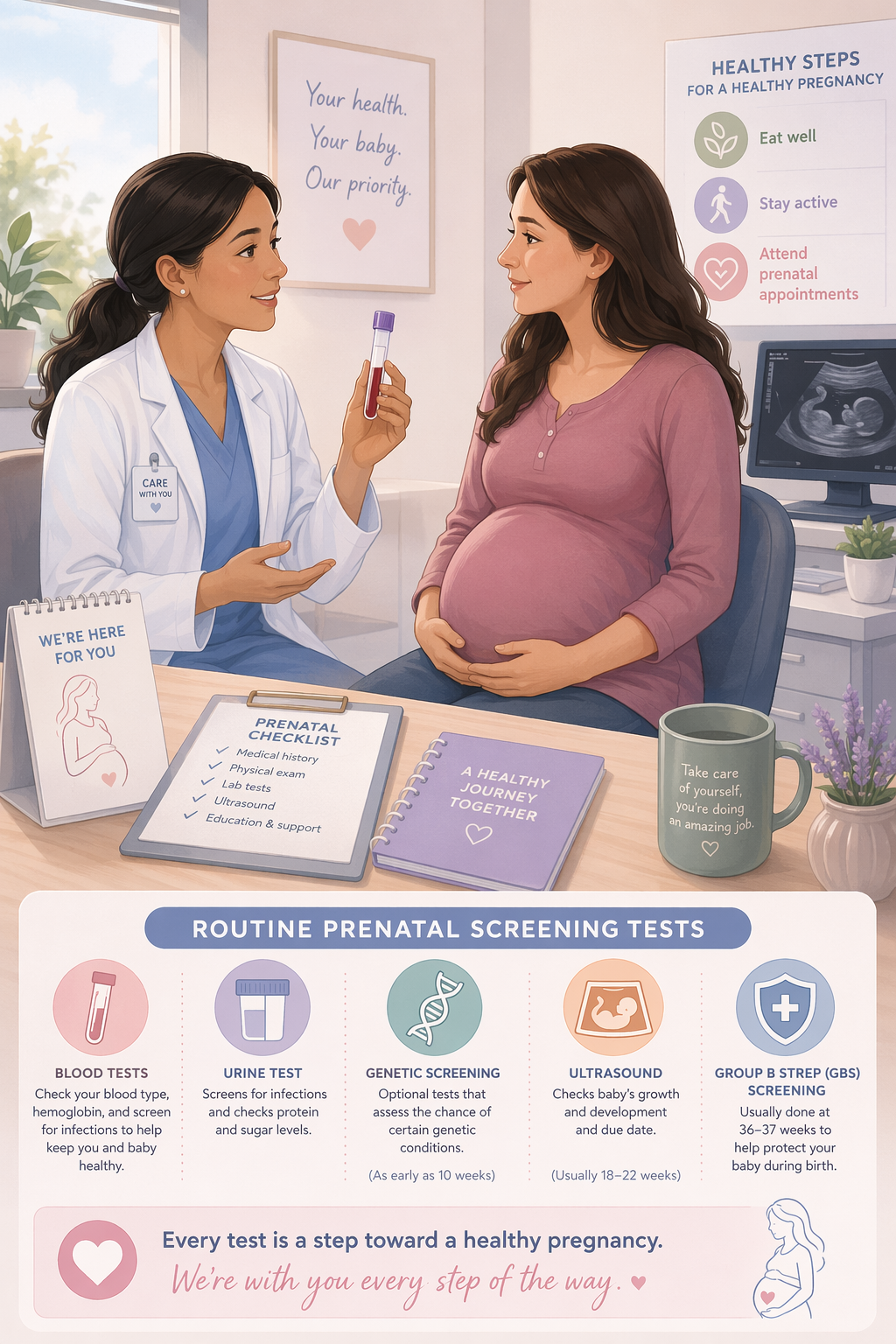
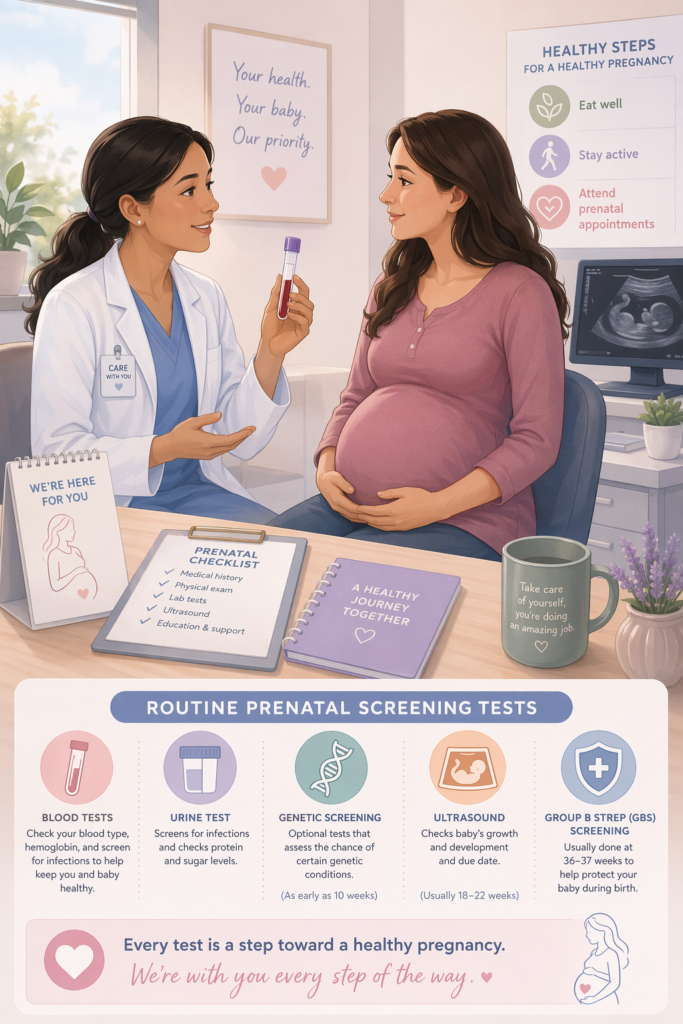
Screening tests are a routine part of prenatal care because they help find problems early. Your provider may check blood, urine, or swab samples to look for infections and other issues that could affect you or your baby. Family history can also guide added testing.
Common screening tests and vaccinations include:
- Blood pressure checks throughout pregnancy
- Testing for urinary tract infection, HIV, hepatitis B, syphilis, and Rh factor
- Gestational diabetes screening between 24 and 28 weeks
- Vaccinations for flu and whooping cough
These steps help lower risk and support a safer pregnancy. Some tests may also help identify concerns linked to birth defects or inherited conditions. If your provider recommends screening tests or vaccinations, ask what they are checking for and when results will be reviewed.
Nutrition Guide for Expecting Mothers
Food choices matter because your meals help meet both your needs and your baby’s nutritional needs. A healthy diet during pregnancy should focus on variety, balance, and enough nutrients rather than simply eating more. This is also why many women are told to take a prenatal vitamin.
Think of nutrition as daily support for growth, energy, and long-term health. Healthy food choices can work alongside supplements to fill gaps. Up next are practical food ideas and the key nutrients pregnant women need most.
Foods to include for a balanced pregnancy diet
A balanced pregnancy diet starts with simple, familiar foods. Try to build meals around healthy food choices that give steady energy and useful nutrients. You do not need perfect meals. You need consistent ones that support your body and your baby.
Good foods to include are:
- Whole grains such as brown rice and breakfast cereals
- Dairy products and fortified soy products for calcium needs
- Citrus fruits and orange juice for vitamin c
- Healthy fats from foods like peanut butter and fatty fish
You can also aim for plenty of fruits and other nutrient-rich foods across the week. These choices help support baby’s growth and can make it easier to meet daily needs without relying on empty calories. If you are unsure about portions or appetite changes, bring that question to your provider.
Key nutrients pregnant women need and how to get them
Some key nutrients deserve extra attention during pregnancy because they support development and help protect your health. Food should do most of the work, but a daily vitamin supplement can help cover what is harder to get from meals alone.
Pay close attention to these key nutrients:
- Folic acid: 400 to 800 mcg of folic acid can help prevent birth defects
- Vitamin d and calcium: important for strong bones
- Fatty acids: support baby’s brain and eye development
- Vitamin c: found in citrus fruits and orange juice
Iron, protein, and vitamin B12 also matter, especially if your diet is limited. Good sources may include animal products, fortified breakfast cereals, dairy products, soy products, and fatty fish. Ask your provider whether a daily prenatal vitamin is enough or if you need extra support for your nutritional needs.
Weight Management and Healthy Weight Gain
Weight gain is a normal part of pregnancy, but the amount of weight that is right for you depends on your body mass index before pregnancy. Healthy weight gain supports your baby’s growth and helps protect your own health as your body changes.
Too little or too much can create problems, so it helps to understand your range early. Your provider can explain how much weight gain makes sense for you. The next sections cover safe targets and simple ways to avoid unhealthy changes.
Understanding safe weight gain during pregnancy
How much weight gain is safe during pregnancy depends on your starting body mass index. General guidance often uses prepregnancy weight to set a range. Your provider can tell you what healthy weight gain looks like for your body and pregnancy.
Typical ranges include:
- Normal weight before pregnancy: 25 to 30 pounds
- Underweight before pregnancy: 28 to 40 pounds
- Overweight before pregnancy: 15 to 25 pounds
- Obesity before pregnancy: 11 to 20 pounds
Gaining too little may raise the risk of low birth weight, while gaining too much can create future health concerns. Most women gain the most weight in the last trimester. Instead of guessing, ask early about your target range and check in often as pregnancy progresses.
Tips for avoiding unhealthy weight changes
Keeping a healthy weight during pregnancy is not about dieting. It is about steady habits that support normal weight gain. One of the biggest mistakes is thinking extra calories should come from snack foods instead of meals with real nutrition.
Try these habits:
- Build meals around healthy foods instead of highly processed snacks
- Add calories gradually, especially in the second and third trimesters
- Use physical activity to support energy and routine
- Ask your provider to review your weight gain pattern
Avoid swinging between overeating and not eating enough. Your baby still needs reliable nourishment. A healthy weight comes from balanced meals, enough fluids, and movement that fits your stage of pregnancy. Small daily choices usually matter more than occasional perfect ones.
Safe Physical Activity and Exercise Recommendations
Physical activity can support a healthy pregnancy when it is done safely. Regular exercise may help you feel better, support emotional health, and prepare your body for labor and recovery. Even if you were not very active before, gentle movement can still help.
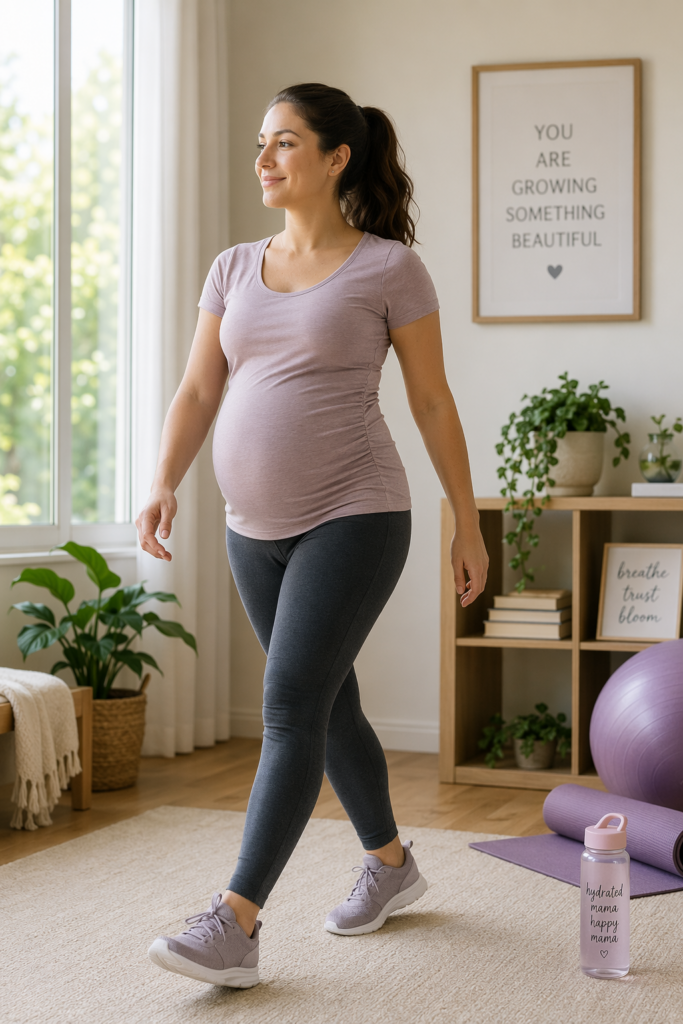
A common goal is at least 150 minutes a week of moderate aerobic activity, depending on your provider’s advice. You do not have to do it all at once. Next are good exercise options and ways to lower risk while staying active.
Best exercises and activities for pregnant women
For many women, regular exercise is a helpful part of pregnancy care. Moderate aerobic activity can ease discomfort, support mood, and improve overall stamina. It can also help you feel more prepared for labor and better able to recover after delivery.
Good options often include:
- Walking
- Swimming
- Dancing
- Other moderate aerobic activity approved during prenatal care
If you are new to exercise, start slow. Even a short walk can be useful. Over time, you may build toward the weekly goal if your provider agrees. The best routine is one you can keep up without strain. Before starting or changing activity, bring it up during prenatal care visits.
Tips for staying active while minimizing risks
Staying active is helpful, but safety comes first. Your exercise plan should match your stage of pregnancy, your comfort level, and any risk factors your provider is watching. If you have symptoms or medical concerns, ask before continuing your usual routine.
Use these steps to reduce problems:
- Start with short sessions and add time gradually
- Stop and call your provider if you have pain, bleeding, or contractions
- Keep up with fluids before and after physical activity
- Pair exercise with other healthy pregnancy habits, including your prenatal vitamin
You do not need intense workouts for benefits. Consistent movement is enough for many women. When physical activity fits your needs, it can support a healthy pregnancy without adding unnecessary stress to your body.
Wellness Habits and Lifestyle Adjustments
Daily choices outside the doctor’s office also shape your pregnancy experience. Wellness habits can lower risk factors, protect emotional wellness, and make stress feel more manageable. Support from family or friends can help more than you may expect.
Some habits should be avoided completely, while others simply need better planning. Knowing where to be careful can make everyday life feel less confusing. The next two sections cover what to avoid and how to manage stress in a healthy, realistic way.
Habits and activities to avoid during pregnancy
Certain habits raise risk factors for you and your baby, so it is worth being careful. There is no safe amount of alcohol during pregnancy. Smoking, vaping, secondhand smoke, and drug use should also be avoided because they can harm baby’s health.
You should also avoid:
- Raw sprouts
- High-mercury fish such as king mackerel
- Unpasteurized milk or juices and some refrigerated ready-to-eat foods
- Ignoring symptoms like high blood pressure concerns or excessive swelling
Food safety matters because some infections can be prevented with better choices and handwashing. If you take prescription drugs, over-the-counter medicines, herbs, or supplements, review them with your provider. Do not assume a product is safe during pregnancy just because it is sold without a prescription.
Strategies for managing stress and emotional wellness
Stress can build during pregnancy, especially when you are tired, uncomfortable, or worried about change. Emotional wellness matters because you need support, rest, and space to speak up when something feels hard. Asking for help is a healthy step, not a weakness.
Helpful ways to manage stress include:
- Talk with your provider about depression risk or ongoing worry
- Ask family or friends for meals, rides, or help at home
- Attend birthing or breastfeeding classes if available
- Keep regular routines for food, sleep, and light movement
Staying hydrated and cared for can also help your body cope better. Since poor hydration may be linked with early labor, simple self-care matters. If sadness, fear, or overwhelm starts to take over, bring it up early so you can get support before it grows.
Conclusion
In summary, maintaining a healthy pregnancy is essential for both the expecting mother and the developing baby. By focusing on proper nutrition, regular prenatal care, safe physical activity, and overall wellness habits, you can create a supportive environment for a healthy pregnancy. Remember to listen to your body, seek guidance from healthcare professionals, and make adjustments as needed. Embracing these essential tips will not only enhance your well-being but also contribute to a positive pregnancy experience. If you have any questions or need personalized advice, don’t hesitate to reach out for a consultation. Your health and the health of your baby are paramount!
Frequently Asked Questions
What are the most important tips for staying healthy throughout pregnancy?
The most important steps for a healthy pregnancy are starting routine prenatal care early, taking a prenatal vitamin with folic acid, eating balanced meals, staying active, and aiming for healthy weight gain. You should also discuss personal risk factors, symptoms, and medicines with your provider right away.
Are there common mistakes expecting moms should avoid?
Yes. Common mistakes include missing checkups, assuming pregnancy means overeating, skipping a prenatal vitamin, and avoiding all physical activity without medical advice. Food safety mistakes matter too. Pregnant women should avoid risky items like raw sprouts and focus on healthy foods that support steady weight gain.
Can exercise improve pregnancy health and how often should it be done?
Yes. Regular exercise can support a healthy pregnancy, improve comfort, and help with recovery after birth. Many women can aim for 150 minutes a week of moderate aerobic activity, such as walking or swimming. Always discuss physical activity plans during prenatal care, especially if symptoms or concerns come up.
https://www.cdc.gov/group-b-strep/testing/index.html
https://www.healthcare.gov/health-care-law-protections
https://www.albertahealthservices.ca:443/findhealth/default.aspx
https://www.albertahealthservices.ca/info/Page14182.aspx
https://www.eatright.org/health/pregnancy/prenatal-nutrition/food-safety-risks-for-pregnant-women
https://www.womenshealth.gov/pregnancy/youre-pregnant-now-what/prenatal-care-and-tests