
What is Acupressure? Discover Its Healing Benefits
Key Highlights
- Acupressure uses gentle pressure on acupressure points to support pain management and relaxation.
- It comes from traditional Chinese medicine and focuses on pressure points along energy pathways.
- Many people use it for chronic pain, muscle tension, stress, nausea, and sinus pressure.
- The benefits of acupressure may include better sleep, calmer emotions, and less discomfort.
- It differs from acupuncture because it does not use needles.
- You can try some pressure points at home when done carefully.
Acupressure is a simple, hands-on practice from traditional Chinese medicine that uses touch rather than tools. In simple terms, you press certain acupressure points on the body to ease discomfort and encourage balance. People often turn to it for healing benefits such as stress relief, support with chronic pain, better sleep, and help with nausea or sinus pressure. If you want a natural, needle-free way to feel better, acupressure offers a gentle place to start.
Understanding Acupressure: An Ancient Healing Art
At its core, acupressure is a healing method from traditional chinese medicine. It uses the fingers to press acupressure points, also called pressure points or acupuncture points, on the body.
The idea is that these spots connect with pathways carrying vital energy. When that flow is disrupted, discomfort may appear. By pressing the right areas, acupressure aims to support balance, calm the body, and ease symptoms. To understand it fully, it helps to look at where it came from and how it differs from acupuncture.
Origins and History of Acupressure
Acupressure grew out of traditional chinese medicine, a healing system that has long viewed the body as an interconnected whole. In this approach, health is linked to the smooth movement of a life force through the body. Practitioners mapped acupuncture points to support that movement and reduce discomfort.
Over time, these points were organized along channels sometimes described as energy fields or meridians. One well-known pathway is the conception vessel, which includes points used for calm and emotional balance. The system teaches that when flow is blocked, symptoms may develop.
So, what is acupressure in simple terms? It is the practice of using the fingers to press these mapped points instead of using instruments. That made it a practical method people could learn and use more easily in daily life.
Differences Between Acupressure and Acupuncture
People often confuse acupressure with acupuncture because both focus on acupuncture points. The key difference is simple. Acupuncture uses thin needles, while acupressure uses gentle pressure from the fingers, thumbs, or hands.
That makes acupressure feel closer to massage therapy, though it is more targeted than a general rubdown. A session may also overlap with a trigger point approach when tight, tender spots are involved. Still, acupressure follows point maps from traditional practice rather than only muscle patterns.
| Method | Main approach |
|---|---|
| Acupuncture | Stimulates acupuncture points with thin needles |
| Acupressure | Uses gentle pressure on the same or similar points |
| Massage therapy | Works more broadly through soft tissue and relaxation |
| Trigger point work | Focuses on tight, painful knots in muscle |
How Acupressure Works on the Body
Acupressure work centers on pressing specific pressure points linked to the body’s energy pathways. In traditional thinking, this helps restore energy flow when it feels blocked or out of balance.
From a modern view, pressing these spots may calm the nervous system, ease muscle tension, and support the body’s own pain-relief responses. You are not forcing change. You are encouraging the body to settle and respond. The next two sections explain the pathway idea and how this practice may support natural healing.
The Concept of Energy Pathways and Pressure Points
Traditional Chinese medicine describes the body as having energy pathways that carry Qi, often explained as vital energy. You can think of them as internal routes that connect different functions and body areas. When the flow is smooth, the body is thought to work in better balance.
Along these pathways are pressure points, also called acupressure points. These are specific points chosen for certain symptoms or goals. Some are used for stress, some for nausea, and others for facial pressure or sleep support.
When you apply steady touch to these spots, the goal is to improve energy flow through the pathway involved. That is the traditional explanation for how acupressure works on the body. It is a point-based system, not random pressing, which is why location and technique matter.
How Acupressure Stimulates Natural Healing
Acupressure is meant to help the body do what it already knows how to do. In traditional terms, it supports vital energy and clears blockages. In practical terms, it may help the body relax, settle, and respond with less tension.
Some explanations also point to blood circulation. When a tight or sensitive area is worked gently, you may get an increase of blood to that spot. That can bring fresh blood into the area after tension eases, followed by a new resurgence of blood flow as tissues relax.
The goal of acupressure is not to overpower symptoms. It is to support balance and decrease pain in a gentle way. That is why many people use it as a supportive method alongside other care, especially when stress and tension worsen discomfort.
Major Benefits of Acupressure Therapy
The benefits of acupressure cover both body and mind. Many people use it for pain management, especially when chronic pain, tight muscles, headaches, or digestive upset affect daily life.
It may also help lower stress hormones, support sleep quality, and create positive effects on relaxation and emotional steadiness. Common reasons people try it include sinus pressure, nausea, anxiety, and physical tension. The sections below look more closely at chronic pain relief and the calming effects many people notice after regular sessions.
Pain Relief for Chronic Conditions
One of the most common reasons people try acupressure is pain management. It is often used when chronic pain makes daily life harder and when stress adds to physical symptoms. A focused session may help relax tight areas and support the body’s own pain-relief response.
People frequently use it for discomfort in the back, shoulders, head, and neck. This can matter if low back pain builds after sitting all day or if neck pain follows stress and poor posture. The aim is to decrease pain without adding more strain.
Common symptoms people target include:
- Back pain and low back pain
- Neck pain linked with muscular tightness
- Tension headaches around the forehead or eyes
- General physical symptoms tied to stress and stiffness
Stress Reduction and Emotional Well-being
Acupressure is not only about soreness. Many people use it because stress shows up in the body fast. Tight shoulders, shallow breathing, racing thoughts, and poor rest can all follow a busy day. Targeted pressure may help the nervous system shift into a calmer state.
That calming effect can support emotional well-being as well as physical comfort. When the body feels safer and more settled, muscle tension often softens. Some people also notice improved sleep quality, especially when acupressure becomes part of a bedtime routine.
Positive effects may include:
- A calmer mood and less felt stress
- Reduced muscle tension in the chest, neck, or shoulders
- Better sleep quality when used consistently and gently
Common Acupressure Points and Their Uses
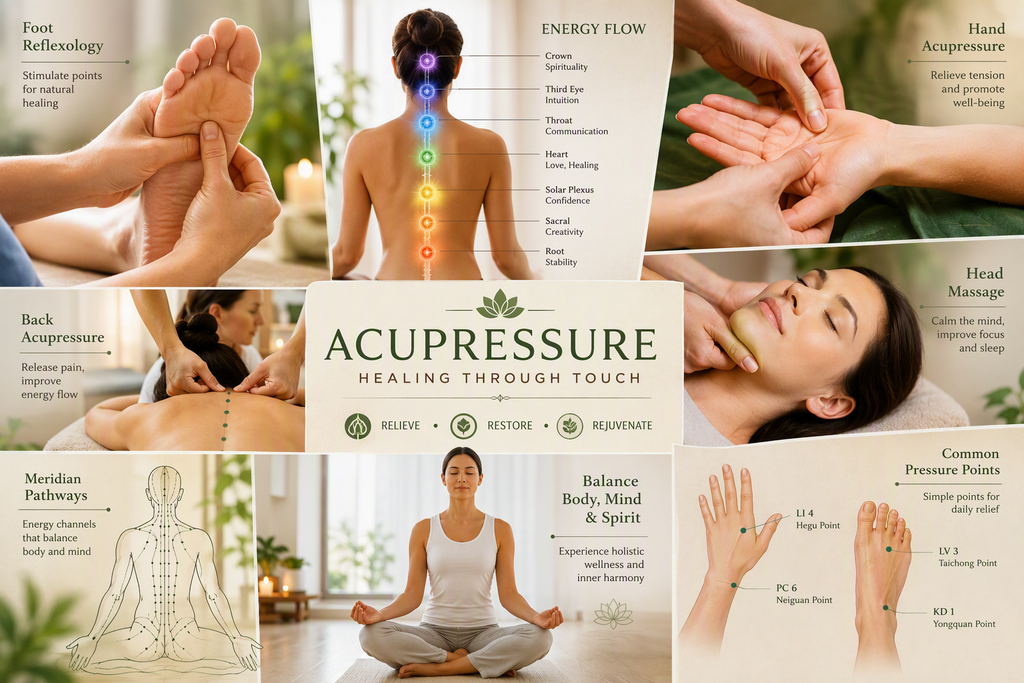
Many acupressure points are easy to reach on your own. These specific acupoints sit on different areas of the body and are chosen based on the symptom you want to address.
Some points are used for headaches, some for sinus pressure, and others for nausea, stress, or digestive support. Knowing which body parts connect with which concerns makes the practice more useful. The next sections cover several of the most commonly used various points and how people apply them at home.
Headaches, Sinus Issues, and Migraine Relief
Certain acupressure points are often used for head pressure, congestion, and discomfort around the eyes or nose. These spots are popular because they are easy to find and simple to press with your fingers. Used gently, they may help with tension headaches, sinus fullness, and facial pain.
For sinus support, LI20 sits beside the nose where the nostril meets the cheek. UB2 is at the inner edge of the eyebrows and is often used when screen strain or forehead pressure builds. Yin Tang is between the eyebrows and is commonly chosen for mild headaches and congestion.
Helpful points include:
- LI20: press with the index finger on each side of the nose
- UB2: use light, steady contact near the inner brows
- Yin Tang: a central trigger point area for calm and forehead relief
Digestive Support and Nausea Management
Digestive symptoms are another common reason people try acupressure. Some pressure points are used for bloating, constipation, nausea, and stomach discomfort. They are also popular when stress seems to upset digestion.
PC6, found on the inner wrist about three finger-widths below the palm, is one of the best-known points for nausea management. It is often mentioned for motion sickness, morning sickness, and general queasiness. Stomach 36, below the kneecap and slightly outside the shinbone, is often used for digestive support and constipation.
Common uses include:
- PC6 for motion sickness, nausea, and even postoperative pain support
- Stomach 36 for digestive support, nausea, constipation, and overall stomach comfort
Techniques and Tips for Practicing Acupressure at Home
Yes, you can often try acupressure treatment on yourself at home. A simple acupressure session usually involves finding the point, pressing with care, and holding steady contact for one to two minutes.
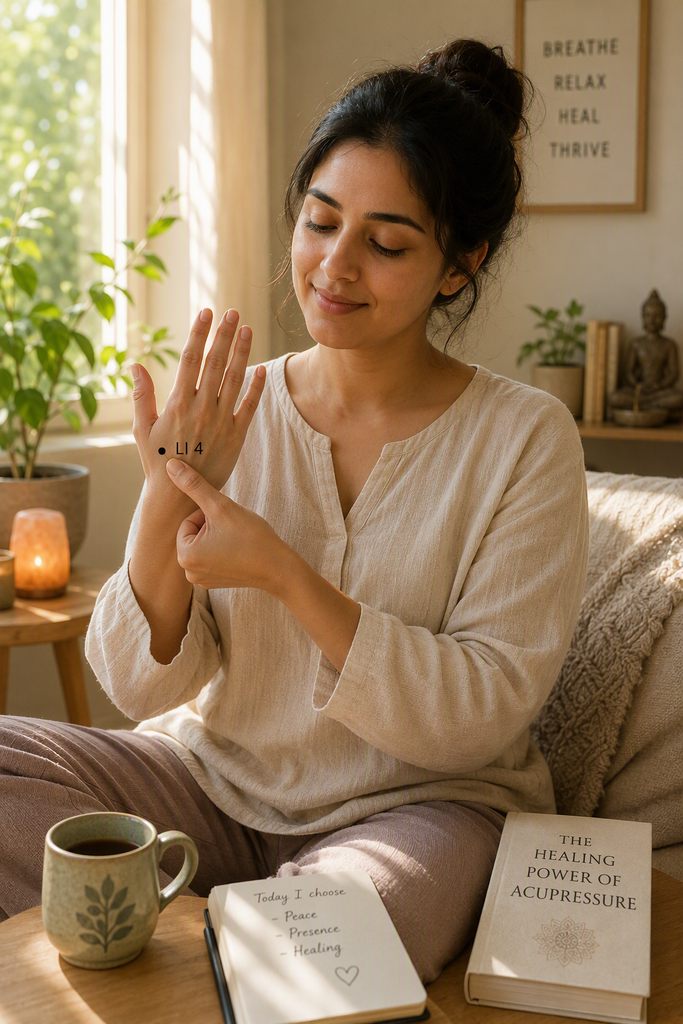
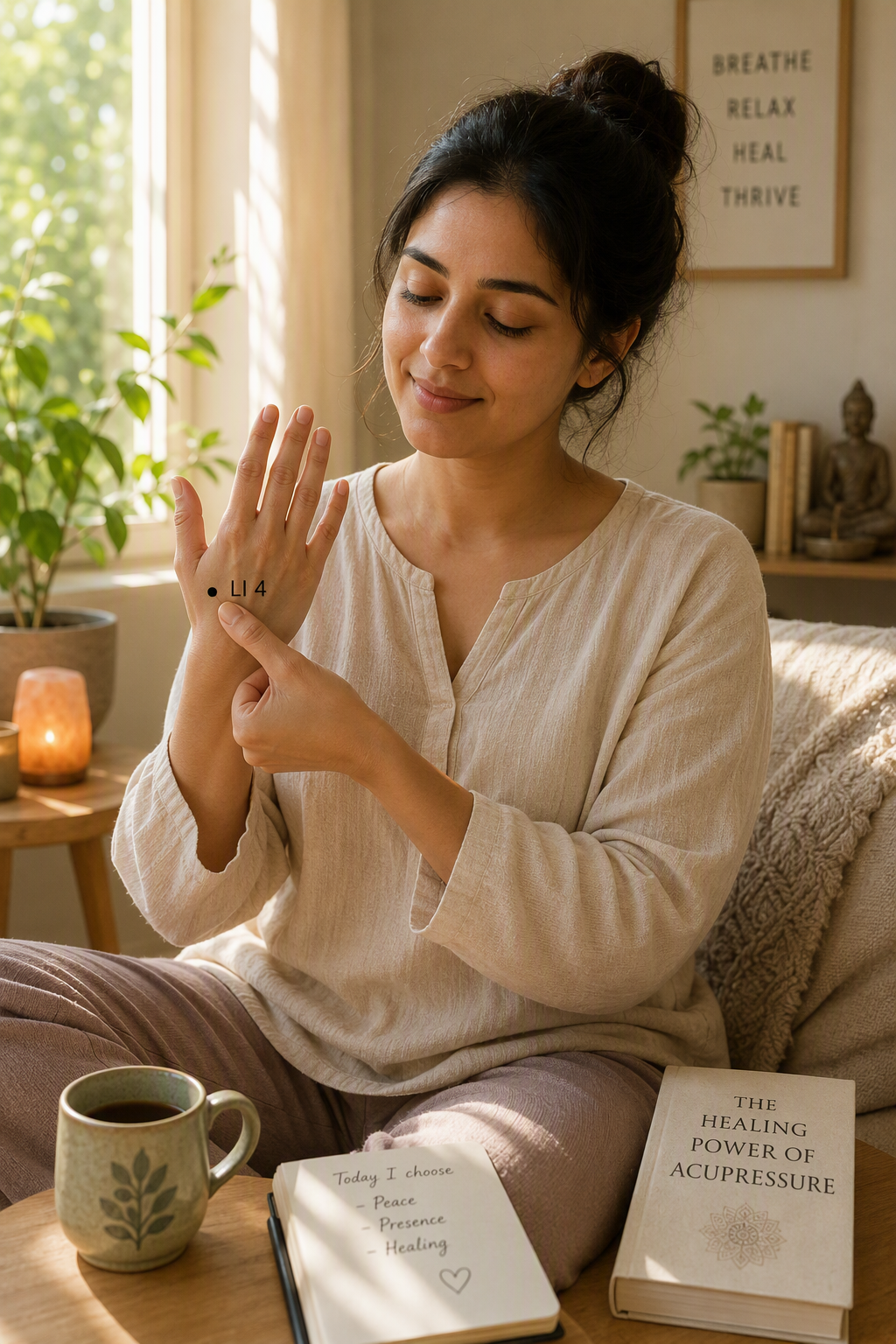
You may use firm pressure if it feels comfortable, or add small circular motions for a gentler effect. The goal of acupressure work at home is support, not force. If you feel unsure about point location or symptom choice, an acupressure practitioner can guide you, and some clinics may offer an online booking tool for appointments.
Simple Self-Acupressure Steps for Beginners
If you are new to this practice, simple self-acupressure starts with comfort. Sit down, breathe slowly, and choose one point that matches your symptom. Use the pad of your finger or thumb rather than your nail. Start with gentle pressure and increase only if it still feels easy and safe.
A short acupressure session does not need to be complicated. Hold the point for one to two minutes. You can switch body parts and repeat on the other side when needed. Some people prefer still pressure, while others like small circles.
Begin with steps like these:
- Pick one of the specific acupoints, such as PC6 or Yin Tang
- Apply gentle pressure and keep breathing steadily
- Stop if the spot becomes painful instead of mildly tender
Safety Precautions and When to Avoid Acupressure
Acupressure is usually considered low risk when done carefully, but safety precautions still matter. You should never press so hard that you bruise yourself or create more pain. A mild ache may help you identify a point, but strong discomfort is a sign to stop.
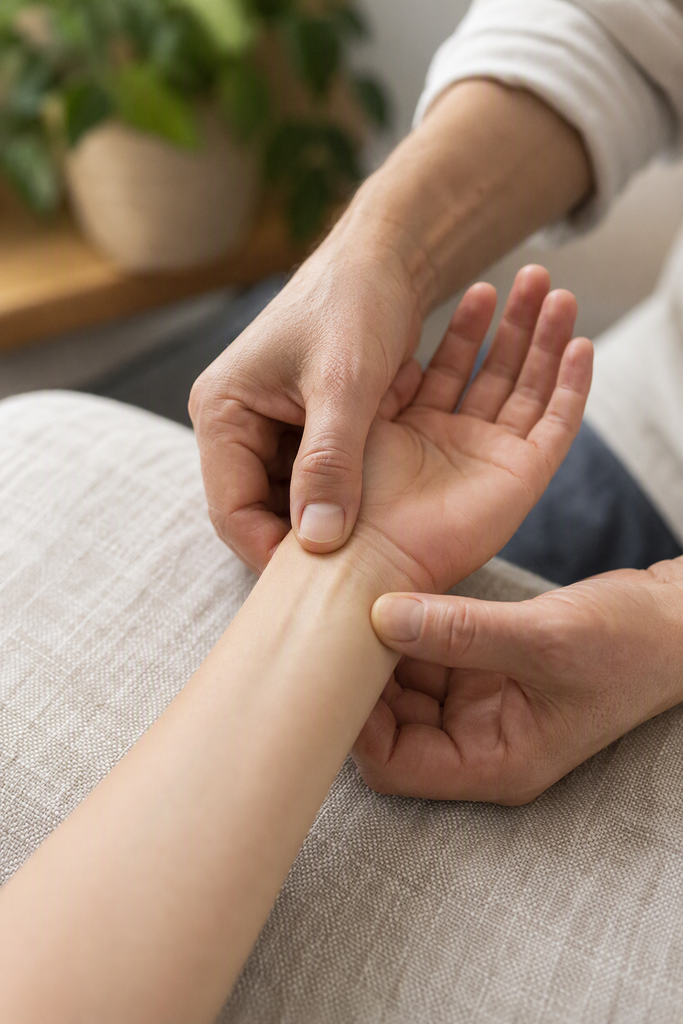
Extra care is important around sensitive areas of the body. If a point feels sharply painful, leave it alone. It is also wise to ask a trained professional before working near scar tissue or if you have a serious health condition. The practice is meant to support healing, not irritate tissues or worsen symptoms.
Use caution if:
- You plan to press near scar tissue or tender treatment areas
- You are one of the breast cancer patients using this alongside care and need point-specific guidance
Medical perspectives also tend to place acupressure in a supportive role, not as a replacement for needed care. It may fit well beside physical therapy or other treatment plans. For safe use, trained guidance matters, whether from a licensed provider or a professional with recognized credentials through a national certification commission pathway.
Research Findings on Effectiveness
Research on acupressure is ongoing, but the compiled information points to several promising findings. Studies and reviews suggest that it may help decrease pain, reduce nausea, support digestion, and improve relaxation in some people. Results can vary, which is important to keep in mind.
There is also scientific evidence connected to sleep and cancer care support. A 2021 randomized trial noted that breast cancer patients experienced some improvement in sleep quality when acupuncture and acupressure were added to regular treatment. Other reports mention benefits for postoperative pain, nausea, and persistent fatigue.
| Area studied | Reported finding |
|---|---|
| Digestive disorders | Review found positive effects in some people |
| Postoperative pain | Some support for symptom relief and comfort |
| Breast cancer care | Sleep quality improved in some patients |
| Pain symptoms | Some studies suggest acupressure may decrease pain |
Who Should Consult a Professional Before Trying Acupressure
Some people should get professional advice before starting acupressure, especially if their health picture is more complex. If you are unsure where to press, have ongoing symptoms, or feel nervous about doing it alone, a licensed acupuncturist or acupressure practitioner can help you use the method more safely.
This matters even more if you have treatment-sensitive areas, scar tissue, or pain that does not behave like ordinary muscular tension. A trained provider can show you which points are appropriate and which ones to avoid.
Breast cancer patients may also benefit from guided support before trying regular acupressure at home. The same is true for anyone who feels worse after pressing a point. If symptoms increase instead of settle, stop and speak with a qualified professional before trying again.
Conclusion
In conclusion, acupressure is a holistic healing practice that taps into the body’s natural energy pathways to promote well-being. By understanding its origins, techniques, and benefits, you can harness its potential for pain relief, stress reduction, and emotional balance. Whether you’re seeking relief from chronic conditions or simply looking to improve your overall wellness, incorporating acupressure into your routine can be a game-changer. Remember to approach it safely and consider consulting a professional if you have any concerns. If you’re ready to explore this ancient healing art further, don’t hesitate to reach out for a free consultation and start your journey towards better health today!
Frequently Asked Questions
What is the difference between acupressure and massage therapy?
Massage therapy usually works more broadly across muscles and soft tissue, while acupressure treatment focuses on exact acupressure points. You can think of it as a type of massage with a more targeted purpose. It may overlap with trigger point work, but it follows a point-based system.
Are there any side effects or risks with acupressure?
Acupressure is generally low risk, but you should not press hard enough to bruise or cause pain. Avoid sensitive areas of the body, and be cautious near scar tissue. People with breast cancer or complex medical needs should ask a professional which acupressure points are appropriate.
Can acupressure be used alongside conventional medical treatment?
Yes, acupressure treatment is often used as a complementary option alongside physical therapy or standard pain management. It is best viewed as supportive, not a replacement for medical care. If you have ongoing symptoms, a licensed acupuncturist can help you use it as part of an effective treatment plan.
https://www.webmd.com/balance/default.htm
https://www.webmd.com/balance/why-am-i-so-angry
https://www.webmd.com/balance/life-and-wellness-coaches
https://health.clevelandclinic.org/living-healthy
https://pubmed.ncbi.nlm.nih.gov/40938065
https://pubmed.ncbi.nlm.nih.gov/21531533
https://www.sciencedirect.com/science/article/abs/pii/S1744388116300512