


Yoga for Sciatic Nerve Pain: Steps to Find Your Relief
Key Highlights
Here are the key takeaways from this guide on using yoga for sciatic nerve pain:
- Sciatica is pain caused by irritation of the sciatic nerve, often stemming from issues in the lower back like a herniated disc or piriformis syndrome.
- Gentle yoga poses can provide significant sciatica relief by strengthening back muscles, stretching the hamstrings, and opening the hips.
- It’s crucial to listen to your body, avoid certain poses like deep forward bends, and consult a doctor before starting, especially with severe pain.
- Consistency is key; a regular yoga practice helps manage current sciatic nerve pain and can prevent future flare-ups.
- Starting with the right equipment, like a supportive yoga mat and props, makes your practice safer and more effective.
Introduction
If you’ve ever felt a sharp, shooting pain traveling from your lower back down your leg, you might be familiar with sciatic nerve pain. This uncomfortable and often debilitating condition affects a surprising number of people. While some injuries need complete rest, sciatica pain often responds well to gentle movement. Are you looking for a way to manage your discomfort? This guide will walk you through how yoga can be a powerful tool to ease sciatic nerve irritation and help you find lasting relief.
Understanding Sciatic Nerve Pain and How Yoga Helps
Dealing with sciatic nerve pain can be frustrating, but understanding its roots is the first step toward finding relief. This pain signals that something is irritating the long sciatic nerve, and specific yoga poses can target the underlying issues.
By gently stretching and strengthening the right areas, your yoga practice can address the common causes of sciatica. Let’s explore what sciatic nerve pain is, its typical triggers, and how a mindful yoga routine can support your journey to recovery and prevention of lower back pain.
What Is Sciatic Nerve Pain?
Sciatic nerve pain, commonly known as sciatica, refers to the discomfort that arises from the irritation of the sciatic nerves. These are the longest nerves in your body, running from your lower back, through your buttocks, and down the back of each leg to your heels. The pain isn’t a condition itself but a symptom of an underlying problem pressing on or inflaming the nerve.
This irritation can manifest in several ways. You might feel a sharp, burning sensation, tingling, numbness, or intense pain anywhere along the nerve’s path. While it can affect both sides, it typically occurs down just one leg, like the right leg or left leg.
To properly perform yoga stretches for this issue, the technique involves gentle, mindful movements. You should focus on poses that create space in the lower back and release tension in the hips and hamstrings without causing sharp pain. Always move slowly, breathe deeply, and never force a stretch. Consulting a healthcare professional can help diagnose the specific cause of your sciatica, which will guide the most effective treatment approach.
Common Causes and Symptoms of Sciatica
One of the most common causes of sciatica is a herniated disc in the lumbar spine. This happens when one of the soft cushions between your vertebrae slips out of place and presses on the sciatic nerve. Another frequent culprit is piriformis syndrome, where the piriformis muscle, located deep in the buttocks, spasms and irritates the nearby nerve. Other conditions like spinal stenosis can also lead to this type of lower back pain.
The symptoms of sciatica can vary widely from person to person. You might experience a mild ache, a sharp burning feeling, or excruciating discomfort. The pain often starts in the lower back and radiates down the back of the thigh and leg. Numbness, tingling, or muscle weakness in the affected leg or foot are also common signs.
For relief, some of the most effective yoga poses are those that gently stretch the piriformis muscle and hamstrings, such as Pigeon Pose and Reclined Hand-to-Big-Toe Pose. Poses that strengthen the back, like Cobra Pose, also help support the spine and reduce pressure on the nerve.
How Yoga Supports Sciatica Relief and Prevention
Yoga can be an incredibly effective tool for managing sciatic nerve pain. A consistent yoga practice works to both alleviate current symptoms and reduce the likelihood of future flare-ups. It addresses the root mechanical issues that often contribute to back pain and nerve compression.
How exactly does it help? Specific yoga poses are designed to:
- Strengthen supporting muscles: Poses that build strength in your back and core help stabilize the spine, reducing pressure on the sciatic nerve.
- Stretch tight areas: Gentle stretches for the hamstrings, hips, and buttocks, particularly the piriformis muscle, can release tension that contributes to nerve irritation.
- Improve mobility: Yoga improves flexibility and movement in the hips and spine, which can help decompress the nerve.
For beginners, starting safely involves choosing gentle poses, using props for support, and never pushing into pain. Yes, a regular yoga practice can absolutely help prevent future episodes of sciatica. By maintaining strength and flexibility in the key areas around your lower back and hips, you create a more resilient body that is less susceptible to the strains and pressures that cause sciatica.
Precautions and Safety Tips for Practicing Yoga with Sciatic Nerve Pain
While yoga can be a fantastic aid for sciatic pain, it’s vital to approach your practice with caution to avoid making the problem worse. The wrong movements or overstretching can increase inflammation and aggravate your back pain. Listening to your body is the most important rule.
To practice safely, you need to understand which movements might pose risk factors for your condition and how to modify yoga poses to suit your needs. We’ll cover when you should speak with a doctor, which postures to avoid, and how to tune into your body’s signals for a safe and healing experience.
When to Consult a Healthcare Professional Before Starting
Before beginning any new exercise regimen for sciatic pain, it is wise to consult a healthcare professional, such as a doctor or physical therapist. They can help diagnose the underlying cause of your pain, which is crucial for determining the right course of action. Conditions like an acute herniated disk may require specific care that yoga alone cannot provide.
A professional can assess your individual risk factors and guide you on what activities will best support your recovery. They can also rule out more serious conditions that might be causing compression of the nerve roots. For many, a combination of physical therapy and a gentle yoga practice is the most effective approach.
You should definitely seek medical advice if you experience any of the following:
- Severe or debilitating pain that doesn’t improve.
- Numbness or weakness that is worsening.
- Pain resulting from a sudden, traumatic injury. This professional guidance is the safest way for beginners to start practicing yoga for sciatica, ensuring your movements are beneficial, not harmful.
Yoga Poses to Avoid With Sciatic Nerve Pain
Yes, certain yoga poses should be approached with caution or avoided entirely when you have sciatic nerve pain. The general rule is to steer clear of any movement that causes sharp pain, tingling, or numbness to radiate down your leg. The goal is to create space and relieve pressure, not add to it.
Poses that involve a deep forward bend from the waist can be particularly problematic. These movements can overstretch the hamstrings and put excessive strain on the lumbar spine, potentially worsening the irritation of the sciatic nerve. Anything that rounds the lower back significantly should be modified or skipped.
Here are a few types of yoga poses to avoid or modify during a flare-up:
- Seated and Standing Forward Folds: Poses like Paschimottanasana (Seated Forward Bend) can aggravate the nerve.
- Deep Twists: Intense twisting can sometimes compress the spinal cord area.
- Double Pigeon Pose: This deep hip opener can be too intense for an inflamed piriformis.
- Straight-Legged Lifts: Exercises that involve lifting straight legs while lying down can strain the lower back.
Listening to Your Body and Modifying Poses Safely
Your body is your best guide during your yoga practice. If a pose causes a sharp, shooting pain down the back of your left leg or anywhere else, that’s a clear signal to back off immediately. The mantra “no pain, no gain” does not apply when dealing with sciatica pain. Instead, focus on gentle sensations of stretching and release.
Modifying poses is a smart and safe way to continue your yoga practice without aggravating the symptoms of sciatica. For example, if a stretch for the piriformis muscle feels too intense, you can reduce the range of motion or use a prop for support. Never force your body into a shape that feels wrong.
To practice safely, especially as a beginner, keep these tips in mind:
- Use Props: Blocks, straps, and blankets can help you get into poses without straining.
- Bend Your Knees: In poses that stretch the hamstrings, keeping a slight bend in the knees can protect your lower back.
- Exit Poses Gently: Move slowly and mindfully out of each posture to avoid sudden strain.
Essential Items to Begin Yoga for Sciatica Relief
Getting started with yoga for sciatica relief doesn’t require a lot of fancy equipment. The most important thing is your commitment to a gentle and consistent practice. However, a few key items can make your experience much safer, more comfortable, and more effective.
Having a good yoga mat, the right yoga props, and comfortable clothing will help you focus on your movements and alignment without distraction. Let’s look at what you’ll need to set up a supportive and healing yoga practice at home.
Choosing the Right Yoga Mat and Props
Selecting a quality yoga mat is a great first step for a beginner’s yoga practice. You need a surface that provides both cushioning and grip. A cushioned mat will protect your joints and lumbar spine, especially in floor-based yoga poses, while a non-slip surface ensures you can hold postures safely without your hands or feet sliding.
Yoga props are your best friends when modifying poses for sciatica. They help you maintain proper alignment and avoid strain by bringing the floor closer to you or providing necessary support. This is a crucial element for beginners looking to start practicing yoga safely.
Here are some essential props and how they can help:
| Yoga Prop | How It Helps with Sciatica |
|---|---|
| Yoga Blocks | Provide support under your hands in poses like Triangle or Half Moon, reducing strain on the lower back. Can also be placed under the hips for support in Pigeon Pose. |
| Yoga Strap | Helps you gently deepen hamstring stretches, like in Reclined Hand-to-Big-Toe Pose, without rounding your back. |
| Bolster/Blankets | Offer cushioning and support in restorative poses like Child’s Pose or under your hips to keep them level and reduce pressure. |
Comfortable Clothing and Setting Up Your Practice Space
What you wear can make a surprising difference in your yoga practice. Choose comfortable clothing that is breathable and allows for a full range of motion. You don’t want tight or restrictive fabric to get in the way when you are moving into different yoga poses. Stretchy materials that move with you are ideal.
Creating a dedicated practice space can also enhance your experience. You don’t need a lot of room, just enough to unroll your mat and move freely without bumping into furniture. A quiet, calm environment will help you focus on your body and breath, which is essential for a mindful practice.
To set up your space for a safe and effective yoga session, consider these points:
- Clear the Area: Make sure you have enough room to stretch out your arms and legs fully to each side of the body.
- Minimize Distractions: Try to find a time and place where you won’t be interrupted.
- Have Props Ready: Keep your blocks, strap, and blankets within arm’s reach so you can easily incorporate them into your practice.
Recommended Resources for Beginners (Videos, Apps, Guides)
As a beginner, it’s helpful to have guidance as you start your yoga practice. Following experienced yoga teachers can ensure you’re performing poses correctly and safely. Thankfully, there are many excellent resources available right at your fingertips. Online videos, apps, and written guides can provide step-by-step instructions tailored for sciatica relief.
Look for resources specifically designed for beginners or for individuals dealing with back pain. These programs will move at a slower pace and offer plenty of modifications. This is one of the best ways for beginners to safely start practicing yoga, as it provides expert instruction on demand.
Here are a few types of resources to look for:
- YouTube Channels: Many certified yoga teachers offer free videos and guides focused on yoga for sciatica.
- Yoga Apps: Apps like “Yoga for Beginners” or “Down Dog” often have specific practices for back pain.
- Online Blogs and Guides: Reputable yoga websites provide detailed articles with images and instructions.
- Local Yoga Studios: Consider a beginner’s class with a qualified instructor who can offer personalized feedback.
Step-by-Step Guide: How to Start Yoga for Sciatic Nerve Pain Relief
Are you ready to begin your journey toward relieving sciatic nerve pain? This step-by-step guide is designed to help you start a gentle and effective yoga practice at home. By following these steps, you can prepare your body safely and perform yoga poses that target the root causes of sciatica pain.
We will walk you through everything from warming up your muscles to cooling down afterward. This structured approach ensures your yoga practice is balanced, helping to create space in the lumbar spine and release tension without causing further irritation. Let’s get started.
Step 1: Gentle Warm-Up Exercises to Prepare the Body
Starting your yoga practice with a proper warm-up is essential, especially when dealing with a sensitive lower back. Gentle warm-up exercises increase blood flow to your muscles, making them more pliable and less prone to injury. This preparation is a key part of how beginners can safely start practicing yoga.
Focus on slow, deliberate movements that gently awaken the back muscles and hips. These are not deep stretches but rather small motions to prepare your body for the yoga poses to come. Think of it as easing your body into movement.
Try these simple warm-up exercises before you begin your gentle yoga poses:
- Pelvic Tilts: Lie on your back with knees bent. Gently rock your pelvis forward and backward to mobilize the lower back.
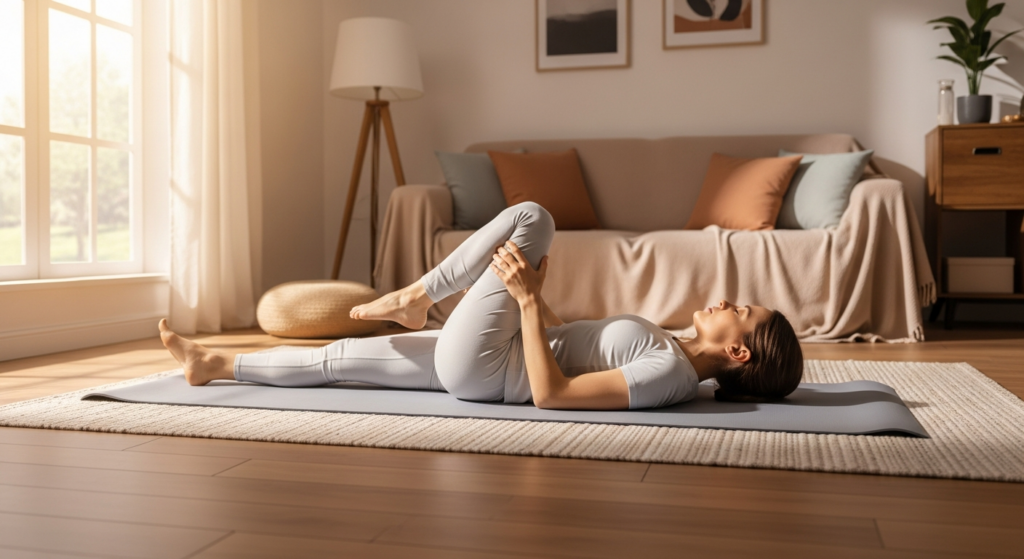
- Gentle Knee-to-Chest: While on your back, slowly hug one knee at a time toward your chest.
- Cat-Cow Stretch: On your hands and knees, gently arch and round your spine in sync with your breath to warm up the entire back.
- Slow Neck Rolls: Gently roll your head from side to side to release tension in the neck and upper shoulders.
Step 2: Foundational Yoga Breathing Techniques
Breathing is a fundamental part of any yoga practice, and it’s especially important when managing sciatic nerve pain. Conscious breathing techniques, or pranayama, help calm your nervous system, which can reduce your perception of pain. A steady breath also ensures your muscles receive the oxygen they need to release tension during yoga poses.
The proper technique for yoga stretches involves synchronizing your breath with movement. Typically, you inhale to lengthen or prepare for a pose and exhale as you deepen into a stretch. This mindful approach prevents you from holding your breath, which can create more tension in the body and worsen back pain.
Here are some foundational breathing techniques to incorporate into your yoga practice:
- Diaphragmatic (Belly) Breathing: Lie on your back and place a hand on your belly. Inhale deeply through your nose, feeling your belly rise. Exhale slowly, feeling it fall. This calms the body.
- Three-Part Breath: Inhale to fill your belly, then your ribcage, then your chest. Exhale in reverse, from chest to ribs to belly.
- Ujjayi Breath: Gently constrict the back of your throat to create a soft, ocean-like sound as you breathe. This helps focus the mind.
Step 3: Performing Gentle Yoga Poses for Sciatic Nerve Relief
Now it’s time to move into the gentle yoga poses that provide sciatica relief. The key is to choose postures that create space and release tension around the sciatic nerve without causing any sharp pain. This part of your yoga practice should feel restorative and healing.
For severe sciatic nerve pain, the most beneficial poses are often the most gentle ones performed with support. Avoid pushing yourself and instead focus on what feels good for your body. Reclined poses are excellent because they support the back completely.
Here are some gentle yoga poses to start with:
- Reclined Pigeon (Eye of the Needle) Pose: This is a safe way to stretch the piriformis muscle without putting pressure on the back.
- Knee-to-Chest Pose: Gently stretches the lower back and glutes.
- Gentle Supine Twist: Lying on your back, let your bent knees fall to one side for a gentle spinal twist.
- Child’s Pose (with support): Use a bolster or blankets under your torso to make this pose more restorative.
Step 4: Cool-Down and Relaxation to Support Recovery
Just as a warm-up prepares your body for movement, a cool-down helps it transition back to a state of rest. This final phase of your practice is crucial for allowing your muscles to relax and your nervous system to calm down, which supports recovery from sciatic pain. Skipping the cool-down can leave your muscles feeling tight.
The cool-down period is an excellent opportunity for deep relaxation. It allows the benefits of the yoga poses to integrate into your body. This is also a safe and easy step for beginners to incorporate, helping to cement the positive effects of the practice.
Your cool-down can include these simple yet effective steps:
- Savasana (Corpse Pose): Lie flat on your back, with your arms and legs relaxed. Close your eyes and focus on your breath for 5-10 minutes. Place a rolled blanket under your knees to support your lower back.
- Gentle Stretches: Perform a few final, very gentle stretches, like slowly rocking your knees from side to side while lying on your back.
- Mindful Breathing: End your practice with a few minutes of quiet, deep belly breathing.
Most Effective Yoga Poses for Sciatic Nerve Pain Relief
When it comes to sciatica relief, not all yoga poses are created equal. The most effective ones are those that target the root causes of the pain by stretching tight muscles and strengthening weak ones. A balanced yoga practice will incorporate poses that decompress the spine and release tension in the hips and legs.
These poses are specifically chosen to strengthen the back muscles and stretch the areas around the sciatic nerve, such as the piriformis and hamstrings. Below are detailed instructions for some of the best yoga poses to help you find relief from sciatic nerve pain.
Reclined Hand-to-Big-Toe Pose (Supta Padangusthasana)
This pose is a fantastic and safe way to stretch your hamstrings without putting any strain on your lower back. Tight hamstrings can pull on the pelvis and contribute to sciatic pain, so keeping them flexible is important. Using a strap makes this pose accessible to everyone, regardless of flexibility.
To perform this pose, lie on your back with both legs extended. Draw your right knee into your chest and loop a yoga strap around the ball of your right foot. Hold the ends of the strap with your right hand or both hands.
Follow these steps for a proper stretch:
- Extend your right leg up toward the ceiling. Keep the leg as straight as you comfortably can, but a slight bend in the knee is perfectly fine.
- Keep your head and shoulders relaxed on the floor. Ensure your left leg and left foot remain grounded and active.
- Hold the stretch for five to ten deep breaths, feeling a gentle release in the back of your right leg. Slowly release and then switch to stretch the back of your left leg.
Child’s Pose (Balasana) and Cat-Cow Stretch
Child’s Pose and Cat-Cow are two of the most beneficial gentle yoga poses for anyone experiencing back pain. They work together to gently stretch the lower spine, release tension, and improve pelvic mobility. These poses are especially suitable when you are dealing with more severe pain because they are easily modified.

Child’s Pose (Balasana) offers a passive stretch for the entire back and hips. To practice, start in a kneeling position, sit back on your heels, and fold your upper body forward, resting your forehead on the mat. For extra support, place a bolster or folded blanket under your torso.
Cat-Cow Stretch (Marjaryasana-Bitilasana) dynamically moves the spine.
- Start on your hands and knees. On an inhale (Cow), drop your belly, lift your tailbone, and look forward.
- On an exhale (Cat), round your spine, tuck your tailbone, and release your head down.
- Repeat this gentle flow five to ten times, linking your breath to the movement. This helps to lubricate the spine and relieve stiffness.
Pigeon Pose and Eye of the Needle Pose for Deep Hip Release
Tight hip rotators, especially the piriformis muscle, are a common cause of sciatica. Pigeon Pose and its gentler variation, Eye of the Needle Pose, are two of the most effective yoga poses for releasing this deep-seated tension.
Pigeon Pose (Eka Pada Rajakapotasana) provides a deep stretch. From a hands-and-knees position, bring your right knee forward toward your right wrist and your right ankle toward your left wrist. Extend your left leg straight behind you. Keep your hips level—use a block under your right hip for support if needed. You can stay upright or fold forward for a deeper stretch.
For a gentler alternative that is often better for sciatica, try Eye of the Needle Pose (Sucirandhrasana):
- Lie on your back with your knees bent.
- Cross your right ankle over your left thigh.
- Flex your right foot to protect the knee.
- To deepen the stretch in your left hip, lift your left foot and gently pull your left thigh toward you. Hold for 5-10 breaths and switch sides.
Building a Safe and Consistent Yoga Practice for Sciatica
Finding relief from sciatica pain is a great start, but maintaining it requires consistency. Building a regular yoga practice is one of the best things you can do to manage symptoms long-term and prevent future flare-ups of back pain. It’s less about intensity and more about showing up on your mat regularly.
Creating a sustainable routine is a powerful complement to other treatments like physical therapy. Let’s look at how often you should practice, how to combine yoga with other remedies, and how to track your progress to build a safe and lasting yoga practice.
How Often to Practice Yoga for Lasting Results
To experience lasting relief from sciatica pain, consistency in your yoga practice is more important than the duration of each session. A short, daily practice of 15-20 minutes can be more beneficial than one long session per week. This regularity helps retrain your muscles and improves your posture in everyday movements.
Is it safe to practice yoga every day? For most people with sciatica, practicing gentle yoga daily is not only safe but highly recommended. Daily practice helps to consistently release tension built up from sitting for long periods and strengthens the muscles that support your spine. However, always listen to your body. If you feel sore or your lower back pain increases, take a rest day.
For lasting results, aim for:
- Short, Daily Sessions: 15-20 minutes of gentle stretching and strengthening each day.
- Mindful Movement: Focus on poses that provide relief without causing strain.
- Listen to Your Body: Take rest days when needed and never push through sharp pain. Some days may require more gentle movements than others.
Combining Yoga with At-Home Remedies for Enhanced Relief
Yes, you can absolutely combine your yoga practice with other at-home remedies for faster and more comprehensive sciatica relief. Yoga is a powerful tool, but it works even better when integrated into a holistic approach to managing sciatic pain. These complementary therapies can help reduce inflammation and soothe muscle tension.
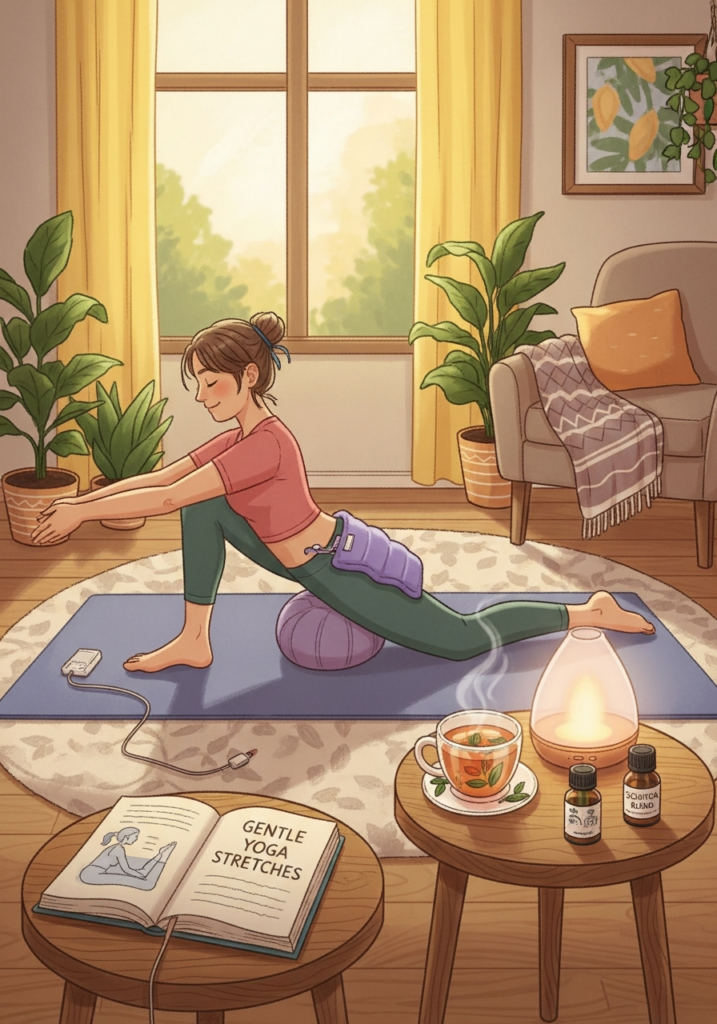
Think of your yoga practice as the active component of your recovery, while other remedies can provide passive relief. For instance, applying heat before your practice can warm up muscles, making them more receptive to stretching. Applying a cold pack after can help reduce any inflammation caused by back pain.
Here are some at-home remedies to pair with your yoga practice:
- Hot and Cold Therapy: Use a heating pad before yoga to loosen muscles and an ice pack afterward to decrease inflammation.
- Topical Analgesics: Creams or patches that create a warming or cooling sensation can offer temporary relief.
- Mindful Posture: Pay attention to your posture throughout the day, especially when sitting, to avoid re-aggravating the nerve.
Tracking Progress and Adjusting Your Routine
Tracking your progress is a great way to stay motivated and understand what works best for your body. The improvements from a regular yoga practice for sciatica pain may be gradual, so noticing small changes can be encouraging. You might start to feel a little less stiffness in the morning or be able to sit for longer without discomfort.
How long does it take to notice improvements? While everyone’s body is different, many people report feeling some relief within a few weeks of consistent, gentle practice. Significant, lasting changes may take a few months. It’s important to be patient with your body as it heals.
Here are some ways to track your progress and adjust your routine:
- Keep a Journal: Note your pain levels, which yoga poses feel best, and any improvements in your mobility or comfort.
- Be Flexible: Adjust your yoga practice based on how you feel each day. Some days you might need more gentle poses, while on others you might feel stronger.
- Consult Experts: If your progress stalls, consider checking in with yoga teachers or a physical therapist to refine your routine and find the best yoga poses for your specific needs.
Conclusion
In conclusion, incorporating yoga into your routine can be a transformative approach to managing sciatic nerve pain. By understanding its causes and practicing targeted poses, you not only promote relief but also foster a deeper connection with your body. Remember to listen to your body, prioritize safety, and adapt your practice as needed. Consistency is key; the more you engage with these techniques, the better your results will be. If you’re ready to begin this journey toward relief, don’t hesitate to reach out and get a free trial or consultation to explore how yoga can make a difference in your life. Your path to wellness starts today!
Frequently Asked Questions
Which gentle yoga poses are best for severe sciatic nerve pain?
For severe sciatic nerve pain, the best gentle yoga poses are those done lying on your back to support the spine. Try Reclined Pigeon (Eye of the Needle), gentle Knee-to-Chest hugs, and supported Child’s Pose. These yoga poses release tension in the hips and back muscles without adding strain.
Is it safe to practice yoga every day with sciatic nerve pain?
Yes, a gentle daily yoga practice is generally safe and beneficial for sciatic nerve pain. Short, consistent sessions of gentle yoga poses help release daily tension and strengthen the lower back. However, always listen to your body and take a rest day if you feel increased pain or soreness.
How long does it take to notice results from yoga for sciatica?
While it varies for everyone, many people notice initial sciatica relief within a few weeks of a consistent yoga practice. More significant and lasting results in reducing back pain and sciatic nerve pain often take a couple of months of regular, gentle practice. Patience and consistency are key.
Can yoga help prevent future episodes of sciatic nerve pain?
Absolutely. A regular yoga practice strengthens the core and back muscles, improves flexibility in the hips and hamstrings, and promotes better posture. By addressing the root causes of lower back pain and nerve compression, yoga is an excellent tool for preventing future episodes of sciatic nerve pain.
https://www.youtube.com/LiformeYoga
https://www.youtube.com/channel/UC7snF15Idi7px6XujWe_h9A
https://www.instagram.com/liforme
https://www.healthonecares.com/locations
https://www.healthonecares.com/
https://www.ncbi.nlm.nih.gov/pmc/articles/PMC6392183
https://www.health.harvard.edu/pain/sciatica-of-all-the-nerve
https://www.instagram.com/centerforspineandorthopedics