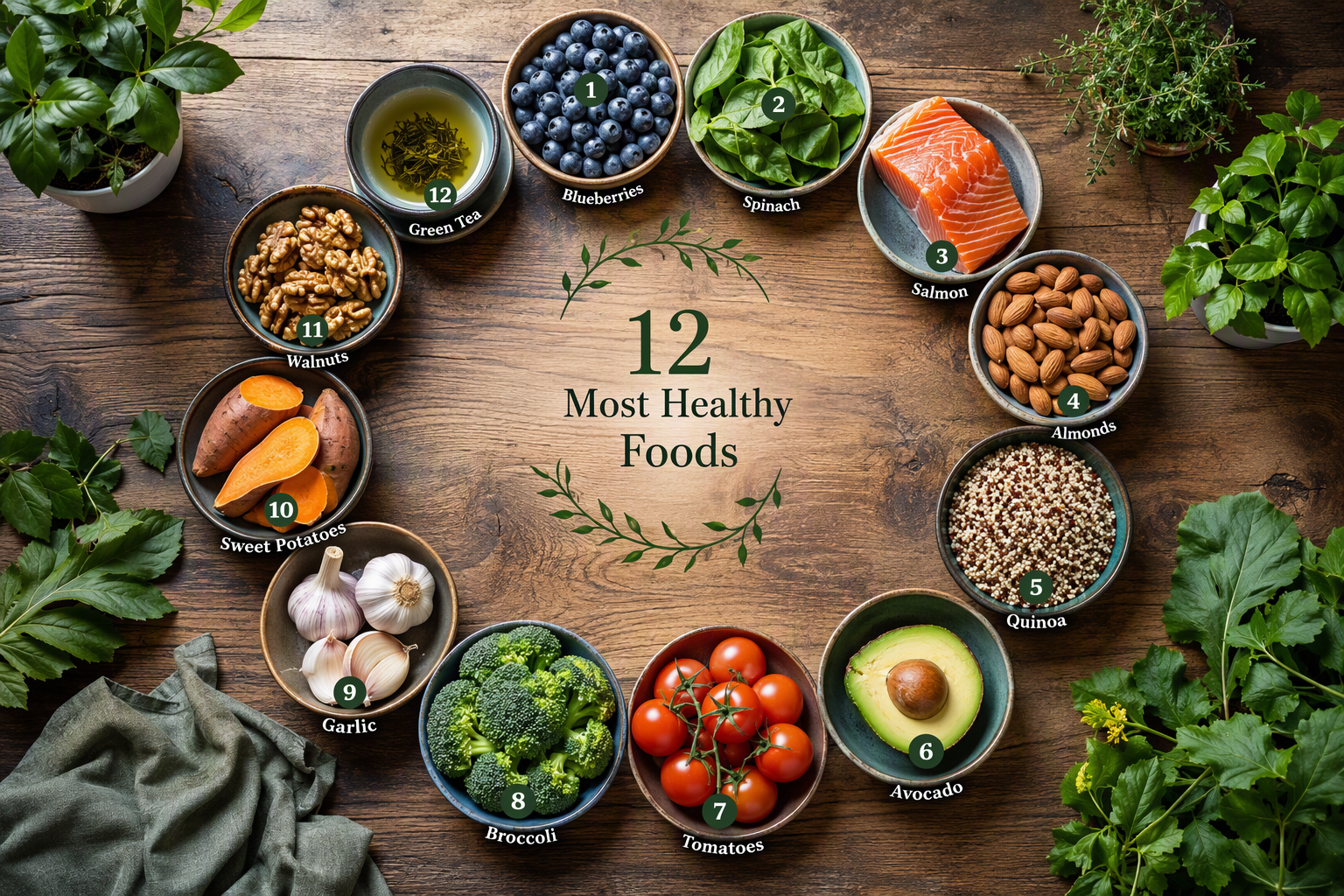

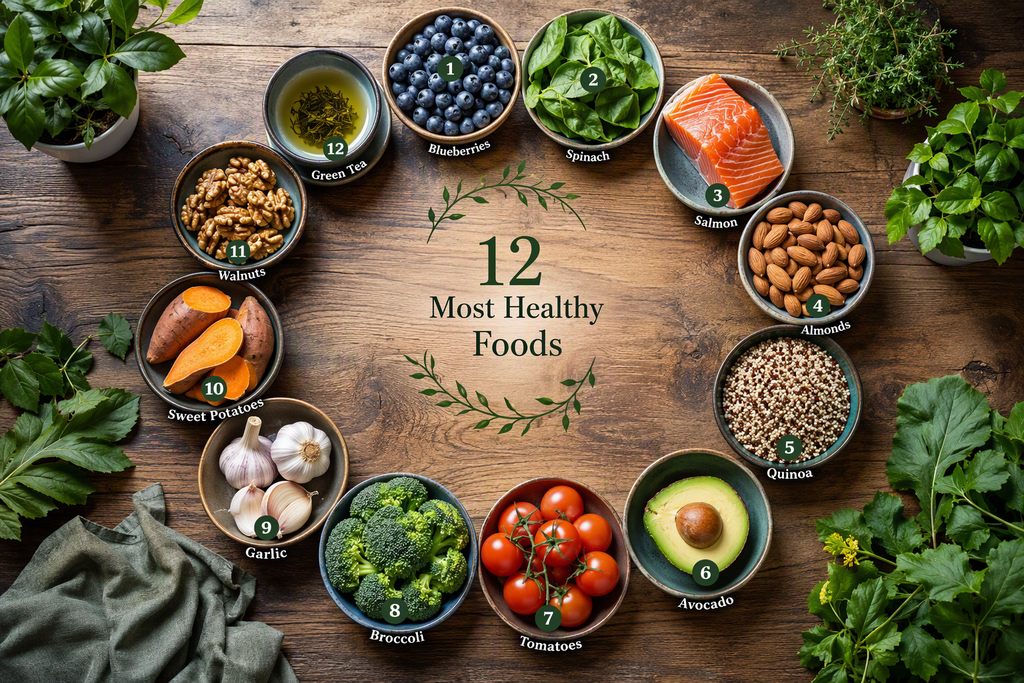
12 Most Healthy Foods to Eat Daily for Optimal Wellness
Key Highlights
- Leafy greens, berries, and citrus fruits bring vitamins and strong health benefits to your daily diet.
- Whole grains and legumes are a good source of fiber that can support digestive health and heart health.
- Nuts, seeds, avocado, and olive oil provide healthy fat, including monounsaturated fats and vitamin e.
- Fatty fish offers omega-3 fatty acids, vitamin d, and support for brain health and the immune system.
- Yogurt and fermented foods help build a healthy diet by supporting gut health and good health.
- These superfoods make healthy eating simpler and more balanced.
Introduction
Some foods stand out because they pack more nutrition into each bite. That is why they are often seen as smart choices for healthy eating and optimal wellness. Foods rich in vitamins, minerals, healthy fat, fiber, and protein can support good health over time. They may also help lower the risk of long-term illness. If you want a stronger daily diet, adding a few proven superfoods can make a real difference without making meals complicated.
12 Most Healthy Foods to Include in Your Daily Diet
Building a better plate does not mean chasing trends. It means choosing some of the healthiest foods that give you essential nutrients in a simple, practical way. The right foods can support energy, digestion, heart health, and immune function.
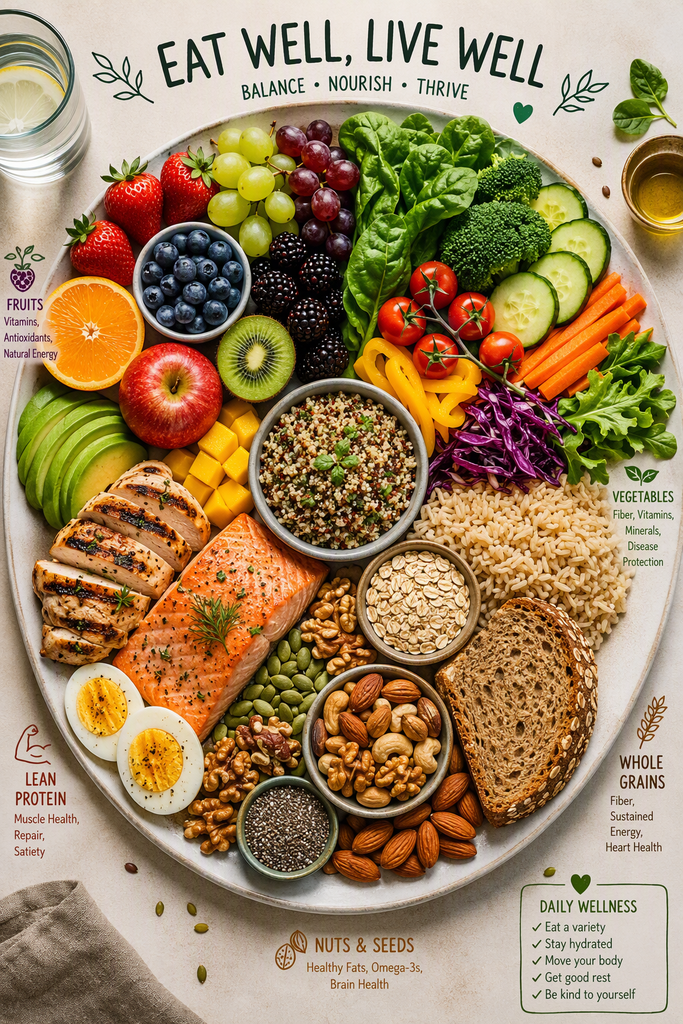
This list focuses on easy options you can use often as part of a balanced diet. Each one offers clear health benefits and fits into everyday meals. If you have wondered which foods are good to eat daily, these are a strong place to start.
1. Leafy Greens (Spinach, Kale, Swiss Chard)
Leafy greens are among the best foods you can eat every day. Spinach, kale, and Swiss chard are packed with vitamins and plant compounds that support many body functions. They are especially useful if you want more dark green vegetables in a healthy diet.
Spinach is a source of vitamin a and vitamin c, along with potassium, folate, and iron. It also contains carotenoids that help support vision and healthy cells. Kale is known for vitamin k and calcium, which are important for bone health. These nutrients also play a role in heart health and healthy blood flow.
You do not need complicated recipes to eat more leafy greens. Add spinach to eggs, soups, stews, or pasta. Use fresh greens in salads or sandwiches. A small daily serving can give you steady nutrition and answer the common question of what vegetables you should eat daily.
2. Berries (Blueberries, Strawberries, Raspberries)
Berries deserve their superfood reputation because they are an excellent source of antioxidants and easy to add to your routine. Blueberries, strawberries, and raspberries bring color, flavor, and strong nutrition to a healthy diet without a lot of calories.
Blueberries stand out for anthocyanins, the compounds linked with brain health and memory support. They also provide vitamin c, vitamin k, and fiber, which can help immune health and digestion. Eating berries regularly may support heart health and may help lower cholesterol as part of an overall healthy eating pattern.
Try berries in simple ways:
- Stir them into yogurt at breakfast.
- Add them to a salad for natural sweetness.
- Use fresh or frozen berries in smoothies.
- Snack on them instead of sugary baked treats.
3. Cruciferous Vegetables (Broccoli, Brussels Sprouts)
A cruciferous vegetable like broccoli or Brussels sprouts adds a lot to your plate. These vegetables are part of the cabbage family and are valued for plant compounds tied to immune health and normal body detox support.
Broccoli is a good source of vitamin c, vitamin a, and calcium. It also contains compounds called glucosinolates and lutein. Along with being a source of fiber, broccoli can support digestive health and help your body absorb iron from grains, beans, and eggs when eaten together. That makes it a practical choice in a balanced diet.
You can roast broccoli, shred it into slaws, or add it to soup. Brussels sprouts fit the same healthy eating pattern and add variety. If you want vegetables that may help lower cholesterol while supporting digestion, this group is worth eating often.
4. Nuts and Seeds (Almonds, Walnuts, Chia Seeds)
Nuts and seeds are small, but they deliver a lot. Almonds, walnuts, and chia seeds offer a mix of healthy fat, fiber, and a steady source of protein. They work well in snacks, breakfasts, and even main meals.
Almonds are especially helpful because they provide vitamin e, magnesium, calcium, and folate. Much of their fat comes from monounsaturated fats, which are linked with heart health when they replace saturated fat. Walnuts and chia seeds also bring valuable fatty acids that support overall wellness. These foods can fit a plan aimed at lower blood pressure and better nutrition.
A few easy ideas:
- Sprinkle chia seeds into oatmeal or yogurt.
- Add chopped walnuts to salads.
- Choose unsalted almonds for a simple snack.
5. Fatty Fish (Salmon, Sardines, Mackerel)
Fatty fish is one of the strongest protein choices for daily or regular meals. Salmon, sardines, and mackerel supply protein along with omega-3 fatty acids that many people do not get enough of. These are some of the healthiest protein sources you can choose.
Salmon is best known for EPA and DHA, two omega-3 fatty acids connected with heart health, brain health, and healthy joints. Fish and seafood can also support brain function and cell health. Sardines and similar oily fish are also useful because fish can provide vitamin d, which can be harder to get from foods.
Fresh or canned salmon can both work well. If you buy canned, choose spring water instead of oil. Use salmon in tacos, burgers, or mixed dishes. Swapping fatty fish for higher fat meat is a simple upgrade for a healthy diet.
6. Whole Grains (Quinoa, Oats, Brown Rice)
Whole grains help turn a healthy meal into a balanced one. Quinoa, oats, and brown rice contain the full parts of the grain, which means they keep more natural nutrition than refined grains. They are a reliable source of fiber and steady energy.
Brown rice is a practical staple, while oats are known for supporting heart and digestive health. Whole grains also provide b vitamins and important minerals that help the body use energy well. Quinoa adds even more value because it is a complete protein, making it a smart choice for meals built around plant foods.
Use these foods as your base instead of white bread, refined pasta, or other stripped grains. Better grain choices may help with cholesterol levels and support a lower risk of heart disease over time. They also make healthy eating more filling and easier to maintain.
7. Legumes (Beans, Lentils, Chickpeas)
Legumes are one of the most useful foods for a daily diet. Beans, lentils, and chickpeas can act as both a vegetable and a source of protein, which makes them flexible, affordable, and filling. They fit easily into lunch or dinner.
Black beans, lentils, and chickpeas are low-fat foods that also provide iron, magnesium, folate, potassium, and zinc. They are a good source of fiber, which supports digestive health and can help with cholesterol levels. Because they are satisfying, legumes also make it easier to replace heavier proteins in some meals.
You can add legumes to soups, salads, grain bowls, or simple side dishes. They work well in a balanced diet and answer a common question about healthy protein choices. If you want better nutrition without much effort, keeping beans in regular rotation is a smart move.
8. Yogurt and Fermented Foods
Yogurt and other fermented foods support something many people overlook: gut health. A healthy gut can help your body work better overall, including the immune system. That makes these foods a valuable part of healthy eating.
Greek yogurt is high in protein and contains probiotics, which support digestion and muscle maintenance. Kefir is another strong choice because it offers probiotics, source of calcium, and protein. Some dairy products and dairy alternatives can also provide vitamin d and other important nutrients when fortified, but probiotic-rich fermented foods are especially useful for daily wellness.
Simple options include:
- Eat plain Greek yogurt with berries.
- Drink kefir as a quick breakfast or snack.
- Add fermented foods like sauerkraut or kimchi to meals in small amounts.
9. Avocado
Avocado is a simple way to add healthy fat to meals without making them heavy. It is rich in monounsaturated fatty acids, the kind often linked with better heart health. That makes avocado more than a trendy topping.
This fruit also provides vitamin e, which helps support cell health. In a healthy diet, replacing less helpful fats with avocado may support cholesterol levels over time. It fits naturally into meals built around whole foods and can help you feel satisfied longer.
Try avocado sliced on toast, added to salads, or mashed into a spread. It pairs well with eggs, grains, and vegetables, so it is easy to use often. If you are looking for superfoods that are practical and filling, avocado earns its place on the list.
10. Sweet Potatoes
Sweet potato is one of the easiest vegetables to build into a weekly plan. Its deep orange color signals carotenoids, including beta carotene, which the body uses to make vitamin a. That helps explain why sweet potatoes are seen as especially healthy.
They are a source of vitamin a, potassium, and some b vitamins. Sweet potatoes are also a good source of fiber while staying relatively low in calories. These nutrients can support immune health, digestive health, and normal blood pressure as part of a balanced diet.
Here is a quick look at what makes them useful:
| Benefit Area | What Sweet Potatoes Provide |
|---|---|
| Vision and cells | Beta carotene that helps the body make vitamin a |
| Immune health | Source of vitamin a |
| Digestion | Good source of fiber |
| Blood pressure | Potassium |
| Energy support | Some b vitamins |
11. Citrus Fruits (Oranges, Grapefruit)
Citrus fruits are a bright, simple choice for daily nutrition. Oranges and grapefruit are well known for vitamin c, but they offer more than that. They are easy to carry, easy to serve, and easy to pair with breakfast or snacks.
Vitamin c helps support immune health and skin health, and fruit also brings fiber and helpful plant compounds. From the compiled information, apples provide insoluble fiber and soluble fiber, both of which support digestive health and may help lower the risk of cardiovascular disease. Citrus fruits fit the same fruit-forward healthy eating approach by adding hydration, nutrients, and variety.
If you are trying to eat more fruit for heart health and better meals, citrus is a smart pick. Add orange segments to salads or keep a whole orange on hand. Simple habits like this can strengthen your daily diet without much planning.
12. Extra Virgin Olive Oil
Extra virgin olive oil is one of the best ways to include healthy fat in everyday cooking. Unlike heavier fats, olive oil is rich in monounsaturated fats, which are linked with heart health and a healthier eating pattern overall.
It also contains antioxidants and can help replace less helpful fats in your meals. That swap matters. Using olive oil in place of saturated fats may support lower cholesterol levels and reduce the risk of heart disease over time. It fits well with vegetables, whole grains, legumes, and fish.
Try these easy uses:
- Drizzle olive oil over roasted vegetables.
- Use it in homemade salad dressing.
- Add a small amount to cooked grains or beans for flavor.
How to Add the Healthiest Foods to Your Daily Meals
Starting a healthy diet does not require a total kitchen reset. Focus on adding one or two nutrient-dense foods to each meal. A balanced diet can be built from simple choices like fruit at breakfast, beans at lunch, and vegetables with dinner.
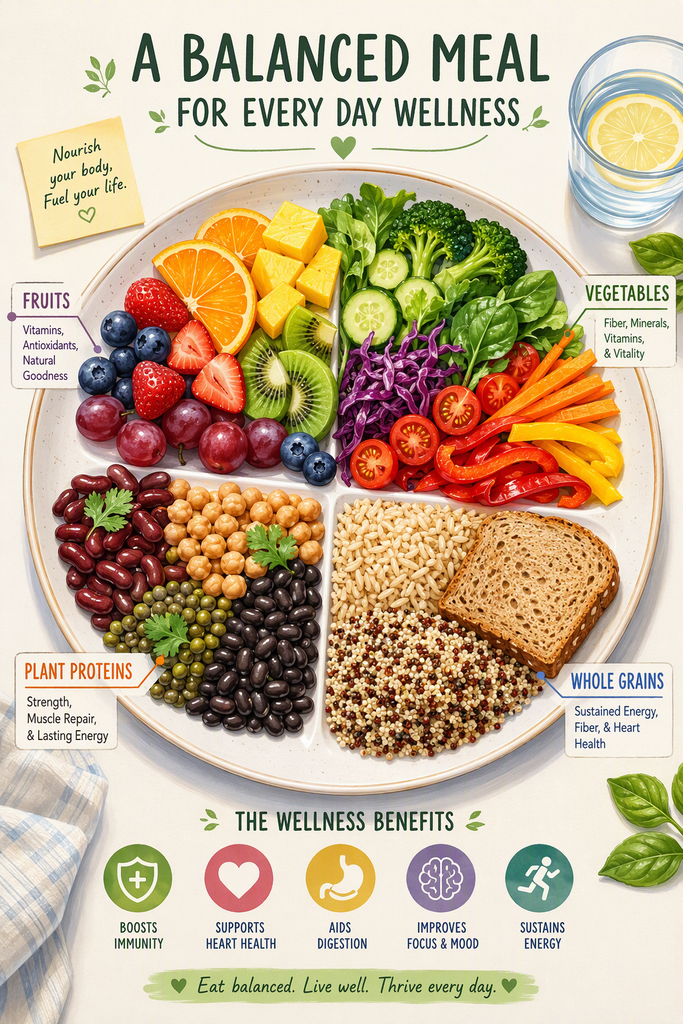
Meal planning makes healthy eating easier to follow. Keep staples such as yogurt, oats, leafy greens, brown rice, and canned salmon or beans ready to use. These small habits support a healthy lifestyle and make better food choices feel practical, not stressful.
Easy Meal Prep Tips and Swaps for a Balanced Diet
Meal prep works best when it stays simple. Wash fruit, chop whole vegetables, and cook a batch of whole grains at the start of the week. When healthy food is ready first, your daily diet becomes easier to manage.
Swaps can also improve meals without making them feel restrictive. Replace refined grains with whole wheat flour, oats, quinoa, or brown rice when possible. Choose low sodium canned beans, plain yogurt over sweetened versions, and foods with less added sugar. Pay attention to the amount of salt in packaged items, especially sauces and juices.
Helpful ideas include:
- Prep spinach, berries, and yogurt for quick breakfasts.
- Swap white rice for brown rice.
- Use beans instead of higher fat meat in some meals.
- Keep unsalted nuts for snacks.
- Roast broccoli and sweet potato in advance.
Conclusion
In conclusion, incorporating these twelve healthy foods into your daily diet can significantly enhance your overall wellness. By prioritizing nutrient-dense options like leafy greens, berries, and fatty fish, you’re not only fueling your body but also supporting long-term health. Remember to explore different meal prep tips and creative ways to integrate these foods into your routine for a balanced diet. Empower yourself with knowledge about nutrition, and you’ll be on the path to a healthier lifestyle. If you’re ready to take charge of your health, why not try it out today? Get a free consultation to learn how you can start making these positive changes in your life!
Frequently Asked Questions
What is the recommended portion size for these healthy foods each day?
Portion size depends on your age, body weight, activity level, budget, and overall daily diet. A practical approach is to include small servings of several groups each day, such as fruit, vegetables, whole grains, and a source of protein. Aim for foods that also add grams of fiber.
Why are these foods considered especially nutrient-dense or superfoods?
These superfoods are called nutrient-dense because they deliver essential nutrients without loading your meals with excess added sugar, salt, or saturated fat. Many are a good source of fiber, protein, vitamins, minerals, or healthy fat, which is why they are linked with wide-ranging health benefits.
Are there simple recipes that combine several of these foods for daily meals?
Yes. Simple recipes can combine whole grains, leafy greens, legumes, and olive oil in a grain bowl. You can also make yogurt with berries for breakfast or use salmon, brown rice, and broccoli for dinner. These combinations make healthy eating and a balanced diet easier to maintain.
https://www.ncbi.nlm.nih.gov/pmc/articles/PMC9958672
https://fdc.nal.usda.gov/fdc-app.html#/food-details/171998/nutrients