


Understanding Drugs for Motion Sickness: A Complete Guide

Key Highlights
- Motion sickness starts when your inner ear and eyes send mixed signals to the brain.
- Common medications include over-the-counter antihistamines such as Dramamine and Bonine.
- Prescription drugs, especially the transdermal patch, may help during longer or stronger travel exposure.
- The most common side effects are drowsiness, dry mouth, and sometimes dry eyes.
- So-called non-drowsy allergy medicines are not effective for motion sickness.
- Taking medicine before travel usually works better than waiting for symptoms to begin.
Introduction
Motion sickness can turn a car ride, flight, cruise, or even virtual reality session into a miserable experience. It happens when signals from your inner ear, eyes, and body do not match, leading to symptoms of motion sickness such as nausea, dizziness, sweating, and vomiting. If you want relief, it helps to know which drugs work, when to take them, and what side effects to expect. This guide gives you a clear look at the main options used in the United States.
Overview of Motion Sickness and Its Impact
Motion sickness is a common problem during travel by car, bus, train, aircraft, or ship. In modern times, it can also happen during virtual reality use, simulator sessions, or an amusement park ride. The intensity of the stimulus matters, but so does your own sensitivity.
There is a large proportion of individual variation in how people react. Some feel mild discomfort, while others develop strong symptoms of motion sickness quickly. The most commonly used drugs for treating motion sickness are antihistamines and scopolamine, but each option comes with a possible side effect. To choose well, you first need to understand why motion sickness happens.
What Causes Motion Sickness?
The leading explanation is sensory conflict. Your brain compares incoming patterns from the inner ear, eyes, and body with expected patterns stored in its internal model. When those signals do not match, motion sickness can begin.
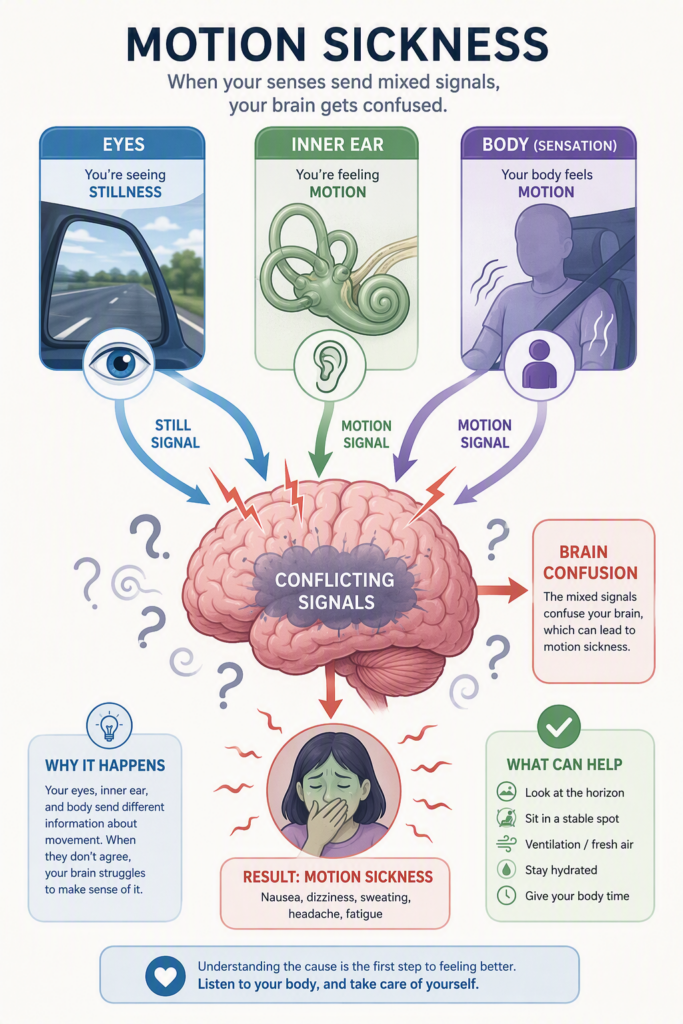
Picture being below deck on a ship with limited outside visibility. Your inner ear senses movement, but your eyes may say you are still. That mismatch between incoming patterns and expected patterns activates brain centers linked to nausea, sweating, and dizziness.
Not everyone reacts the same way. Genetic factors appear to explain a large share of motion sickness susceptibility, and people with migraine, vertigo, or vestibular disorders may be more prone to it. As for treatment, the most commonly used drugs are antihistamines such as dimenhydrinate and meclizine, plus anticholinergic medicine like scopolamine.
Common Symptoms of Motion Sickness
For many people, the initial symptoms of motion sickness build slowly. You may first notice stomach awareness, yawning, dizziness, or trouble concentrating. If the motion continues, nausea and vomiting can follow.
Common symptoms of motion sickness include:
- cold sweats and facial pallor
- gastrointestinal discomfort and increased salivation
- feelings of warmth and dizziness
- drowsiness, fatigue, or headache
- nausea, vomiting, or retching
Medication can help, but side effects are possible too. The most common side effect is drowsiness or sedation. Some drugs also cause dry mouth and dry eyes, especially scopolamine. That is why it helps to match the medicine to your trip, your age, and your health care needs before you travel.
Drug Classes Used for Motion Sickness
Drugs used in the treatment of motion sickness mainly fall into two practical groups for travelers: antihistamines and anticholinergic medicines. Older guidance also mentions sympathomimetics, but highly effective combinations of amphetamine are not available because of legal and abuse concerns.
How do Dramamine and Bonine help? They act on brain pathways involved in motion-triggered nausea. Timing matters with drug administration because these medicines work best before exposure begins. Once symptoms start, gastric stasis can limit absorption of tablets. Next, let’s look at how each drug class works and what side effects you may notice.
Antihistamines and Their Role
Antihistamines are among the most common medications for motion sickness. Examples include dimenhydrinate and meclizine. These drugs work in the brain, which is why they can reduce nausea and other motion-related symptoms during travel.
Dramamine usually refers to dimenhydrinate, while Bonine usually contains meclizine. Both can help by calming the central signals involved in motion sickness. Their effectiveness is best when you take them before the trip rather than after you already feel sick.
Still, antihistamines are not perfect. Drowsiness is the most common side effect, and some people feel slowed down or tired. Meclizine is often marketed as less drowsy, but sedation can still happen. If you are unsure which product fits your needs, healthcare professionals can help you weigh effectiveness against side effect risk.
Anticholinergic Medications
The main anticholinergic drug for motion sickness is scopolamine. In the United States, it is often used as Transderm Scop, a transdermal patch placed on the skin. This option is especially useful for longer travel, such as multi-day sea trips.
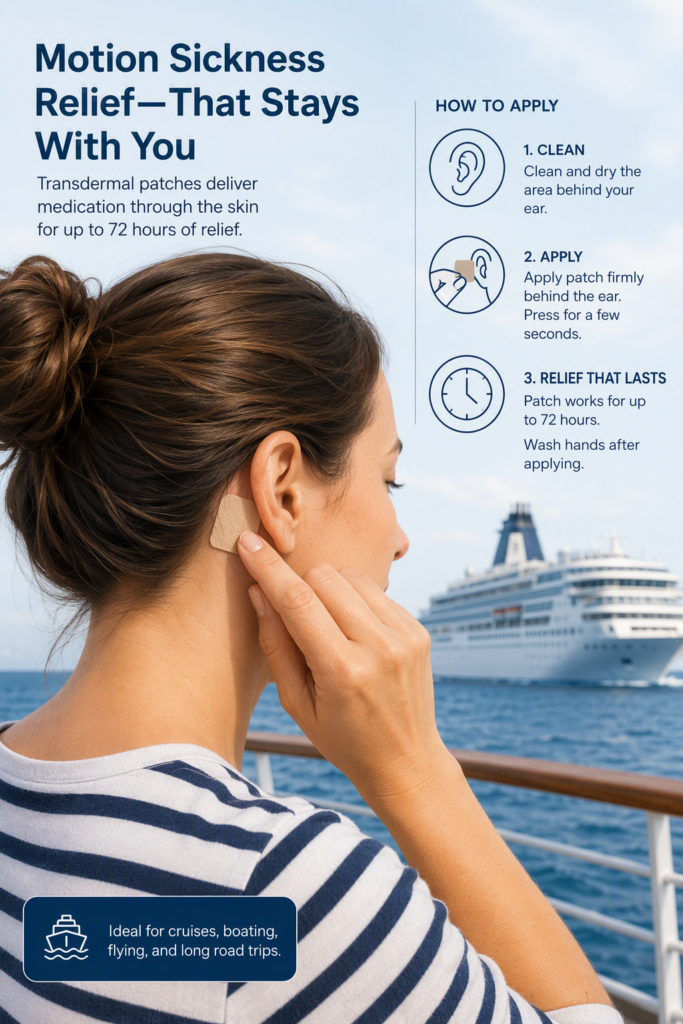
A transdermal patch releases medicine slowly over time, which makes it practical for ongoing exposure. It can last up to 72 hours, but it takes time to start working, so you need to plan ahead. One important warning: do not cut the patch in mistaken attempts to adjust the dose, because that can disrupt the mechanism of release.
Like other motion sickness drugs, scopolamine has side effects. Dry mouth is common, and dry eyes can happen too. It may also cause mental confusion in some people. It should be avoided in children and in adults with glaucoma or risk of urinary retention.
Popular Over-the-Counter Options in the US
In the United States, the best-known over-the-counter options are dimenhydrinate and meclizine. You will often see them sold as Dramamine and Bonine. Meclizine is commonly available as a chewable tablet, which many travelers find easy to use before a trip.
For sea travel, meclizine or dimenhydrinate may help with mild symptoms, while stronger or longer exposure may call for prescription scopolamine. OTC drugs still have side effects, including drowsiness. If you already feel faint or have low blood pressure concerns, it is smart to speak with a professional before trying a new medicine.
Dramamine, Bonine, and Other Common OTC Drugs
If you shop for motion sickness relief in the United States, Dramamine and Bonine are usually the first names you notice. Dramamine original contains dimenhydrinate. Bonine and some less-drowsy Dramamine products contain meclizine. Both help by acting on the brain systems involved in motion-triggered nausea.
Here is a quick text table to compare common OTC choices:
| Drug | Common U.S. Name | Form | Onset | Duration | Most common side effect |
|---|---|---|---|---|---|
| Dimenhydrinate | Dramamine original | Oral tablet | About 2 hours | About 8 hours | Drowsiness |
| Meclizine | Bonine | Chewable tablet | About 2 hours | 8 to 24 hours | Drowsiness |
| Meclizine | Dramamine Less Drowsy | Chewable tablet | About 2 hours | 8 to 24 hours | Drowsiness |
So, how do these drugs help? They work best when taken before motion exposure starts. If you wait until nausea is strong, absorption may be slower, and relief may be less reliable.
Non-drowsy Motion Sickness Medicines
Many people ask for a non-drowsy motion sickness medicine. That sounds ideal, but there is an important catch. In modern times, newer antihistamines sold as minimally sedating allergy medicines are designed to stay out of the brain.
Because of that, their effectiveness for motion sickness is poor. Drugs such as cetirizine, fexofenadine, and loratadine are not considered useful for treating motion-triggered nausea. If a product is marketed as non-drowsy, read the label carefully.
A few key points can help:
- True non-drowsy allergy medicines generally do not work for motion sickness.
- Meclizine may be less sedating than some options, but it is not fully non-drowsy.
- Scopolamine may cause slightly less sedation than dimenhydrinate or meclizine.
- Some people report benefit from acupressure bands, but laboratory trials suggest a placebo effect rather than proven drug-level effectiveness.
Prescription Medications for Motion Sickness
Prescription treatment may be a better fit when OTC medicine is not enough, especially for longer travel or stronger motion exposure. The main prescription option is scopolamine, often given as a transdermal patch. Promethazine is another stronger medicine used in some cases.
Yes, prescription drugs can be more effective than OTC products for some travelers, but side effects still matter. Promethazine is more sedating, while scopolamine can cause dry mouth and dry eyes. Older amphetamine combinations are not available now. Healthcare professionals can help you decide when prescription treatment makes sense.
When to Consider Prescription Treatments
You may want a prescription option if OTC medicines have not worked, if your trips last many hours, or if sea travel reliably makes you sick. Individual variation is a big part of motion sickness, so what works well for one person may not work for you.
Timing is important. Motion sickness medicine works best before travel begins. Oral drugs need enough time for absorption, and the scopolamine patch needs even more lead time because its onset is slower. If you wait until the initial symptoms start, gastric stasis may reduce the benefit of tablets.
There are also special situations. If you have a history of migraine headaches, you may need a broader plan because migraine can trigger or worsen symptoms. Expert healthcare professionals may suggest a prescription approach when an individual finds standard OTC choices too weak or too sedating.
Effectiveness and Special Considerations
The right drug depends on how long you will be in motion, how strong the trigger is, and how sensitive you are. For short trips, meclizine or dimenhydrinate may be enough. For longer sea travel or stronger exposure, scopolamine may offer better effectiveness.
You should also think about special considerations before choosing:
- Older adults may be more sensitive to side effects such as confusion or sedation.
- Children need extra caution, and scopolamine should be avoided in them.
- A test dose before departure can help you spot unwanted reactions.
- If vomiting has already begun, non-oral routes may be needed because of gastric stasis.
For car travel, sitting in the front seat or front passenger seat may help. For air travel, sitting near the wings may reduce motion. On ships, avoiding areas of stronger movement can make any medicine work better.
Conclusion
In summary, understanding drugs for motion sickness is essential for anyone who frequently travels or experiences discomfort during movement. With various options available, from over-the-counter antihistamines to prescription medications, it’s important to choose the right treatment based on your individual needs and circumstances. Remember to consider factors such as drowsiness, timing, and potential interactions when selecting a medication. By being informed and proactive about your options, you can effectively manage motion sickness and enjoy your journeys without the hassle of nausea and discomfort. If you have more questions or need personalized advice, don’t hesitate to reach out for a free consultation!
Frequently Asked Questions
Can children safely use motion sickness medications?
Children can sometimes use motion sickness medicine, but medication safety matters. For ages 6 to 12 years of age, some antihistamines may be used before travel, with caution. Scopolamine should be avoided in children. Because reactions vary, healthcare professionals should guide parents on the safest choice.
How soon before travel should I take medication?
For motion sickness, drug administration should happen before travel starts, not after nausea appears. Tablets need time to absorb, and patches need even longer. A test dose before your trip can help you learn how your body responds and whether side effects will be a problem.
Are there effective natural alternatives to drugs for motion sickness?
Some nondrug steps may help, such as getting fresh air, choosing the front seat, or avoiding visual tasks. Evidence for ginger ale, fizzy drinks, and acupressure bands is weak, though some people still feel better using them. Habituation remains the most effective countermeasure overall.
https://www.buzzrx.com/blog/best-medications-for-montezuma-s-revenge-traveler-s-diarrhea
https://www.doi.org/10.1016/B978-0-444-63437-5.00027-3