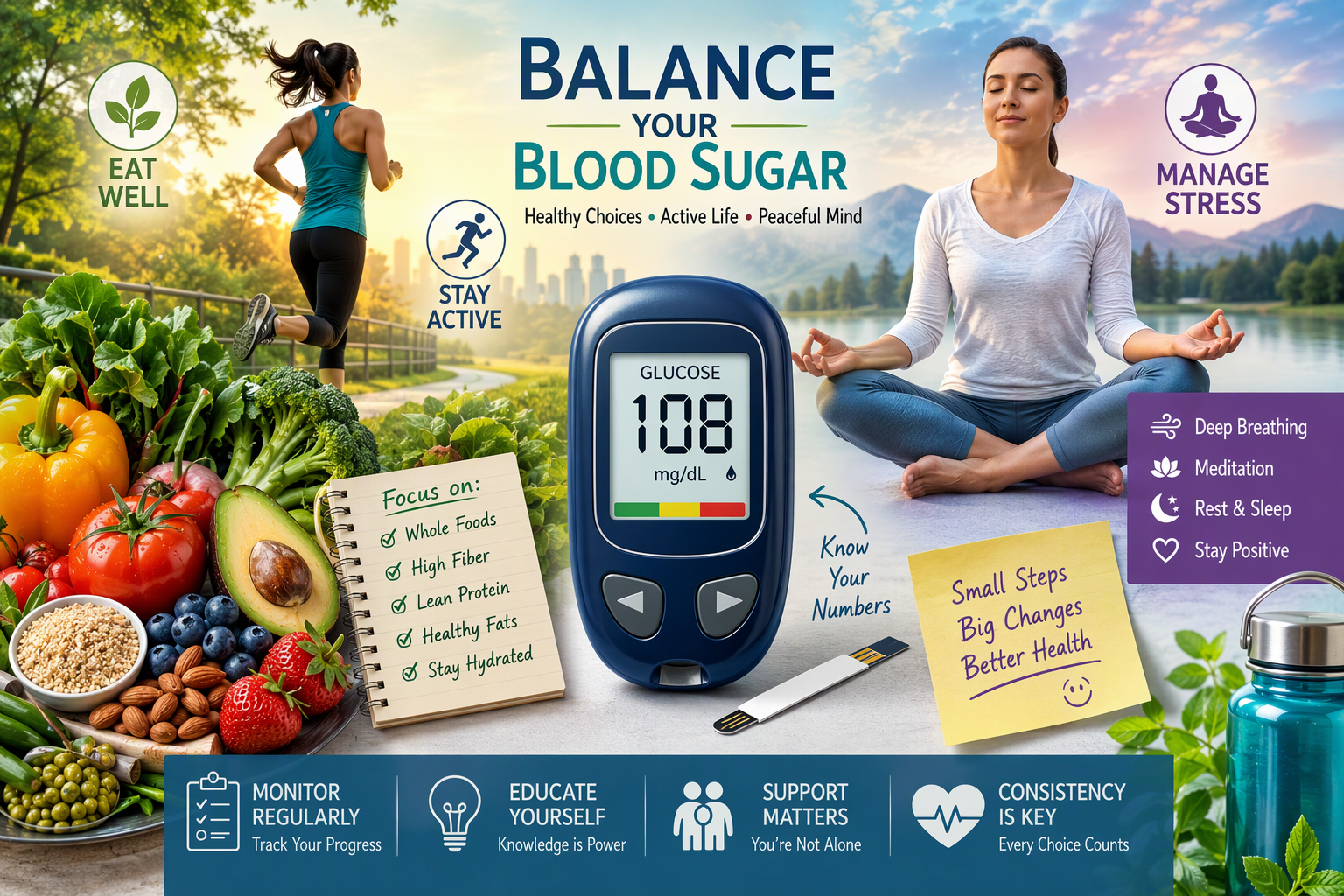

Essential Tips on How to Keep Blood Sugar Under Control
Key Highlights
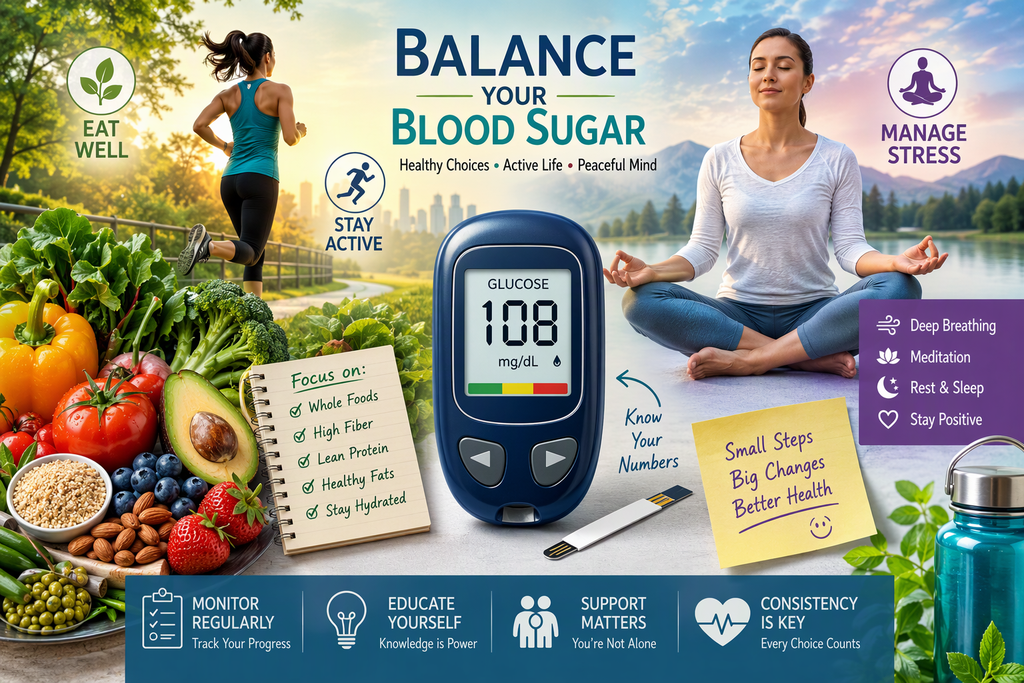
- Healthy daily habits at regular times can support blood sugar control and steadier glucose levels.
- Healthy eating, smart portion control, and balanced meals help reduce sudden blood sugar levels changes.
- Exercise helps your body use blood sugar for energy and can improve insulin response.
- Stress management matters because stress can trigger blood sugar spikes and other symptoms.
- Quick actions like water, movement, and checking your plan can help with high readings.
- Watching symptoms early can help you act before blood sugar gets harder to manage.
Introduction
Keeping your blood sugar in a healthy range can feel hard at times, especially when food, activity, stress, and daily routines all affect blood glucose. The good news is that simple choices can make a real difference. When you understand what raises or lowers blood sugar, you can build habits that support your overall health. In this guide, you’ll learn practical ways to eat, move, plan, and respond so your numbers stay more stable day to day.
Understanding Blood Sugar Control
Blood sugar control means keeping your blood glucose levels within the range your healthcare professional recommends. Food, physical activity, medicine, illness, alcohol, stress, and hormone changes can all shift glucose levels, sometimes faster than you expect.
Steady routines often help most. Eating at regular times, staying active, following your diabetes care plan, and checking how your body responds can improve insulin sensitivity and reduce large swings. To see why this matters, start with the bigger picture of health.
Why Stable Blood Sugar Matters for Overall Health
Stable blood sugar supports much more than your daily energy. When blood glucose stays in a safer range, it can help protect your nerves, kidneys, and heart over time. That makes blood sugar management a key part of overall health, not just one number on a meter.
There is another reason to pay attention. Uncontrolled levels can raise the risk of heart disease, especially when high blood sugar happens along with high blood pressure or high cholesterol. A healthy eating plan can help manage both blood sugar and the risk of heart disease at the same time.
Your body often gives clues when something is off. Common signs include unusual thirst, frequent urination, fatigue, shakiness, hunger, lightheaded feelings, or trouble concentrating. Repeated blood sugar swings or blood sugar readings outside your target range are signs to check in with your care team.
Factors That Affect Blood Sugar Levels
Many day-to-day factors affect blood sugar levels. It is not just about sweets. Meal size, the amount of carbohydrates, medicine timing, activity, stress, illness, and sleep patterns can all change your numbers. Even healthy routines can work better when they happen consistently.
Your daily routine can help with healthy blood sugar because the body responds well to regular habits. When meals, movement, and medicine happen at predictable times, it is often easier to avoid sharp changes and support better control, even if insulin resistance is part of the picture.
- Large portions or refined carbs can raise blood sugar levels quickly.
- Stress, illness, and some medical conditions can push numbers higher.
- Hormone levels during periods or menopause may lead to blood sugar swings.
- Missed activity, poor sleep, or changes in medicine timing can disrupt healthy blood sugar.
Build Healthy Daily Habits for Blood Sugar Management
Healthy daily habits create structure, and structure helps blood sugar levels stay steadier. The most effective habits are often simple: eat at regular times, move your body most days, stay hydrated, and follow your meal and medicine schedule as closely as possible.
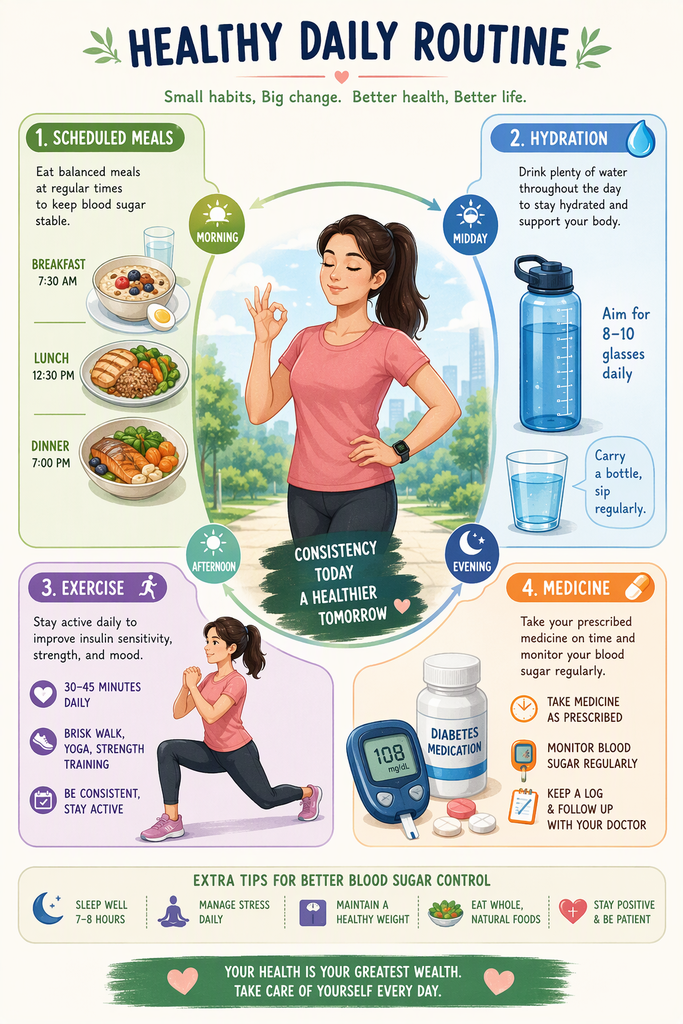
Over time, these small changes can support better blood glucose patterns and a healthy weight. You do not need a perfect routine. You need one you can repeat. Next, look at how your morning and the rest of your day can work in your favor.
Morning Routines to Support Steady Glucose
How you start your day can shape your blood glucose for hours. A steady morning routine helps you avoid rushing, skipped meals, and long gaps without food. If you use medicine, keeping breakfast and medication timing aligned can also support better control.
A practical morning plan does not need to be complicated. Focus on healthy eating, light physical activity, and enough sleep the night before. These choices can make it easier to keep your levels steady throughout the day.
- Eat breakfast at a regular time instead of delaying your first meal.
- Add physical activity such as a walk or light movement if it fits your plan.
- Protect enough sleep, since tired days can make routines harder to follow.
Keeping Your Levels Balanced Throughout the Day
During the day, consistency matters. Blood sugar levels tend to be easier to manage when meals, snacks, medicine, and activity happen in a pattern you can maintain. Irregular eating habits often make it harder to predict how your body will respond.
Try to notice trends instead of judging a single reading. If certain foods, skipped meals, or long inactive periods affect your healthy blood sugar, those patterns can help you decide what to change. Your care team can help if the pattern is unclear.
- Keep meals and snacks at regular times whenever possible.
- Match your eating habits with your medicine schedule.
- Reach out to your care team if your numbers stay high or drop too low often.
Making Smart Food Choices for Blood Sugar Stability
Food has one of the biggest effects on blood sugar stability. Healthy eating is not about cutting out everything you enjoy. It is about choosing foods that are nutrient-rich, moderate in portion size, and easier on your blood sugar.
In most cases, that means focusing on whole grains, vegetables, fruits, legumes, lean protein, healthy carbohydrates, and healthy fats in sensible amounts. The best choices are usually less processed and higher in fiber. Here are the foods to favor and the ones to limit.
Best Foods to Include in Your Diet
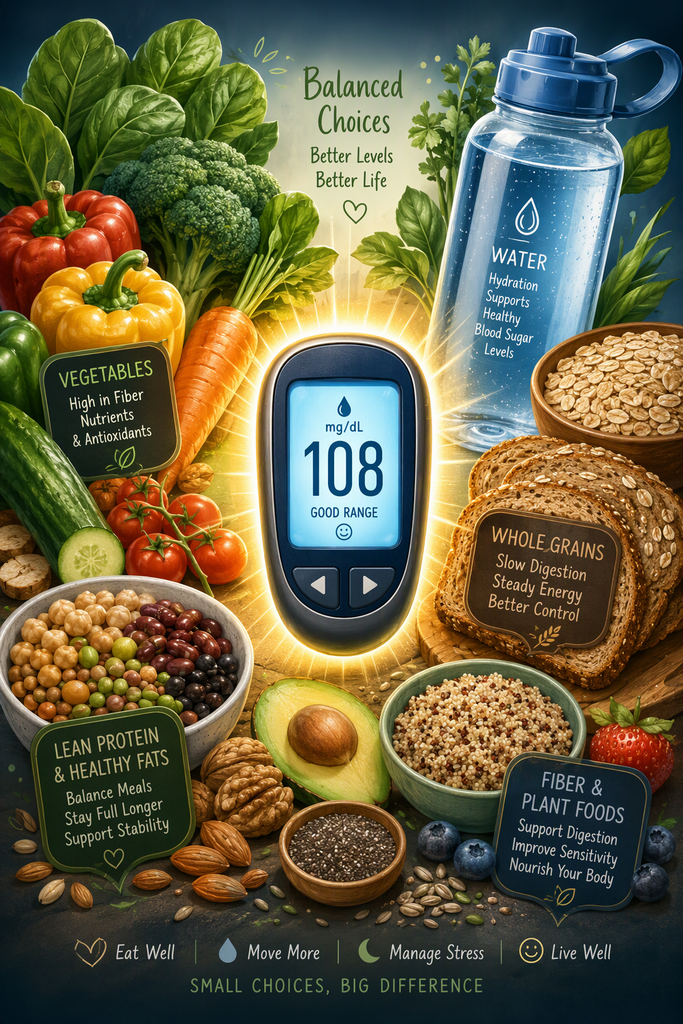
A healthy diet for blood sugar support includes foods that provide fiber, nutrients, and a steadier release of energy. Whole grains, vegetables, beans, fruit, low-fat dairy, lean protein, and fish can all fit well. Small amounts of healthy fats can also support a balanced meal.
The goal is not to eat one “perfect” food. It is to build meals that work together. Think nonstarchy vegetables, lean protein, and measured carbohydrates. Foods such as brown rice and leafy greens are strong starting points.
| Food group | Helpful choices |
|---|---|
| Whole grains | Brown rice, other whole grains, and fiber-rich grain options |
| Vegetables | Leafy greens, tomatoes, cucumbers, broccoli, green beans |
| Protein | Fish, beans, eggs, lean meat, and poultry |
| Healthy fats | Avocados, nuts, olive oil, canola oil, peanut oil |
Foods and Ingredients to Limit or Avoid
Some foods raise blood sugar fast and offer little nutrition in return. Refined carbohydrates and sweet drinks are common causes of blood sugar spikes. If you are trying to reduce sugar in your diet, start with the items that are easiest to spot and replace.
Reading food labels can help you catch added sugars and highly processed ingredients. It also helps you compare serving sizes. One important note: sugary drinks may be used when you have low blood sugar, so they are not always off-limits in that situation.
- Limit white bread, sugary cereal, cakes, cookies, candy, and chips.
- Cut back on sugary drinks like regular soda, juice, and sports drinks.
- Watch food labels for added sugars and serving size details.
- Reduce heavily processed foods with added fats, sugars, and sodium.
The Impact of Exercise on Blood Sugar Control
Physical activity plays a critical role in blood sugar control because your muscles use glucose for energy when you move. Regular exercise can also help your body use insulin better, which supports healthier blood glucose levels over time.
The effect can last beyond the workout itself. In general, most adults should aim for 150 minutes of moderate aerobic activity each week, along with strength work. The type, timing, and frequency of movement all matter, so let’s break that down.
Types of Physical Activities That Help
You do not need intense training to benefit. Many forms of physical activity can help lower blood sugar, especially when done regularly. Activities that raise your heart rate are useful, but lighter movement also counts and can still improve your numbers.
If you are working toward weight loss, exercise may also support that goal, which can help some people manage blood sugar more easily. The best activity is often the one you can keep doing week after week.
- Walking, biking, and swimming are examples of moderate aerobic activity.
- Housework and gardening can help when you need lighter physical activity.
- Strength-building exercise two to three times a week adds extra benefit.
- Choose activities that fit your schedule and health needs.
Timing and Frequency for Optimal Results
When you exercise at regular times, it becomes easier to match movement with meals and medicine. That can reduce surprises and help you notice how your body responds. Consistency often matters more than chasing a perfect workout plan.
Your activity level also affects how strongly exercise changes your numbers. A new routine or harder session may lower blood sugar for hours afterward. For some people, that means checking more closely and planning a snack when needed.
Ongoing blood sugar management usually improves when exercise is part of your weekly rhythm. Regular movement can support insulin sensitivity and make day-to-day patterns easier to manage. If you use insulin or other medicine, ask your healthcare professional about the best exercise timing for you.
Managing Stress to Prevent Blood Sugar Spikes
Stress can affect more than your mood. When pressure builds, stress hormones can push blood sugar higher and make routines harder to follow. That means stress management is not optional if you want steadier numbers.
The good news is that simple relaxation techniques, better limits, and regular movement can help. You do not need to remove all stress from life. You just need tools that lower its impact. First, it helps to understand what stress is doing inside your body.
How Stress Affects Blood Sugar
Stress changes the way your body functions. During prolonged stress, your body releases stress hormones that help you respond to pressure. In people with diabetes, those hormones can raise blood sugar levels and make control harder.
There is also a second problem. Stress can disrupt sleep, eating patterns, activity, and medicine routines. Even if your plan usually works well, extra pressure may lead to skipped meals, less movement, or choices that push numbers in the wrong direction.
That is why stress can lead to high blood sugar levels both directly and indirectly. If you notice patterns during busy or emotional periods, pay attention. Those changes are useful clues. Once you spot them, you can build practical habits to reduce the effect of stress on your day.
Practical Techniques for Stress Reduction
You do not need a major reset to improve stress management. Small, repeatable actions often work best. The goal is to calm your system and protect the routines that support blood sugar control.
Start with methods you can use on ordinary days, not just hard ones. Relaxation techniques and basic structure can make a real difference. Enough sleep also matters because tiredness can increase pressure and make decision-making harder.
- Practice simple relaxation techniques and set limits on stress triggers.
- Rank tasks by importance so everything does not feel urgent.
- Exercise often to help ease tension and support lower blood sugar.
- If stress feels overwhelming, get support from a mental health professional.
Simple Strategies to Prevent Blood Sugar Spikes After Meals
Post-meal blood sugar spikes are often linked to what you eat, how much you eat, and how meals are put together. That is why portion control and meal planning can make such a big difference.
You can also learn how grams of carbohydrates affect your body and whether the glycemic index helps with food choices. These tools do not need to make eating stressful. Used well, they simply give you more control over what happens after you finish a meal.
Meal Planning and Portion Control Tips
A balanced meal can reduce the chance of a sharp rise after eating. The plate method is one of the easiest ways to build that balance. Use a 9-inch plate, fill half with nonstarchy vegetables, one quarter with lean protein, and one quarter with carbohydrates.
If you count carbs, tracking grams of carbohydrates can help you understand how meals affect you. This is especially important if you take mealtime insulin. Better eating habits often start with knowing both quality and quantity.
- Use the plate method to guide meal balance and portion control.
- Measure foods when needed so portions stay realistic.
- Keep track of grams of carbohydrates in meals and snacks.
- Match your meals with your medicine schedule when advised.
Understanding the Glycemic Index and Its Role
The glycemic index ranks foods that contain carbohydrates based on their effect on blood glucose levels. Some people use it to help compare carbohydrate choices, especially when trying to avoid sharp increases after meals.
It is not the only tool you need. Portion size, meal balance, and timing still matter. Even so, the glycemic index can be helpful when used alongside healthy carbohydrates, especially if you work with a dietitian on your meal plan.
| Tool | What it helps you do |
|---|---|
| Glycemic index | Compare carbohydrate foods by how strongly they affect blood glucose levels |
| Healthy carbohydrates | Choose options like fruits, vegetables, legumes, and whole grains |
| Meal balance | Pair carbohydrates with protein, vegetables, and healthy fats |
| Portion awareness | Reduce the chance of overeating foods that raise blood sugar quickly |
Quick Actions When Blood Sugar Gets Too High
High blood sugar can happen after large meals, missed activity, illness, stress, or medicine problems. When it happens, quick actions can help you respond safely. Start by checking your reading, reviewing what may have changed, and following the plan your healthcare professional has given you. If you use insulin, the right dose of insulin may be part of that plan, but it should match your medical guidance.
Another immediate step is hydration. Drinking plenty of water or other calorie-free fluids may help when blood sugar is high, especially if you are active or feeling dehydrated. Gentle movement may help some people too, but personal guidance matters. The next sections cover what you can do right away and when medical support is the better choice.
Immediate Steps You Can Take
If you want to lower blood sugar after a high reading, begin with the basics. Check your number, think about food, medicine, stress, or illness, and use the steps already approved in your care plan. Quick actions work best when they are calm and specific.
Hydration is a good first move for many people. Plenty of water can support your body, and staying calm helps you avoid overcorrecting. If your plan includes movement or medicine adjustments, follow it carefully rather than guessing.
- Recheck your blood sugar and note possible causes of the high blood sugar.
- Drink plenty of water or other noncaloric fluids.
- Follow your prescribed medicine plan, including insulin guidance if given.
- Keep monitoring, especially if the reading does not improve.
When to Seek Medical Help
Sometimes home steps are not enough. If high blood sugar levels keep happening or stay high despite following your plan, contact a healthcare professional. Ongoing highs can signal that your food plan, medicine timing, or dose needs to be adjusted.
You should also reach out during illness if you cannot eat, are vomiting, or are not sure how to adjust treatment. Sick days often change blood sugar fast, and your usual routine may no longer fit. Your care team can tell you how often to check and what to do next.
Do not ignore warning signs just because you are focused on high readings. Symptoms of low blood sugar can also occur if food and medicine are not balanced correctly. Shakiness, weakness, confusion, hunger, and lightheaded feelings need attention too.
Recognizing Signs of Poor Blood Sugar Control
Poor control often shows up before it becomes a bigger issue. You may notice symptoms, repeated blood sugar swings, or blood sugar readings that stay outside your target range. Patterns matter more than one unusual number.
It also helps to look at the full picture. Illness, stress, hormone changes, and other medical conditions can all affect your results. Good health information and careful tracking make those patterns easier to spot. Here is what to watch for now and over time.
Symptoms to Watch For
Your body often signals when blood sugar is off balance. Some symptoms point to high blood sugar, while others suggest low blood sugar. Repeated blood sugar swings can leave you feeling unlike yourself, even before you understand the reason.
Pay attention to changes that happen often or follow the same pattern. A symptom once may not mean much. A symptom that keeps showing up deserves a closer look and possibly a conversation with your care team.
- High blood sugar may cause thirst, frequent urination, or tiredness.
- Low blood sugar may cause shakiness, hunger, weakness, or confusion.
- Mood changes, sweating, and lightheaded feelings can happen with swings.
- Repeated symptoms with unusual readings are signs to take seriously.
Long-Term Effects of Uncontrolled Blood Sugar
Uncontrolled blood sugar is not only about how you feel today. Over time, high levels can lead to long-term effects that harm several parts of the body. That is why steady diabetes management matters, even when symptoms seem mild.
Long-lasting high blood sugar can contribute to nerve damage, kidney damage, and heart disease. It can also make other health concerns harder to manage. Keeping numbers in range helps protect your body and supports stronger overall health.
There is a positive side to this. Healthy eating, regular movement, medication follow-through, and better daily structure can lower your risk over time. Even small improvements count. The earlier you respond to a pattern, the more you can do to protect your future health.
Conclusion
In conclusion, maintaining stable blood sugar levels is crucial for overall health and wellbeing. By adopting healthy daily habits, making informed food choices, engaging in regular physical activity, and managing stress effectively, you can significantly improve your blood sugar control. It’s important to recognize the signs of poor blood sugar management and take proactive steps to prevent spikes and crashes. With these strategies in place, you can lead a healthier life and enjoy greater energy throughout your day. For personalized guidance and support, don’t hesitate to reach out and get a free consultation with our experts today.
Frequently Asked Questions
What are the first signs of unbalanced blood sugar?
Early symptoms often include thirst, tiredness, shakiness, hunger, lightheaded feelings, and trouble concentrating. These signs can happen with blood sugar swings caused by high blood sugar or low blood sugar. If they happen often, talk with a healthcare professional, especially if you have other health conditions.
Are there simple tips to keep my blood sugar steady all day?
Yes. Healthy daily habits help a lot. Eat at regular times, keep consistent eating habits, follow your medicine plan, stay active, and drink enough water. These steps can support steadier blood sugar levels and glucose levels without making your routine overly complicated.
Which daily habits help most with ongoing blood sugar management?
The most helpful habits are healthy eating, regular physical activity, meal timing, and sticking to your medicine schedule. Watching your activity level and noting patterns in blood glucose levels can improve blood sugar control over time. Small, consistent habits usually work better than short-term changes.
https://www.kpcare.com/blog/5-reasons-why-medical-weight-loss-can-help-meet-your-health-needs
https://www.nkchealth.org/find-a-service/womens-health/maternity-care/neonatal-intensive-care-unit
https://www.nkchealth.org/providers
https://diabetesfoodhub.org/blog/what-diabetes-plate
https://www.glucoforager.com/recipes