

What is a Macronutrient and Micronutrient Explained
Key Highlights
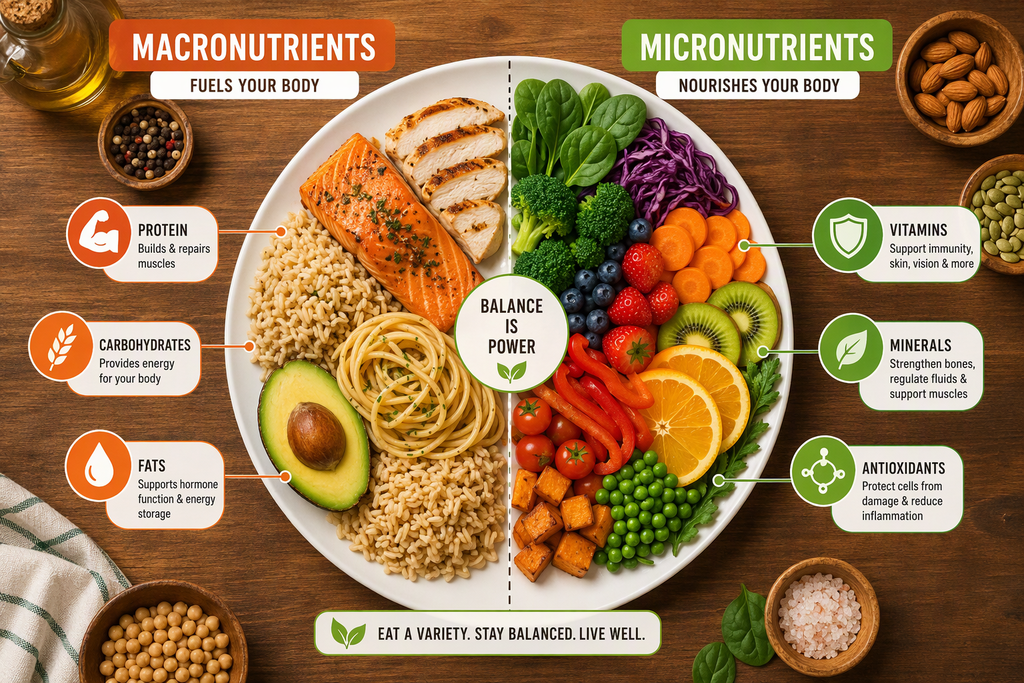
- Macronutrients and micronutrients are the main nutrients your body needs for a balanced diet.
- Macronutrients are needed in larger amounts and supply energy for daily calories and body functions.
- Micronutrients are needed in smaller amounts and support immune function, bone health, and energy metabolism.
- Whole grains, lean proteins, healthy fats, fruits, and vegetables help cover both nutrient groups.
- Dietary guidelines can help you match intake to your health goals.
- Eating a variety of foods makes meeting nutritional needs much easier.
Introduction
A balanced diet can feel confusing when you hear terms like macronutrients and micronutrients. So, what is the difference between macronutrients and micronutrients? In simple terms, both support overall health, but your body needs them in different amounts and for different jobs. Macronutrients give you energy and structure, while micronutrients help important body processes run well. When you eat a variety of foods, it becomes easier to meet your nutritional needs without overcomplicating your meals.
Defining Macronutrients and Micronutrients
Macronutrients and micronutrients are the two main nutrients in your diet. Macronutrients are nutrients your body needs in larger amounts. They include carbohydrates, proteins, and fats. These nutrients provide energy in the form of calories and also supply the building blocks your body uses for growth, repair, and normal function.
Micronutrients are needed in smaller amounts, but they are still essential. They include vitamins and minerals. The main types of micronutrients are vitamins such as vitamin C, vitamin D, vitamin K, and b vitamins, plus minerals such as calcium, potassium, iron, zinc, and other trace minerals. While they do not provide calories, they help the human body handle many important functions that keep you healthy.
Key Differences Between Macronutrients and Micronutrients
The biggest difference is amount and purpose. Macronutrients are needed in large amounts because they provide energy and basic structure. Micronutrients are required in much smaller amounts, yet they help control many body processes. That means micronutrients differ in function compared to macronutrients by supporting regulation rather than supplying calories.
Here is a quick breakdown:
- Macronutrients include carbohydrates, protein, and fat.
- Micronutrients include vitamins, minerals, and trace minerals.
- Macronutrients provide calories; micronutrients do not.
- Micronutrients help the body use food for energy metabolism.
- Dietary guidelines give intake ranges for macros and daily targets for many vitamins and minerals.
Both groups matter, but they do different work. One fuels and builds. The other supports and regulates. Understanding that split can make healthy eating feel far more practical.
Why Both Are Essential for Human Health
You need both because your body cannot run well on just calories alone. Macronutrients help power movement, support tissues, and maintain energy levels. Micronutrients help direct many of the systems that keep those processes working smoothly. Without both, your diet will have gaps.
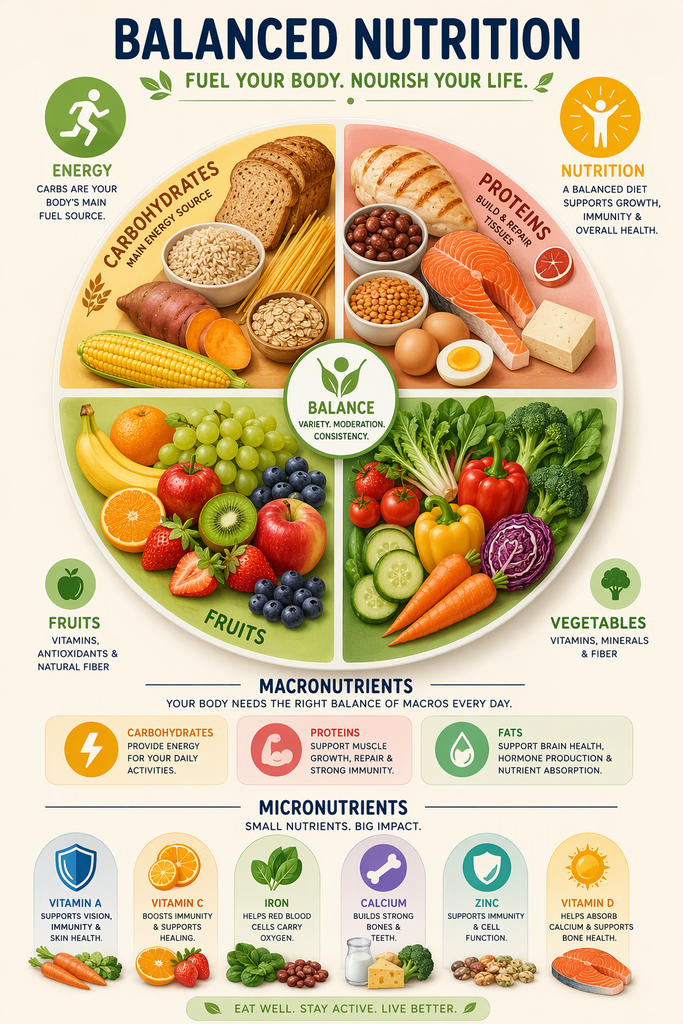
For example, carbohydrates affect blood sugar and provide quick fuel. Protein supports repair and immune response. Fats support cell membranes and hormone production. At the same time, micronutrients such as vitamin D and calcium help bone health, while vitamin C and zinc support immune function.
That is why both are essential for overall health and long-term health goals. A healthy eating plan should not focus on only one side of nutrition. It should include enough fuel and enough support nutrients together.
Understanding Macronutrients
Macronutrients are nutrients your body needs in larger amounts every day. They are carbohydrates, proteins, and fats. These nutrients supply most of your daily calories and play a central role in energy production.
They also act as building blocks for the human body. Carbohydrates help fuel activity, proteins supply amino acids for growth and repair, and fats provide fatty acids that support structure and storage. Once you understand these basics, the three main types of macronutrients become much easier to compare.
Types of Macronutrients: Carbohydrates, Proteins, and Fats
The three macronutrients are carbohydrates, proteins, and fats. Carbohydrates are the body’s main energy source. Proteins are made of amino acids and help build and repair tissues. Fats contain fatty acids and provide concentrated energy while also supporting many body structures.
Here is a simple text table:
| Macronutrient | Main role in the body | Calories per gram |
|---|---|---|
| Carbohydrates | Primary fuel for brain, nervous system, and activity | 4 |
| Proteins | Growth, repair, enzymes, and immune response | 4 |
| Fats | Energy storage, cell membranes, and vitamin absorption | 9 |
Together, these nutrients make up most of your daily calories. Micronutrients are different because they include vitamins and minerals, not energy-providing nutrients. Knowing that split helps you see how the diet is organized.
How Macronutrients Function in the Body
Carbohydrates mainly support energy production. They break down into glucose, which is the preferred fuel for brain function, the central nervous system, and red blood cells. Some carbohydrates are also stored as glycogen for later use when your body needs extra fuel.
Protein affects your body in a different way. It provides amino acids that help build and repair muscles and tissues. Protein also helps create enzymes and supports immune response. This makes it important for muscle function and recovery.
Fats do more than store energy. They help form cell membranes, protect organs, and support hormone production. They also help your body absorb vitamins A, D, E, and K. So, carbs, protein, and fats each affect your body in a distinct but connected way.
Sources of Macronutrients in Everyday Foods
You can get macronutrients from many everyday food sources. Carbohydrates often come from whole grains, fruits, beans, and starchy vegetables. Proteins come from lean proteins, dairy products, seafood, eggs, soy foods, legumes, nuts, and other animal products.
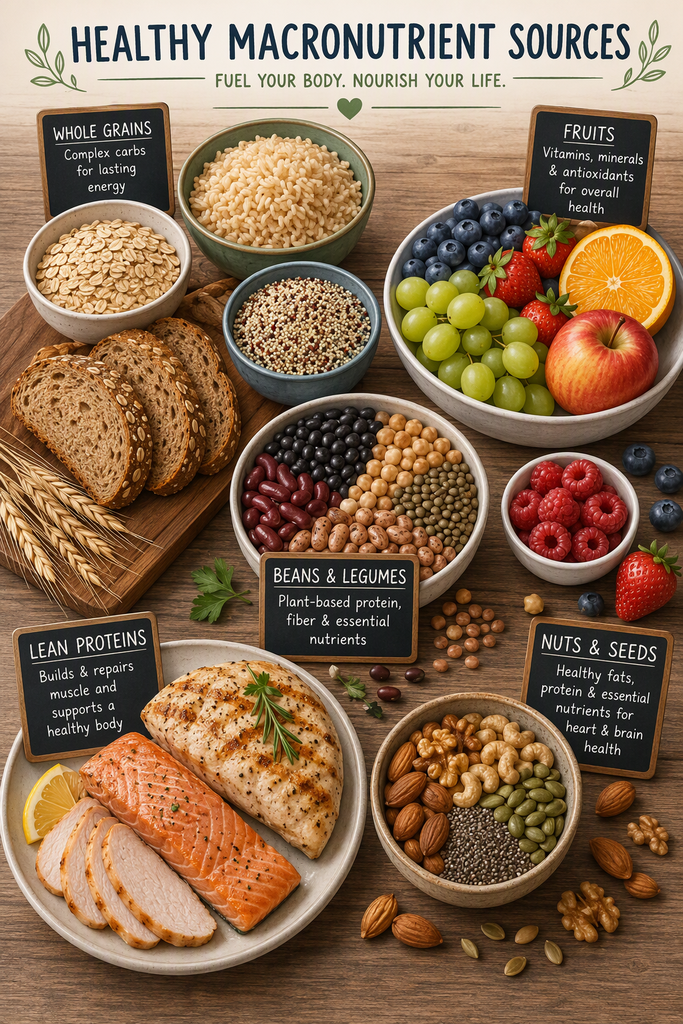
Fats are found in healthy fats such as avocados, nuts, seeds, olive oil, and fatty fish. Since many foods contain more than one nutrient group, eating a mix of plant foods and animal products can help you build balanced meals.
Common Foods Rich in Carbohydrates, Proteins, and Fats
Many common foods give you a strong mix of carbs, protein, and fat. Some are rich in one nutrient, while others supply two or more. This is why variety matters. You do not need unusual products to eat well. Basic foods often do the job.
Examples include:
- Whole grains such as oats, brown rice, barley, and farro for carbohydrates.
- Beans and lentils as plant sources of carbs and sources of protein.
- Eggs, poultry, seafood, and lean meats for protein.
- Dairy products like milk, yogurt, and cheese for protein and fat.
- Nuts and seeds for healthy fats and some protein.
- Avocados, olive oil, and fatty fish for healthy fats.
Fruits, vegetables, legumes, and dairy products can also contribute micronutrients. When meals include these foods regularly, it becomes easier to cover both energy needs and nutrient support.
Tips for Balancing Macronutrients in a Healthy Diet
The balance of macronutrients is not exactly the same for everyone. Dietary guidelines suggest that adults get about 45% to 65% of total daily calories from carbohydrates, 10% to 35% from protein, and 20% to 35% from fat. Your needs can shift with age, body weight, and activity level.
A practical healthy eating plan often works better than chasing perfect numbers. Try these ideas:
- Include a source of protein, carbs, and fat at meals.
- Choose whole grains and high-fiber carbs more often.
- Use healthy fats when cooking.
- Adjust intake if weight loss or muscle support is your goal.
- Eat a variety of foods instead of relying on popular diets alone.
Some people track macros, but it is not required. For many, steady meal balance works well and feels easier to maintain over time.
Exploring Micronutrients
Micronutrients are nutrients your body needs in smaller amounts than macronutrients, but they are still vital. They include vitamins and minerals, including trace minerals that are needed in very small amounts. Even without calories, they help keep many systems working properly.
These nutrients are important because they support growth, immune function, brain development, and energy metabolism. In short, micronutrients help your body use the food you eat and maintain health day after day.
Main Types of Micronutrients: Vitamins and Minerals
The main types of micronutrients are vitamins and minerals. Vitamins are organic compounds. Minerals are inorganic elements. Both are essential, even though your body only needs them in smaller amounts than carbohydrates, proteins, and fats.
Important examples include:
- Vitamin C, which supports immune function and wound healing.
- B vitamins, which help with energy metabolism and red blood cell formation.
- Vitamin D, which supports bone health.
- Vitamin K, which helps with blood clotting.
- Calcium and magnesium, which support muscles and bones.
- Trace minerals such as iron, zinc, iodine, selenium, copper, and manganese.
Minerals can be grouped as major minerals or trace minerals. Major minerals are needed in higher amounts, while trace minerals are required in very small amounts. Both groups still matter to everyday health.
The Unique Roles of Micronutrients in Wellness
Micronutrients differ from macronutrients because they do not mainly provide fuel. Instead, they support wellness by helping control body processes. They act more like helpers and regulators than energy sources. That role is easy to miss, but it is essential.
For example, vitamin C supports immune function. B vitamins help with red blood cell formation and energy metabolism. Calcium and vitamin D are important for bone health. Vitamin K plays a key role in blood clotting.
Minerals also support the nervous system, muscle function, fluid balance, and enzyme activity. Trace minerals help with antioxidant defense and immune health. So while macronutrients power and build the body, micronutrients help keep those systems working the right way.
Conclusion
In conclusion, understanding macronutrients and micronutrients is essential for maintaining a balanced and healthy diet. While macronutrients provide the energy our bodies need, micronutrients play crucial roles in supporting various bodily functions, from immunity to bone health. By incorporating a variety of foods rich in these nutrients into your meals, you can ensure your body receives the sustenance it needs. Remember, a well-rounded approach to nutrition not only enhances your physical health but also supports your overall well-being. If you’re ready to take charge of your health, get a free consultation with our experts today!
Frequently Asked Questions
What are the recommended daily amounts of macronutrients and micronutrients?
Dietary guidelines suggest 45% to 65% of total daily calories from carbohydrates, 10% to 35% from protein, and 20% to 35% from fat. Micronutrient needs vary by nutrient. Your ideal balance of macronutrients depends on your health goals, age, and nutritional needs.
What happens if you don’t get enough of certain macronutrients or micronutrients?
Not getting enough can affect overall health in different ways. Too little protein may lead to muscle loss. Low carbohydrate intake can reduce energy. Inadequate fat can affect brain and hormone support. Micronutrient deficiencies can weaken immune function and may contribute to medical conditions over time.
Can you list examples of both macronutrient and micronutrient deficiencies in the United States?
Examples include low protein intake that may contribute to muscle wasting, and low fat intake that may affect brain function. Common micronutrient deficiencies can include vitamin D, iron, and iodine. If you have symptoms, a registered dietitian or healthcare provider can review your medical history, especially for older adults.
https://health.clevelandclinic.org/macronutrients-vs-micronutrients
https://health.clevelandclinic.org/diet-food-fitness
https://health.clevelandclinic.org/diet-food-fitness/nutrition
https://www.ncbi.nlm.nih.gov/pmc/articles/PMC3385798