
Effective Strategies on How to Keep Blood Sugar Under Control
Key Highlights
- Blood sugar control starts with steady meals built around whole grains, lean protein, and healthy fats.
- Your blood glucose can rise fast after sugary drinks, refined carbs, and large portions.
- Regular physical activity helps your body use glucose better and supports diabetes management.
- Sleep, stress, and daily habits can all affect blood sugar readings more than you may expect.
- Simple food swaps, such as brown rice instead of white rice, can help limit spikes.
- Tracking patterns helps you make better choices for your overall health.
Keeping your blood sugar in a healthy range matters for your energy, focus, and overall health. If you have diabetes, prediabetes, or simply want better blood sugar management, small daily choices can make a real difference. The food you eat, how much you move, how well you sleep, and how you handle stress all play a part. When you understand what raises or steadies blood sugar, it becomes much easier to build habits that support lasting health.
What is Blood Sugar and Why Control Matters
Blood sugar, also called blood glucose, is the sugar your body uses for energy. Your pancreas normally releases enough insulin to help move glucose into cells and keep glucose levels in a healthy range.
When that system does not work well, blood sugar can stay too high. This is central to diabetes management because ongoing high readings raise risk factors for future health problems. In diabetes, blood sugar control matters because the body either does not make enough insulin or cannot use it well. Understanding the basics makes the next details easier to follow.
Understanding Blood Sugar Levels and Their Impact
Your blood sugar changes throughout the day based on meals, sleep, stress, and activity. A temporary rise in blood glucose can happen after a large meal, especially one high in carbohydrates. You may feel sluggish, tired, or sleepy afterward. For many people, the body brings levels back down.
Still, repeated blood sugar spikes can be a warning sign, especially in prediabetes or diabetes. Fasting blood sugar is one useful number because it shows where you start before eating. If that reading is already high, your body may be struggling to regulate glucose well.
Daily routine matters more than most people think. Late nights, large portions, low movement, and stress can all affect readings. The best treatment often includes a mix of food choices, exercise, sleep, stress control, and medical guidance when needed.
The Link Between Diabetes and Blood Sugar Management
Diabetes mellitus is a condition tied directly to blood sugar management. In type 2 diabetes, the body may not make enough insulin, or it may stop responding well to it. That reduced response is called insulin resistance, and it makes glucose harder to control.
Prediabetes can come first. In that stage, fasting blood sugar is elevated but not yet in the diabetes range. Without changes, blood sugar may stay high after meals and progress over time. That is why early disease control matters.
The connection is simple: diabetes treatment is largely about keeping blood sugar in a safer range. Food planning, regular movement, sleep, stress management, and medications when prescribed all work together. Strong daily habits can improve control and lower the risk of progression.
Best Foods for Maintaining Healthy Blood Sugar
Food has a direct effect on blood sugar control, so your plate matters. A balanced diet built around healthy eating habits can help slow digestion and support steadier glucose levels after meals.
Good choices include whole grains, lean protein, non-starchy vegetables, fruits with fiber, and healthy fats. These foods fit well into a sustainable pattern like a Mediterranean-style approach. On the other hand, heavily processed items and refined carbs can work against you. The next two sections break down what to put in your cart and what to leave behind.
Foods to Prioritize for Blood Sugar Control
If you want steadier readings, focus on foods that digest more slowly and keep you full. This usually means meals with fiber, protein, and healthy fat instead of quick sugars. Whole foods are often the better choice.
Here are smart foods to prioritize:
- Whole grains such as brown rice, quinoa, steel cut oats, and whole-grain bread
- Lean proteins like chicken, fish, beans, lentils, tofu, eggs, and other lean proteins
- Healthy fats from olive oil, avocado, nuts, and seeds
- High-fiber produce, including berries, leafy greens, broccoli, zucchini, and foods with soluble fiber
- Greek yogurt with berries and chia or flax seeds for a balanced breakfast or snack
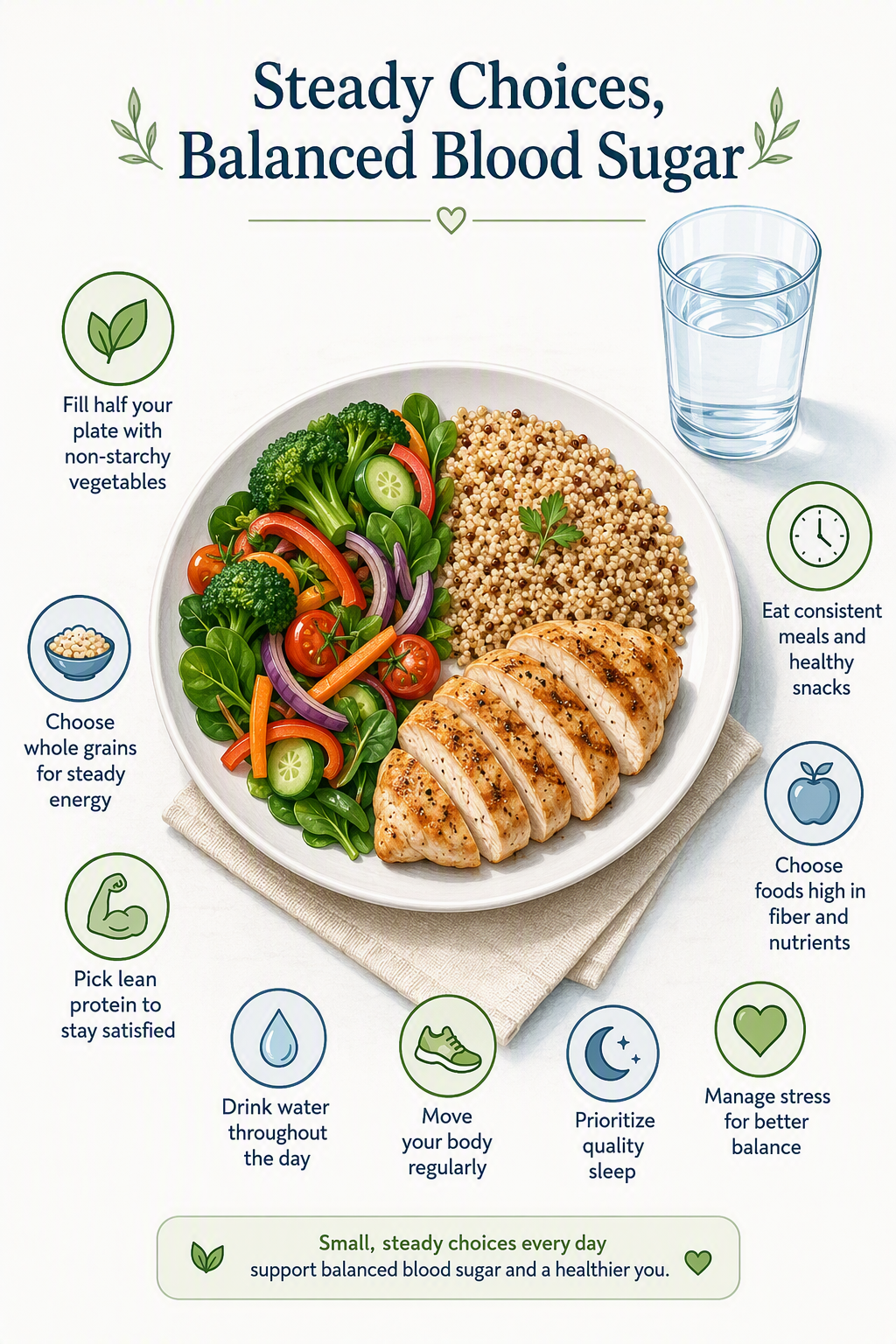
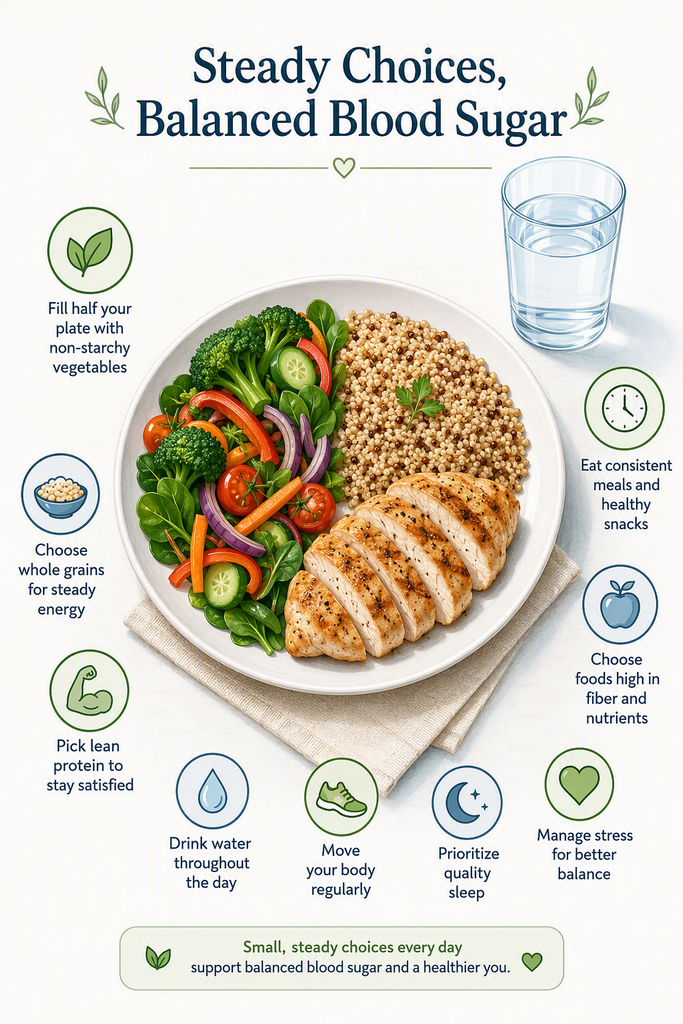
Portion size still matters, even with nutritious foods. A simple meal guide can help: half your plate non-starchy vegetables, one quarter healthy carbohydrates, and one quarter protein. That approach supports blood sugar control without feeling overly restrictive.
Foods to Limit or Avoid with High Blood Sugar
Some foods raise blood sugar quickly because they are low in fiber and highly processed. Many also add extra calories, which may contribute to weight gain and worsen insulin resistance over time. Drinks are a major issue because they are absorbed fast.
Try to limit or avoid these items:
- Sugary drinks such as soda, sweet tea, energy drinks, and fruit juice
- Refined grains like white bread, white rice, pastries, and regular pasta
- Sugary foods including candy, desserts, sweetened cereals, cookies, and packaged snacks
- Fast food, fried foods, and highly processed meats such as sausages, hot dogs, and deli meats
- Large portions of foods that can raise sugar quickly, including some starchy vegetables and refined carb meals
One simple example stands out: a whole apple is a better choice than apple juice. Chewing and fiber slow digestion, while liquid sugar can lead to faster spikes. Choosing minimally processed foods gives you a stronger starting point.
Building Effective Daily Habits for Balanced Blood Sugar
Strong blood sugar management is built through repeatable actions, not one perfect meal. Your daily habits shape how your body responds to food, stress, sleep loss, and movement from morning to night.
A healthy lifestyle usually includes balanced meals, portion awareness, regular physical activity, better sleep, and stress control. These basics can help lower your risk of diabetes progression and support steadier energy. The good news is that you do not need extreme changes. Small shifts in routine often create the most lasting results, and the next sections show where to start.
Simple Lifestyle Changes That Make a Difference
Lasting progress usually comes from simple steps you can repeat. A healthy lifestyle does not require cutting out entire food groups or chasing fad diets. Instead, aim for habits that support healthy eating and steadier readings day after day.
Helpful changes include:
- Build a meal plan around non-starchy vegetables, whole grains, lean protein, and healthy fats
- Get regular sleep, since poor rest raises stress in the body and can push blood sugar higher
- Use relaxation techniques to manage stress and reduce overeating or sugary snacking
- Meet with a registered dietitian for a plan that fits your age, routine, and health needs
Another smart move is watching added sugar in packaged foods. Sugars can hide in cereals, bars, sauces, and frozen meals. Reading labels and choosing less processed options can lower blood sugar naturally and make your routine easier to maintain.
How Your Daily Routine Impacts Blood Sugar Readings
Your routine affects blood sugar more than you may notice at first. Long gaps between movement, oversized meals, sugary snacks, and poor sleep can all shift blood glucose levels. Morning readings may also run higher because hormones like cortisol rise after waking.
Activity level is another big factor. If you sit most of the day, your body may use glucose less efficiently. By contrast, regular movement helps muscles use sugar for energy, which can support steadier glucose levels over time.
Stress matters too. When stress builds, hormone changes can affect appetite, sleep, and cravings, which may raise blood sugar further. These patterns become important risk factors if repeated often. Paying attention to your habits helps you spot what pushes your readings up or keeps them balanced.
The Role of Physical Activity in Blood Sugar Regulation
Regular movement is one of the best tools for blood sugar control. Physical activity helps your muscles use glucose, which can lower levels and support better insulin sensitivity over time.
If you are new to exercise, your blood sugar may rise at first because the body can treat activity like stress. Still, with regular physical activity, especially over time, the benefits become clearer. Exercise also supports weight goals, heart health, and diabetes management. To make that easier, it helps to know which types of movement are most useful and how to stay consistent.
Types of Exercise That Benefit Blood Sugar
Exercise helps the body use glucose more effectively. Over time, regular physical activity can improve blood sugar control, support weight loss, and reduce the risk of heart disease. The best choice is often the one that matches your current activity level and that you can keep doing.
Different forms of movement offer different benefits for diabetes management:
| Type of exercise | How it helps |
|---|---|
| Walking or other moderate exercise | Supports daily glucose use and is a practical starting point |
| Strength training | Helps muscles use glucose for repair and growth, which can lower blood sugar over time |
| Moderate to vigorous weekly exercise | Supports overall control and is linked with diabetes prevention goals |
| Daily step goals | Adds movement across the day and reduces long sitting periods |
A good target for many people with prediabetes is at least 150 minutes per week of moderate to vigorous exercise or about 10,000 daily steps. Always build up at a safe pace and check with your doctor before making major changes.
Creating an Exercise Plan You Can Stick With
The best exercise plan is one that fits your life. Start with your current activity level and choose something realistic. If you have been inactive, a short daily walk may be better than a hard routine you quit after one week.

Consistency matters more than intensity at the beginning. As your body adapts, you can add time or include strength training. This can support diabetes management, help you reach a healthy weight, and improve blood sugar control in a steady way.
One of the best ways to stay on track is to connect movement to your routine. Walk after meals, schedule workouts on your calendar, or track steps during the day. Small actions done often are more useful than big plans that never become habits.
Conclusion
In summary, maintaining balanced blood sugar levels is essential for your overall health and well-being. By understanding the impact of your diet, daily habits, and exercise routines, you can take proactive steps toward better management. Prioritizing the right foods, staying active, and making mindful lifestyle choices can significantly influence your blood sugar stability. Remember, every small change counts in the journey toward optimal health. If you’re looking for personalized guidance and support, don’t hesitate to reach out. Your path to better blood sugar control starts now!
Frequently Asked Questions
How often should I check my blood sugar for optimal control?
If you have diabetes, checking before meals and about two hours after eating can help you track of your blood sugar and spot patterns. Your provider may also suggest a continuous glucose monitor. The right schedule depends on your treatment plan, blood glucose levels, and blood sugar target.
Can stress or poor sleep affect my blood sugar levels?
Yes. Stress and poor sleep can raise blood sugar because they affect hormone levels and may trigger cravings, overeating, and less activity. Over time, that can worsen blood glucose control. Relaxation techniques, better sleep habits, and support for other health conditions can help keep levels steadier.
Are there safe home remedies to help lower blood sugar naturally?
Safe ways to lower blood sugar naturally include healthy eating, regular physical activity, quality sleep, and stress management. These support diabetes management without relying on unproven supplements. Before trying any home remedy or supplement, talk with your healthcare provider to make sure it is safe for you.
Effective Strategies on How to Keep Blood Sugar Under Control
Key Highlights
- Blood sugar control starts with steady meals built around whole grains, lean protein, and healthy fats.
- Your blood glucose can rise fast after sugary drinks, refined carbs, and large portions.
- Regular physical activity helps your body use glucose better and supports diabetes management.
- Sleep, stress, and daily habits can all affect blood sugar readings more than you may expect.
- Simple food swaps, such as brown rice instead of white rice, can help limit spikes.
- Tracking patterns helps you make better choices for your overall health.
Keeping your blood sugar in a healthy range matters for your energy, focus, and overall health. If you have diabetes, prediabetes, or simply want better blood sugar management, small daily choices can make a real difference. The food you eat, how much you move, how well you sleep, and how you handle stress all play a part. When you understand what raises or steadies blood sugar, it becomes much easier to build habits that support lasting health.
What is Blood Sugar and Why Control Matters
Blood sugar, also called blood glucose, is the sugar your body uses for energy. Your pancreas normally releases enough insulin to help move glucose into cells and keep glucose levels in a healthy range.
When that system does not work well, blood sugar can stay too high. This is central to diabetes management because ongoing high readings raise risk factors for future health problems. In diabetes, blood sugar control matters because the body either does not make enough insulin or cannot use it well. Understanding the basics makes the next details easier to follow.
Understanding Blood Sugar Levels and Their Impact
Your blood sugar changes throughout the day based on meals, sleep, stress, and activity. A temporary rise in blood glucose can happen after a large meal, especially one high in carbohydrates. You may feel sluggish, tired, or sleepy afterward. For many people, the body brings levels back down.
Still, repeated blood sugar spikes can be a warning sign, especially in prediabetes or diabetes. Fasting blood sugar is one useful number because it shows where you start before eating. If that reading is already high, your body may be struggling to regulate glucose well.
Daily routine matters more than most people think. Late nights, large portions, low movement, and stress can all affect readings. The best treatment often includes a mix of food choices, exercise, sleep, stress control, and medical guidance when needed.
The Link Between Diabetes and Blood Sugar Management
Diabetes mellitus is a condition tied directly to blood sugar management. In type 2 diabetes, the body may not make enough insulin, or it may stop responding well to it. That reduced response is called insulin resistance, and it makes glucose harder to control.
Prediabetes can come first. In that stage, fasting blood sugar is elevated but not yet in the diabetes range. Without changes, blood sugar may stay high after meals and progress over time. That is why early disease control matters.
The connection is simple: diabetes treatment is largely about keeping blood sugar in a safer range. Food planning, regular movement, sleep, stress management, and medications when prescribed all work together. Strong daily habits can improve control and lower the risk of progression.
Best Foods for Maintaining Healthy Blood Sugar
Food has a direct effect on blood sugar control, so your plate matters. A balanced diet built around healthy eating habits can help slow digestion and support steadier glucose levels after meals.
Good choices include whole grains, lean protein, non-starchy vegetables, fruits with fiber, and healthy fats. These foods fit well into a sustainable pattern like a Mediterranean-style approach. On the other hand, heavily processed items and refined carbs can work against you. The next two sections break down what to put in your cart and what to leave behind.
Foods to Prioritize for Blood Sugar Control
If you want steadier readings, focus on foods that digest more slowly and keep you full. This usually means meals with fiber, protein, and healthy fat instead of quick sugars. Whole foods are often the better choice.
Here are smart foods to prioritize:
- Whole grains such as brown rice, quinoa, steel cut oats, and whole-grain bread
- Lean proteins like chicken, fish, beans, lentils, tofu, eggs, and other lean proteins
- Healthy fats from olive oil, avocado, nuts, and seeds
- High-fiber produce, including berries, leafy greens, broccoli, zucchini, and foods with soluble fiber
- Greek yogurt with berries and chia or flax seeds for a balanced breakfast or snack
Portion size still matters, even with nutritious foods. A simple meal guide can help: half your plate non-starchy vegetables, one quarter healthy carbohydrates, and one quarter protein. That approach supports blood sugar control without feeling overly restrictive.
Foods to Limit or Avoid with High Blood Sugar
Some foods raise blood sugar quickly because they are low in fiber and highly processed. Many also add extra calories, which may contribute to weight gain and worsen insulin resistance over time. Drinks are a major issue because they are absorbed fast.
Try to limit or avoid these items:
- Sugary drinks such as soda, sweet tea, energy drinks, and fruit juice
- Refined grains like white bread, white rice, pastries, and regular pasta
- Sugary foods including candy, desserts, sweetened cereals, cookies, and packaged snacks
- Fast food, fried foods, and highly processed meats such as sausages, hot dogs, and deli meats
- Large portions of foods that can raise sugar quickly, including some starchy vegetables and refined carb meals
One simple example stands out: a whole apple is a better choice than apple juice. Chewing and fiber slow digestion, while liquid sugar can lead to faster spikes. Choosing minimally processed foods gives you a stronger starting point.
Building Effective Daily Habits for Balanced Blood Sugar
Strong blood sugar management is built through repeatable actions, not one perfect meal. Your daily habits shape how your body responds to food, stress, sleep loss, and movement from morning to night.
A healthy lifestyle usually includes balanced meals, portion awareness, regular physical activity, better sleep, and stress control. These basics can help lower your risk of diabetes progression and support steadier energy. The good news is that you do not need extreme changes. Small shifts in routine often create the most lasting results, and the next sections show where to start.
Simple Lifestyle Changes That Make a Difference
Lasting progress usually comes from simple steps you can repeat. A healthy lifestyle does not require cutting out entire food groups or chasing fad diets. Instead, aim for habits that support healthy eating and steadier readings day after day.
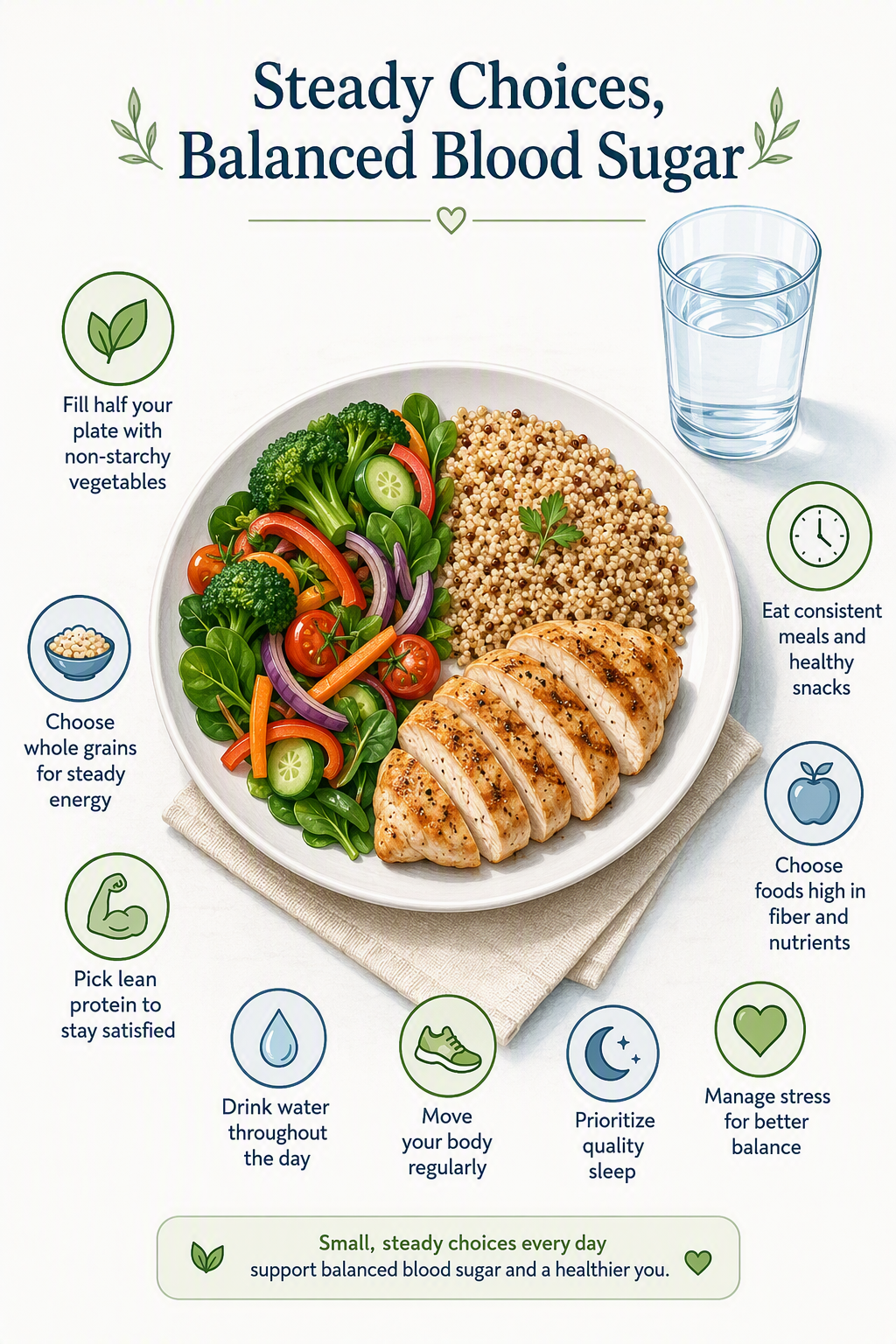
Helpful changes include:
- Build a meal plan around non-starchy vegetables, whole grains, lean protein, and healthy fats
- Get regular sleep, since poor rest raises stress in the body and can push blood sugar higher
- Use relaxation techniques to manage stress and reduce overeating or sugary snacking
- Meet with a registered dietitian for a plan that fits your age, routine, and health needs
Another smart move is watching added sugar in packaged foods. Sugars can hide in cereals, bars, sauces, and frozen meals. Reading labels and choosing less processed options can lower blood sugar naturally and make your routine easier to maintain.
How Your Daily Routine Impacts Blood Sugar Readings
Your routine affects blood sugar more than you may notice at first. Long gaps between movement, oversized meals, sugary snacks, and poor sleep can all shift blood glucose levels. Morning readings may also run higher because hormones like cortisol rise after waking.
Activity level is another big factor. If you sit most of the day, your body may use glucose less efficiently. By contrast, regular movement helps muscles use sugar for energy, which can support steadier glucose levels over time.
Stress matters too. When stress builds, hormone changes can affect appetite, sleep, and cravings, which may raise blood sugar further. These patterns become important risk factors if repeated often. Paying attention to your habits helps you spot what pushes your readings up or keeps them balanced.
The Role of Physical Activity in Blood Sugar Regulation
Regular movement is one of the best tools for blood sugar control. Physical activity helps your muscles use glucose, which can lower levels and support better insulin sensitivity over time.
If you are new to exercise, your blood sugar may rise at first because the body can treat activity like stress. Still, with regular physical activity, especially over time, the benefits become clearer. Exercise also supports weight goals, heart health, and diabetes management. To make that easier, it helps to know which types of movement are most useful and how to stay consistent.
Types of Exercise That Benefit Blood Sugar
Exercise helps the body use glucose more effectively. Over time, regular physical activity can improve blood sugar control, support weight loss, and reduce the risk of heart disease. The best choice is often the one that matches your current activity level and that you can keep doing.
Different forms of movement offer different benefits for diabetes management:
| Type of exercise | How it helps |
|---|---|
| Walking or other moderate exercise | Supports daily glucose use and is a practical starting point |
| Strength training | Helps muscles use glucose for repair and growth, which can lower blood sugar over time |
| Moderate to vigorous weekly exercise | Supports overall control and is linked with diabetes prevention goals |
| Daily step goals | Adds movement across the day and reduces long sitting periods |
A good target for many people with prediabetes is at least 150 minutes per week of moderate to vigorous exercise or about 10,000 daily steps. Always build up at a safe pace and check with your doctor before making major changes.
Creating an Exercise Plan You Can Stick With
The best exercise plan is one that fits your life. Start with your current activity level and choose something realistic. If you have been inactive, a short daily walk may be better than a hard routine you quit after one week.

Consistency matters more than intensity at the beginning. As your body adapts, you can add time or include strength training. This can support diabetes management, help you reach a healthy weight, and improve blood sugar control in a steady way.
One of the best ways to stay on track is to connect movement to your routine. Walk after meals, schedule workouts on your calendar, or track steps during the day. Small actions done often are more useful than big plans that never become habits.
Conclusion
In summary, maintaining balanced blood sugar levels is essential for your overall health and well-being. By understanding the impact of your diet, daily habits, and exercise routines, you can take proactive steps toward better management. Prioritizing the right foods, staying active, and making mindful lifestyle choices can significantly influence your blood sugar stability. Remember, every small change counts in the journey toward optimal health. If you’re looking for personalized guidance and support, don’t hesitate to reach out. Your path to better blood sugar control starts now!
Frequently Asked Questions
How often should I check my blood sugar for optimal control?
If you have diabetes, checking before meals and about two hours after eating can help you track of your blood sugar and spot patterns. Your provider may also suggest a continuous glucose monitor. The right schedule depends on your treatment plan, blood glucose levels, and blood sugar target.
Can stress or poor sleep affect my blood sugar levels?
Yes. Stress and poor sleep can raise blood sugar because they affect hormone levels and may trigger cravings, overeating, and less activity. Over time, that can worsen blood glucose control. Relaxation techniques, better sleep habits, and support for other health conditions can help keep levels steadier.
Are there safe home remedies to help lower blood sugar naturally?
Safe ways to lower blood sugar naturally include healthy eating, regular physical activity, quality sleep, and stress management. These support diabetes management without relying on unproven supplements. Before trying any home remedy or supplement, talk with your healthcare provider to make sure it is safe for you.
https://www.mdanderson.org/cancerwise/how-to-avoid-sugar-spikes.h00-159537378.html
https://diabetes.org/food-nutrition/reading-food-labels/fruit