


Essential 40 Years Old Doctors Check Up for Optimal Health

Key Highlights
- At 40, regular checkups help catch silent issues like high blood pressure, high cholesterol, and high blood sugar.
- Your doctor reviews risk factors, family history, and lifestyle changes to guide preventive care.
- Key health screenings often include blood pressure checks, cholesterol tests, and diabetes screening.
- Men may need focused preventive care for heart disease and colon cancer risk.
- Women should stay current with breast cancer and cervical cancer screening.
- Vaccines, annual screening visits, and early detection all support long-term health.
Introduction
Turning 40 is a smart time to take your health more seriously. Even if you feel well, regular checkups can uncover hidden risk factors before they become larger health conditions. This stage of life often brings changes in blood pressure, cholesterol, blood sugar, and cancer risk, so preventive care matters more than ever. If you want to manage your health after turning 40, the best place to start is with the right screenings, a routine eye exam, and a clear plan with your doctor.
Why Regular Doctors Check Ups Matter at Age 40
Regular checkups matter because many common problems in your 40s do not cause symptoms early on. High blood pressure, high cholesterol, and diabetes risk, along with the rising prevalence of skin cancer, can all rise quietly. Health screenings help spot these issues before they affect your heart, kidneys, or overall well-being.
Just as important, your doctor can review family history and personal risk factors to decide which tests, including a specific antigen assessment, fit you best. That focus on early detection can shape better choices about blood work, cancer screenings, vaccines, and follow-up care. The next sections break down those benefits in a practical way.
Health Benefits of Routine Medical Screenings
Routine health screenings give you useful information, even when you feel completely fine. Some of the most important checks at 40 look for high blood pressure, high cholesterol, and blood sugar changes, as recommended by the American College of Obstetricians. These problems can develop without warning signs, so testing matters.
Early detection is the biggest benefit. A simple blood test may show diabetes risk. A blood pressure reading may uncover stage 1 hypertension. Cancer screenings can also find disease at a point when treatment may be more effective. That is why preventive care is not just for people who feel sick.
Another advantage is personalization. Your doctor can match screening timing to your age, family history, and other risk factors. If you have a strong family history of colon cancer or breast cancer, for example, your screening plan may include CT colonography or change. That tailored approach helps you stay ahead, not catch up later.
How Your Risk Factors Change After 40
After 40, your risk factors often shift in ways that are easy to miss. Blood pressure may rise. Weight gain can affect cholesterol and blood sugar. A condition that once seemed unlikely may now carry an increased risk. This is why routine screening becomes more important.
Your doctor also looks beyond age alone. Family history, smoking, heavy alcohol use, low body weight, pregnancy-related blood pressure problems, and existing health conditions, including a family history of hip fracture, can all place you at higher risk. These details help shape how often you need follow-up.
Common concerns doctors watch more closely after 40 include:
- High blood pressure and early heart disease risk
- High cholesterol and cardiovascular disease
- Prediabetes or diabetes in people with added risk factors
- Certain cancers when family history suggests a higher risk
Annual Physical Exam – What to Expect
An annual lung cancer screening visit usually starts with your primary care provider reviewing your medical history, current medicines, and any recent symptoms. You may also discuss diet, exercise, alcohol, tobacco, drug use, and mental health concerns such as depression or anxiety.
During the physical exam, your height, weight, body mass index, and blood pressure are commonly checked. Your provider may also talk about safety, vaccine updates, and needed tests based on age and risk. Knowing what happens at this visit makes it easier to prepare the right questions for the appointment.
Key Questions to Ask Your Doctor
A good checkup is not just about being examined. It is also your chance to ask focused questions. If you are in your 40s, a simple health checklist can help you make the most of regular checkups and avoid missing important topics.
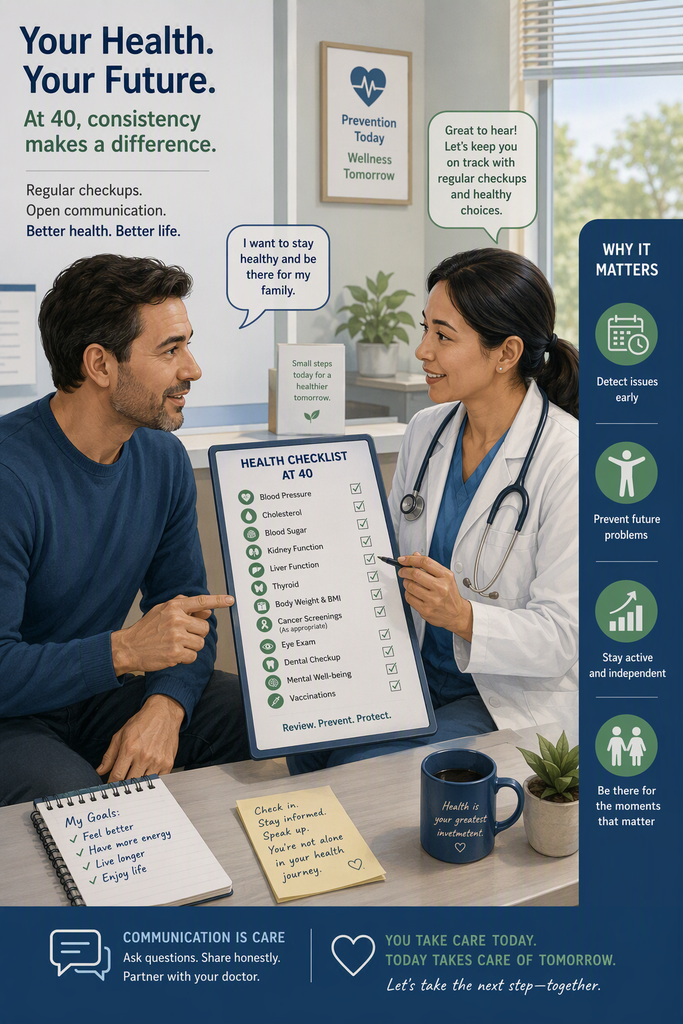
Start with questions tied to your personal situation. Your family history, weight changes, blood pressure, and current health conditions all affect what your doctor may recommend. Small lifestyle changes can also influence what testing schedule makes sense for you.
Consider asking:
- Which screenings do I need this year based on my age and family history?
- Do my current numbers suggest risk for heart disease or diabetes?
- How often should I schedule regular checkups with you?
- Are any lifestyle changes likely to lower my risk factors?
- Do I need cancer screenings, vaccine updates, or extra follow-up visits?
Essential Measurements and Vitals
At your visit, several basic vital signs can reveal a lot about your health. These measurements help your doctor screen for heart disease risk, weight-related concerns, and other changes that may need attention. Even simple numbers can show early warning signs.
Blood pressure is one of the most important checks after 40. According to the American Heart Association, readings from 120 to 129 mm Hg on top or 70 to 79 mm Hg on the bottom may need closer follow-up. A top number of 130 mm Hg or higher, or a bottom number of 80 mm Hg or higher, may point to hypertension.
Here is a quick view of essential measurements:
| Measurement | Why It Matters |
|---|---|
| Blood pressure | Helps detect high blood pressure, a key risk for heart disease and kidney problems |
| Weight | Tracks changes that may raise diabetes or cardiovascular disease risk |
| BMI | Shows whether body size may be contributing to health concerns |
| Height | Used with weight to calculate BMI and monitor overall trends |
Important Blood Tests After Age 40
Blood work becomes more useful after 40 because several common conditions can stay hidden for years. A blood test can help identify high cholesterol, blood sugar problems, and signs linked to organ function before symptoms appear.
In many cases, your doctor will decide what to order based on your weight, health conditions, medicines, and family history. Diabetes screening, cholesterol checks, and tests related to liver function or kidney problems may all be considered. The next two sections explain which blood tests are often most relevant and why they matter.
Recommended Cholesterol and Glucose Screening
Cholesterol and glucose testing are among the most important blood checks in your 40s. These tests help spot risk factors for high risk cardiovascular disease and diabetes before noticeable symptoms begin. That matters because both conditions can quietly damage blood vessels and organs over time.
For cholesterol, screening often starts well before 40, but your doctor may repeat it every few years or more often if your situation changes. Weight gain, heart disease, kidney problems, stroke, or medicines for high cholesterol can all affect timing. This is a major part of protecting long-term heart health.
Glucose testing is also important, especially if you are overweight or have obesity. According to the American Diabetes Association, diabetes screening is often advised from age 35 in that group and may need to happen sooner or more often with added risk factors, such as high blood pressure, prediabetes, prior pregnancy-related diabetes, or a first-degree relative with diabetes.
Thyroid, Liver, and Kidney Function Tests
Not every person turning 40 automatically needs the same extended lab work, but your doctor may order tests based on symptoms, medicines, or underlying health concerns. This is where a blood test can help look beyond cholesterol and glucose.
Liver and kidney function testing may be useful when you have kidney problems, heart disease, certain other conditions, or medication use that could affect these organs. These results can help your provider understand whether your body is handling treatment and daily health stress well.
Thyroid testing may also come up if symptoms or medical history suggest a concern. The key point is that screening after 40 is not one-size-fits-all. If your risk shows an increased risk of organ-related issues, your provider may add these labs to build a clearer picture of your health.
Gender-Specific Health Screenings in Your 40s
Some health screenings in your 40s depend on sex-specific risks and anatomy. That is why cancer screenings, including the fecal occult blood test, are not exactly the same for men and women. Age, symptoms, and family history all shape what your doctor may suggest.
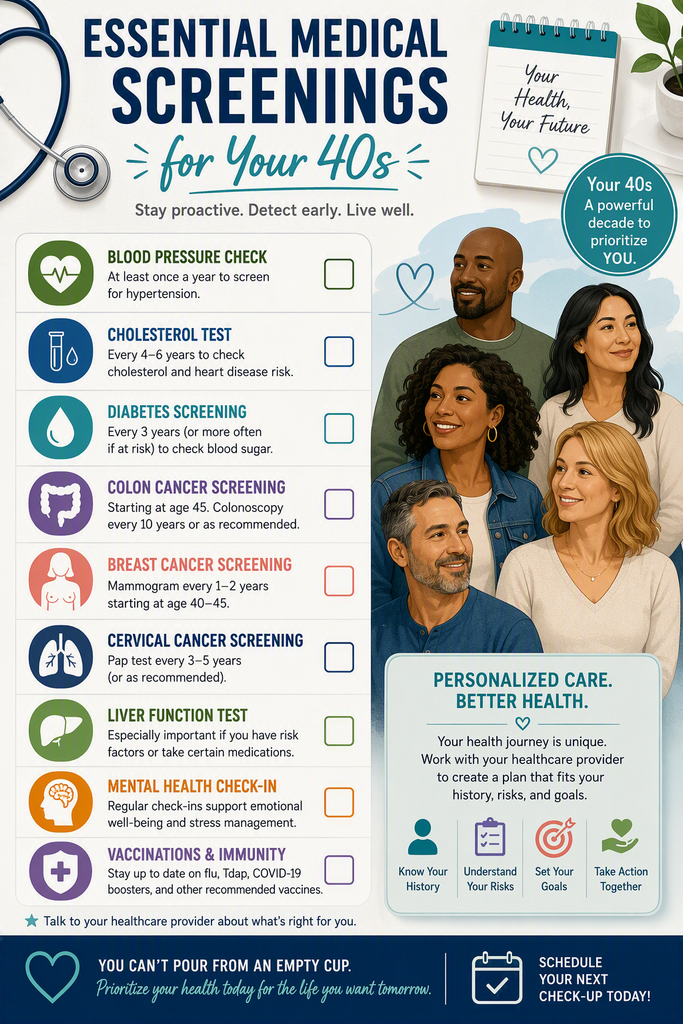
For women, this often includes breast cancer screening and cervical cancer testing such as a pap smear or HPV-based testing. For men, the focus may turn more toward heart disease, colorectal cancer, colon cancer risk, and questions about prostate cancer. The next sections explain these needs in a clear, practical way.
Preventive Care for Men Over 40
For men over 40, preventive care should focus on silent risks that often build over time. The primary prevention of cardiovascular disease and heart disease deserves close attention, especially if blood pressure, cholesterol, weight, or blood sugar are changing. Regular visits help catch those issues early.
Screening plans also depend on personal history. According to the American Cancer Society, colon cancer screening usually begins at 45 for average risk adults, though men with a strong family history may need earlier discussions. Questions about prostate cancer may also come up, especially if symptoms or family risk are present.
Useful priorities for men include:
- Checking blood pressure, weight, and other routine exam findings
- Reviewing cholesterol and diabetes risk with your doctor
- Asking when colon cancer screening should begin for you
- Discussing lifestyle changes that reduce cardiovascular disease risk
Recommended Women’s Health Checkups After 40
Women over 40 should keep up with both general wellness visits and age-based screening as recommended by the US Preventive Services Task Force. Breast cancer and cervical cancer are two major concerns during this stage, and early detection can make a real difference. Even if you feel healthy, these appointments still matter.
Mammography is generally recommended starting at age 40 and is often repeated every 1 to 2 years. Cervical cancer screening from ages 30 to 65 may include a pap test or pap smear every 3 years, an HPV test every 5 years, or cotesting every 5 years. Osteoporosis screening is usually discussed later, though some women ages 50 to 64 need earlier review if risk factors are present.
Women should ask about:
- Mammograms for breast cancer screening
- Pap smear or HPV test timing
- Extra screening if there is a family history of breast cancer
- Osteoporosis screening if risk factors are present
Vaccines and Immunizations for 40-Year-Olds
Vaccines remain an important part of preventive care in your 40s. They help lower your risk of infectious disease and keep routine protection up to date. Even healthy adults may need annual or catch-up immunizations depending on past records and current health.
For many people, the key vaccines in this decade include the flu shot every year, COVID-19 vaccination, tetanus boosters, and hepatitis b if it was not completed earlier. Your doctor can also review whether you need other immunizations based on age, exposure, travel, or health conditions. Here is what that usually includes.
Routine Vaccinations Recommended in the United States
In the United States, adult vaccines are part of routine preventive care, not just something you think about during outbreaks. Your 40s are a good time to review your records and make sure basic protection is still current. This is especially useful if you have not had regular care in years.

Several vaccines are commonly recommended for adults in this age range. These help reduce avoidable illness and support your immune system over time. Some are repeated on a schedule, while others depend on whether you completed them earlier in life.
Common routine vaccines include:
- A flu shot every year
- COVID-19 vaccination based on current guidance
- Td or Tdap booster shots every 10 years
- Hepatitis B vaccination if you did not complete it earlier
People at increased risk for infectious disease, including some with human immunodeficiency virus or other health issues, may need closer review with a doctor.
Catch-Up Vaccines and Booster Shots
A vaccine review at 40 is also about what you may have missed. Catch-up vaccines can close gaps from childhood, teen years, or early adulthood. That step helps support your immune system before new health issues appear.
Your provider may look at whether you ever received Tdap, MMR, varicella, or hepatitis B. Booster shots for tetanus protection are also part of staying current. While hepatitis c virus screening is a blood test rather than a vaccine, it often comes up in the same preventive visit because adults should have one-time screening.
Ask your doctor about these catch-up needs:
- Tdap if you never received it as an adolescent
- MMR if you are not already immune
- Varicella if you never had chickenpox or the vaccine
- Td or Tdap booster shots every 10 years
Conclusion
Taking charge of your health becomes increasingly vital as you reach the age of 40. Regular check-ups and screenings, as endorsed by the American College of Obstetricians and Gynecologists, can catch potential issues early, allowing for timely interventions and better health outcomes. By understanding the essential tests and check-ups required for your age group, whether it’s for cardiovascular health or gender-specific screenings, you empower yourself to maintain optimal well-being. Don’t underestimate the importance of preventive care; it can make all the difference in your health journey. If you’re ready to prioritize your health, consider scheduling a consultation with your healthcare provider today.
Frequently Asked Questions
How often should you visit your doctor after 40?
Most adults should see their primary care provider for an annual screening visit after 40, as recommended by the American Academy of Ophthalmology. You may need regular checkups more often if you have health conditions, rising blood pressure, diabetes risk, or other risk factors that call for closer follow-up and repeat testing.
Are there warning signs that mean you need extra checkups?
Yes. New symptoms, changing blood pressure, unexplained weight changes, vision problems, or concerns linked to family history can all suggest increased risk. Extra visits support early detection and help your doctor decide whether you need added testing for health conditions or faster follow-up.
Is there a comprehensive health checklist for people turning 40?
A useful checklist includes an annual screening visit, review of medical history, blood pressure measurement, weight and BMI, needed blood work, vaccine updates, and age-based health screenings. Your doctor should also review lifestyle changes, family history, and personal risk factors to tailor the plan.
https://www.cdc.gov/vaccines/imz-schedules/adult-easyread.html
https://www.uspreventiveservicestaskforce.org/uspstf/recommendation/cervical-cancer-screening